

So, you've just left the studio with a stunning new piece from Fountainhead New York. That initial excitement is incredible, but now comes the most important part of the journey: healing. A common question we get is, "How long does a tattoo really take to heal?" While the surface might look sharp and settled in about two to four weeks, the real magic is happening much deeper. Your skin needs up to six months for a full, deep recovery that truly locks in your tattoo's vibrancy for a lifetime.
Unpacking the Tattoo Healing Timeline
When you walk out of our Huntington Village studio with fresh ink from artists like Matt Beckerich or Phil Szlosek, you're leaving with what is essentially a beautiful, artistic open wound. How you treat it from this moment forward determines everything. Understanding the healing process isn't just about following aftercare steps; it's about knowing why you're doing them.
Think of it like this: the first couple of weeks are like framing a house. From the outside, it looks like a complete structure pretty quickly. But the real work—the plumbing, the electrical, the foundation settling—is happening inside for months. Your tattoo is no different. The initial healing you see is just the beginning of a much deeper process.
We've laid out a quick reference guide to help you understand what's happening at each stage.
Quick Guide to Tattoo Healing Stages
Here's a snapshot of what you can expect as your new tattoo moves from a fresh wound to a permanent piece of art.
| Healing Stage | Typical Duration | What to Expect |
|---|---|---|
| Stage 1: The Open Wound | Days 1-6 | The area will be red, swollen, and tender, much like a severe sunburn. You'll see some weeping of plasma and excess ink. This is completely normal as your body begins its initial immune response. |
| Stage 2: Peeling & Itching | Days 7-14 | Your skin will start to flake and peel, similar to a healing sunburn. Scabs may form, especially over heavily worked areas. The itch can be intense, but resisting the urge to scratch is critical. |
| Stage 3: The "Dull" Phase | Weeks 2-4 | Once the peeling stops, a new layer of skin will cover the tattoo, making it look a bit dull or cloudy. Don't worry, this is temporary. The skin is still regenerating from the surface down. |
| Stage 4: Deep Tissue Recovery | Month 1-6 | The surface looks healed, but the deeper layers of skin are still busy rebuilding collagen and settling the ink. Your tattoo's true colors and sharpness will emerge during this final phase. |
This table is a general guide, but remember that every person and every tattoo heals differently. Factors like size, placement, and your personal health play a huge role.
Surface Healing vs. Deep Tissue Recovery
One of the biggest misconceptions we see is clients thinking their tattoo is fully healed once the scabs and flakes are gone. While the top layer of skin (the epidermis) does a great job of closing up and looking good within a few weeks, the real work is happening in the layer below—the dermis, where the ink actually lives.
For the next several months, your body is busy remodeling collagen and fully encapsulating the ink particles. Experts in dermatology confirm that while the epidermis heals quickly, the dermis takes a solid three to six months to fully stabilize and regain its original strength. You can dive deeper into the science behind this by reviewing expert insights into how long a tattoo takes to heal. During this time, the ink truly settles, and your skin returns to its normal texture.
The key takeaway is this: Your tattoo is not truly finished healing until the skin over it feels exactly like the skin around it—smooth, healthy, and completely normal to the touch. Rushing this process can compromise the final look of your artwork.
What This Means for You
Knowing about this dual timeline isn't meant to scare you; it's meant to empower you. It helps set realistic expectations and shows why long-term care is so important. After the first month, you can generally get back to most of your normal activities. However, protecting that new art from harsh sun exposure is absolutely critical for the entire six-month period.
Patience is your best friend here. Giving your body the time it needs to complete this extended healing process is what guarantees the crisp lines and bold colors you invested in will stay that way for decades to come.
The Four Critical Stages of Tattoo Healing
Figuring out how long a new tattoo really takes to heal is a lot simpler when you break it down into four distinct acts. Think of it like a play where your skin is the main character, and it’s going through a serious transformation. Each stage has its own personality, its own challenges, and its own specific care instructions. Knowing what’s coming is the key to navigating the process and ending up with a beautifully healed piece of art.
This timeline shows the big picture—the difference between the initial surface healing you can see and the deeper tissue recovery that quietly continues for months.
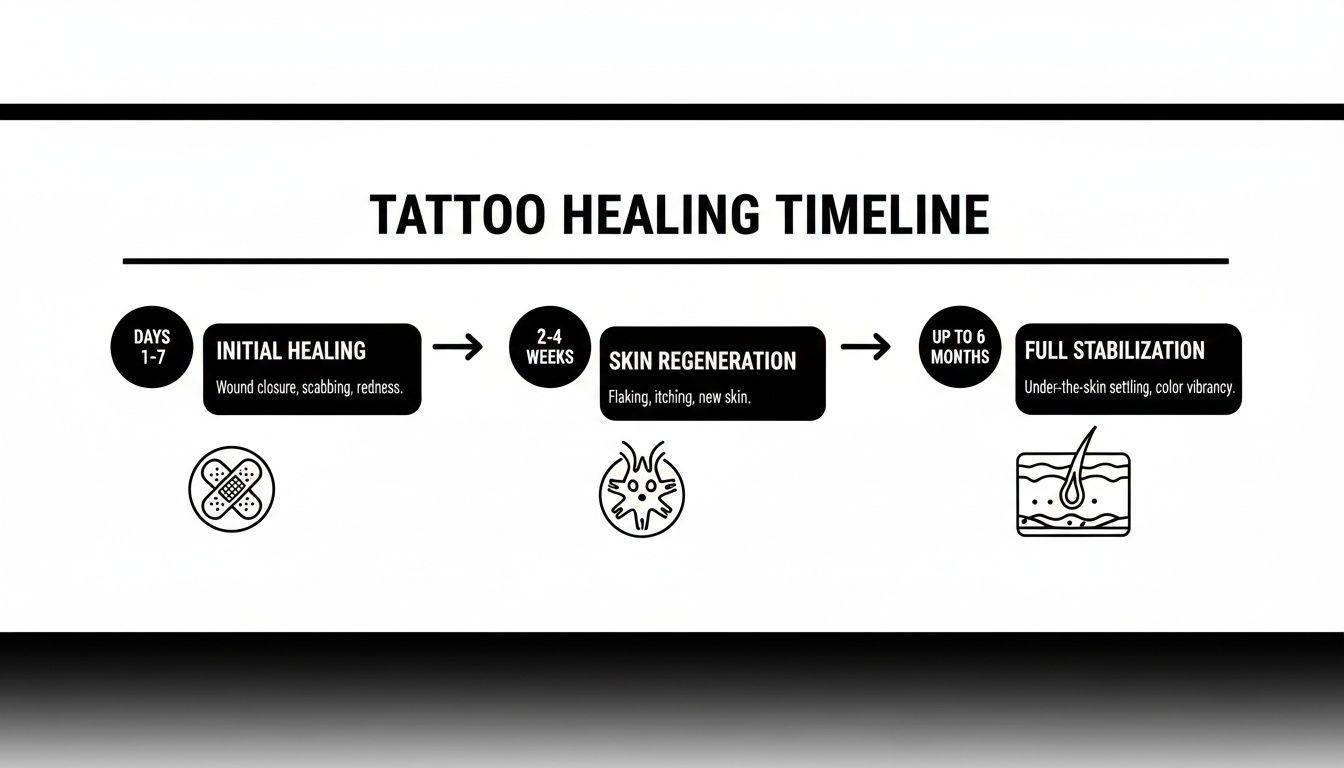
The key takeaway here is patience. While your tattoo might look totally healed in less than a month, the real work of locking that ink in for good is happening deep beneath the surface.
Stage 1: The Open Wound Phase (Days 1 to 6)
Right after you leave the studio, your new tattoo is exactly what it sounds like: an open wound. Your body’s immune system immediately kicks into gear, which is why you’ll see some redness, swelling, and tenderness. It’s also totally normal to see some clear plasma and a bit of excess ink weeping for the first 24 to 48 hours. This is just your body starting its natural inflammatory response, and it’s a good thing.
Your only job during this stage is to keep it clean. That’s it. Gently wash it with a fragrance-free soap, pat it dry, and apply a paper-thin layer of the aftercare ointment we recommended. This protects it from bacteria while still letting the skin breathe.
Stage 2: The Itching and Flaking Phase (Days 7 to 14)
Once that initial wound closes up, your skin gets down to the business of real repair. This is when the infamous itch arrives, usually along with some light scabbing and flaking skin. It’s a lot like a sunburn peeling—your body is just shedding the damaged top layer to make way for the new.
This stage is honestly the hardest part for most clients. You have to resist the urge to scratch or pick at the peeling skin. It’s non-negotiable. Picking at it can pull ink out, cause scarring, and totally ruin the final look of your tattoo. A good, light, fragrance-free moisturizer can take the edge off the itchiness.
Stage 3: The Cloudy and Dull Phase (Days 15 to 30)
After the flakes are gone, you’ll enter what we call the "milky" or "cloudy" stage. Your tattoo might suddenly look a bit dull, faded, or even blurry. Don't panic! This is just a fine, protective layer of new skin forming over the tattoo. It’s not fully translucent yet, so it’s temporarily obscuring the vibrant ink underneath. For a different perspective on skin healing, you can see a similar process with the day-by-day microneedling healing stages.
Stage 4: The Complete Recovery Phase (Month 2 to 6)
The final stage is all about deep tissue repair. Even though the surface looks fantastic, the lower layers of your skin are still busy rebuilding collagen and fully encapsulating every last particle of ink. Over the next few months, that cloudy layer will completely disappear, revealing your tattoo’s true, permanent vibrancy and sharpness.
You'll know the entire process is officially complete when the tattooed skin feels exactly like the non-tattooed skin right next to it. No difference in texture, just beautiful, settled art.
Factors That Influence Your Healing Time
Ever wonder why your friend's small wrist tattoo seemed to heal in the blink of an eye, while your detailed calf piece is taking its sweet time? There’s no simple answer. Just like every piece of art we create at Fountainhead New York is unique, so is every person's healing journey.
Several key factors come together to determine your personal healing timeline. Think of it like this: your body is the canvas and the soil for a new plant. A small seed in rich soil with perfect sunlight will sprout quickly. A larger, more complex plant in a high-traffic area will naturally need more time and care to establish its roots. Your new tattoo works on a very similar principle.
The Tattoo Itself: Size and Placement
The most obvious variables are the tattoo's size, the amount of detail, and its location on your body. These are huge.
- Size and Detail: A simple, fine-line tattoo is more like a shallow scratch on the skin's surface. It causes less trauma and therefore heals much faster than a large, densely colored piece like an American Traditional eagle, which involves packing a lot of ink deep into the skin. The more ink and detail, the more work your body has to do.
- Placement: Where you get your tattoo matters immensely. A tattoo on a fleshy, stable area like your forearm or thigh generally heals faster. These spots have great blood flow and don't move or stretch much. On the flip side, tattoos in high-movement zones—hands, feet, elbows, or knees—face constant friction and bending, which can seriously prolong the healing process.
Your Body and Lifestyle
Beyond the tattoo itself, your personal health and daily habits play a massive role. Your immune system is the engine driving this whole process, so anything you do to support it will directly help your tattoo heal.
A strong immune system, good nutrition, and staying hydrated give your body the resources it needs to repair skin efficiently. On the other hand, things like stress, poor sleep, or smoking can divert those resources elsewhere, slowing down your recovery.
Of course, the quality of your artist and studio also sets the foundation for a good heal. Working with a reputable shop ensures the process is clean and professional from the get-go. Our guide on how to find the best tattoo shop on Long Island explains exactly why this is so critical for both the final look of the art and how it heals.
Your aftercare routine is the single most critical factor you can control. A perfectly executed tattoo can be wrecked by poor aftercare, while even a simple piece can heal flawlessly with diligent attention.
Following our aftercare instructions isn't just a suggestion—it's the blueprint for a successful heal. Proper care during the first 2 to 4 weeks drastically cuts down the risk of complications. Things like skipping moisturizer or letting your new tattoo get sunburnt can slow healing by 20-50%.
While most surface healing happens by day 30, larger tattoos can take a full 3-6 months to heal at a deeper level. Consistent, proper care makes all the difference in the world.
A Proven Aftercare Routine for a Perfect Heal
Proper aftercare is the single most important factor you get to control. It's what turns a great tattoo from your artist into a perfectly healed piece of art you'll love forever. Think of it this way: the artist creates the masterpiece, but you are its guardian. How you treat your new tattoo in those first few weeks directly impacts its final clarity, vibrancy, and longevity.
Following a proven routine isn't just about dodging an infection; it's about preserving the crisp lines and rich saturation you walked out of our studio with. It’s an investment in your art.
The First 48 Hours Are Critical
The healing journey begins the second your artist finishes. These first two days are everything—they set the stage for the entire process to come.
-
Leave the Initial Wrap On: Your artist will cover your new tattoo with a protective wrap. Leave it on for the exact amount of time they recommend, which is usually a few hours. This barrier is your first line of defense against airborne bacteria.
-
The First Wash: Once you remove the wrap, it's time for the all-important first wash. Use lukewarm water and a gentle, fragrance-free liquid soap. Lather it up with clean hands and gently wash away any plasma, blood, and excess ink. Be gentle.
-
Pat, Don’t Rub: Never, ever rub your new tattoo with a towel. Instead, gently pat the area dry with a fresh paper towel and let it air-dry completely for a few minutes. Trapping moisture under ointment is a recipe for irritation.
-
Apply Ointment: When the skin is totally dry, apply a very thin layer of the aftercare ointment your artist recommended. You're aiming for a light sheen, not a thick, greasy coat. With ointment, less is more. Too much can suffocate the skin and clog your pores, which will only slow down healing.
Repeat this simple cleaning and ointment routine 2-3 times a day to keep the area pristine and support this initial healing stage.
Weeks One and Two: Moisturize and Protect
After the first few days, your tattoo will start to feel dry and tight. This is totally normal. It’s entering the peeling and flaking phase, which means it's time to switch from a healing ointment to a light, fragrance-free moisturizer. Keeping the skin hydrated now will minimize scabbing and help relieve that intense itching you're about to feel.
Resisting the urge to scratch or pick at peeling skin is non-negotiable. Picking at scabs can literally pull ink right out of the dermis, leaving you with patchy spots and scarring that will definitely need a touch-up.
During this period—and for at least the next month—you have to act as your tattoo's bodyguard against the elements. These are the absolute must-avoids:
- No Sun Exposure: UV rays are the number one enemy of a new tattoo. They cause fading and can seriously damage the healing skin. Keep it covered with loose clothing when you go outside.
- No Soaking: Stay out of baths, pools, hot tubs, lakes, and oceans. Submerging your healing tattoo is like an open invitation for bacteria and can completely mess up the healing process. Short showers are perfectly fine.
- Wear Loose Clothing: Friction is not your friend. Tight clothes will rub against the tattoo, causing irritation and potentially pulling off flakes of skin and scabs before they're ready. Stick to soft, breathable fabrics.
Essential Aftercare Dos and Don'ts
Navigating aftercare can feel like a lot to remember, but it boils down to some simple principles. Keep it clean, keep it moisturized, and leave it alone. This quick-reference table breaks down the essentials.
| Do | Don't |
|---|---|
| Gently wash with fragrance-free soap 2-3 times daily. | Scrub or use harsh soaps with fragrances or exfoliants. |
| Pat dry with a clean paper towel after washing. | Rub with a shared, dirty bath towel. |
| Apply a very thin layer of recommended ointment/lotion. | Slather on a thick coat of product, suffocating the skin. |
| Wear loose, soft, and breathable clothing over the area. | Wear tight or abrasive fabrics that can cause friction. |
| Drink plenty of water to keep your skin hydrated. | Expose the tattoo to direct sunlight. |
| Let scabs and flakes fall off naturally. | Pick, scratch, or peel the healing skin. |
| Protect your tattoo from sun exposure even after it heals. | Soak your new tattoo in a bath, pool, or hot tub. |
Following these guidelines is the surest way to help your tattoo heal perfectly and look its best for the long haul. When in doubt, just reach out to your artist.
Recognizing Signs of Healing Complications
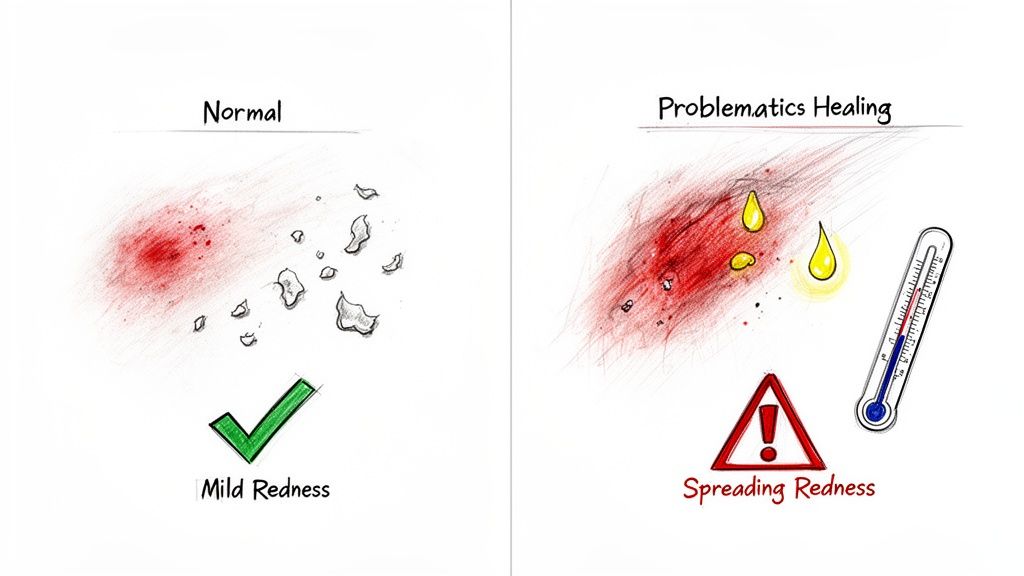
While complications are incredibly rare when working with a reputable studio like Fountainhead New York, knowing the difference between normal healing and a potential problem is crucial for your peace of mind. Your body is doing amazing work, but sometimes it runs into a snag. Think of this section as your troubleshooting guide to help you distinguish standard healing symptoms from red flags that need a second look.
First, let's set the baseline. For the first week, it's completely normal to see some mild redness, minor swelling, and tenderness—think of it like a moderate sunburn. As the days go on, light scabbing and peeling are also expected. These are all good signs that your body is repairing itself exactly as it should.
The trouble starts when certain symptoms go beyond this normal range and get worse instead of better.
When to Pay Closer Attention
If your healing tattoo feels more intense than a simple sunburn, it’s time to take a closer look. The key is to watch for any symptoms that worsen over time instead of improving.
Here are the specific warning signs that could point to an infection or an allergic reaction:
- Spreading Redness: Initial redness is normal, but it should gradually shrink. If the redness intensifies or starts spreading outward from the tattoo after a few days, that's a red flag.
- Prolonged or Excessive Swelling: Swelling should be at its worst within the first 48 hours and then start to go down. If the area stays super puffy, or if it swells up again after it already subsided, take note.
- Pus or Discharge: Seeing some clear or slightly yellow plasma weep in the first day or two is totally fine. However, thick, yellow-green, or foul-smelling pus is a classic sign that something’s wrong.
- Intense Pain: A new tattoo will be sore, no doubt. But the pain should be manageable and get a little better each day. If the pain becomes severe, starts throbbing, or actually increases after the first couple of days, that’s a real cause for concern.
- Fever or Chills: If you start feeling sick with a fever or chills, it means your body is fighting a bigger battle. This is a sign to seek medical advice right away.
Most issues are minor and can be sorted out quickly if you catch them early. The most important thing is not to panic or try to ignore persistent symptoms. Trust your gut—if something feels off, it’s always better to be cautious.
If you notice any of these signs, your first step should be to contact your artist. But if symptoms are severe, like a high fever or red streaks spreading from the tattoo, it’s time to see a doctor.
In cases of serious wound infections, medical professionals might use tools like advanced pathogen detection to pinpoint the specific bacteria causing the issue. This helps them prescribe the most effective treatment to get you back on track.
Being informed empowers you to take the right action, ensuring your healing process is as safe and successful as possible.
Long-Term Care to Keep Your Tattoo Vibrant
Thinking about “how long do tattoos take to heal?” doesn’t stop once the scabs are gone and the itching is a distant memory. The real answer? Healing is a lifelong commitment. After about six months, your tattoo is truly settled in, and the focus needs to shift from active healing to long-term preservation.
Protecting that investment now is what keeps it looking sharp for decades. Think of it this way: your tattoo’s biggest enemy is the sun. It’s a slow-motion bleach, with UV rays breaking down the ink particles that sit in the dermis. That degradation is the #1 cause of fading, blurring, and color loss over time.
Protect Your Ink from the Sun
This is the golden rule, the one thing you absolutely can't skip: protect your art from the sun. Using a high-SPF, broad-spectrum sunscreen is completely non-negotiable if you want your tattoo to maintain its clarity and color. Make it a daily habit, just like brushing your teeth.
- Apply generously: Don't be shy with it. Cover the entire tattooed area at least 15 minutes before you head outside.
- Reapply often: Slap on some more every two hours or so—and even more frequently if you’re swimming or sweating heavily.
This simple routine is, without a doubt, the most powerful tool you have to keep your lines crisp and your colors bright for years to come.
Moisturize for Lasting Vibrancy
Healthy skin is the foundation of a healthy-looking tattoo. When your skin is hydrated and elastic, your artwork looks its best. Dry, dehydrated skin can make even the most brilliant piece look dull, muted, and faded.
You don't need anything fancy. A simple, fragrance-free lotion applied daily is all it takes to keep the canvas hydrated and the ink looking vibrant.
A tattoo is a permanent part of your body. Treating your skin well is the best insurance policy you can have for your art. Lifelong care ensures the piece you love today remains the piece you love for decades.
When to Consider a Touch-Up
Even with perfect aftercare, life happens. Sometimes a line settles a bit lighter than the rest, or a small patch of color just isn't quite as saturated once everything is fully healed. It’s completely normal. After about six months, give your tattoo a really close look in good light.
If you spot any little inconsistencies that bother you, that's what a touch-up is for. Here at Fountainhead NY, we see touch-ups as the final polish on a custom piece—the last step in making it perfect. Just reach out to your artist to schedule a follow-up and we'll get it looking flawless.
And if you're already thinking about what’s next, or just want to explore different artistic avenues, check out our comprehensive tattoo style guide for some inspiration.
Your Top Questions About Tattoo Healing, Answered
As your new tattoo settles in, it's completely normal to have questions pop up. It's an active healing process, after all, and every day can bring something new. We've been guiding clients through this for years, so here are answers to some of the most common things we hear in the studio.
Can I Work Out After Getting a New Tattoo?
We strongly recommend taking it easy for at least the first week. The main enemies of a new tattoo are sweat and bacteria. Heavy workouts mean a lot of sweat, which can seriously irritate the healing skin, and gym equipment is a breeding ground for germs you definitely don't want anywhere near an open wound.
Light activities like walking are perfectly fine. The goal is just to avoid anything that causes excessive sweating or lets clothing rub constantly against your new piece.
Why Does My New Tattoo Look Dull and Cloudy?
Ah, the "milky" stage. Don't panic—this is a totally normal and temporary part of the journey. It usually shows up after the initial peeling is done, and it’s caused by a fresh, thin layer of new skin forming over the ink.
Think of it like looking through a slightly frosted window. That new skin isn't fully transparent yet, which mutes the vibrancy of your tattoo for a little while. As your skin continues to heal on a deeper level over the next few weeks, that clarity will return, revealing the tattoo's true colors and sharp details.
How Do I Know When My Tattoo Is Fully Healed?
You'll know the surface is healed when all the scabbing and flaking is completely gone, and the skin's texture is no longer shiny or tender to the touch. This initial phase usually takes about 2-4 weeks.
But that's just the surface. The deeper layers of your skin are still busy regenerating, a process that can take up to 6 months. The true sign that your tattoo is 100% healed, inside and out, is when the tattooed skin feels exactly the same as the non-tattooed skin right next to it.
Is It Normal for My Tattoo to Peel Like a Sunburn? Absolutely. Peeling is a sign that everything is going right. It typically starts about a week in and means the top layer of damaged skin is making way for the fresh, healthy skin underneath. The most important rule? Do not pick at it. Pulling off peeling skin can lift the ink right out, leading to patchiness and scarring. Just let it happen naturally.
Still have a few more questions on your mind? We get it. We've put together an even more detailed guide covering all the other tattoo aftercare frequently asked questions to give you total peace of mind.
Your journey with your art is just as important as the art itself. For world-class custom work and expert guidance from the initial idea to the final healing, you can always trust the artists at Fountainhead New York.


