

A tiger tattoo is a powerful statement. It speaks to something primal within us—raw power, untamed freedom, and a fierce, protective courage. These designs capture the tiger's inherent duality, its ferocious strength perfectly balanced by a quiet, graceful poise, making it one of the most potent and enduring symbols in the world of body art.
The Tiger Tattoo: A Universal Symbol of Primal Power
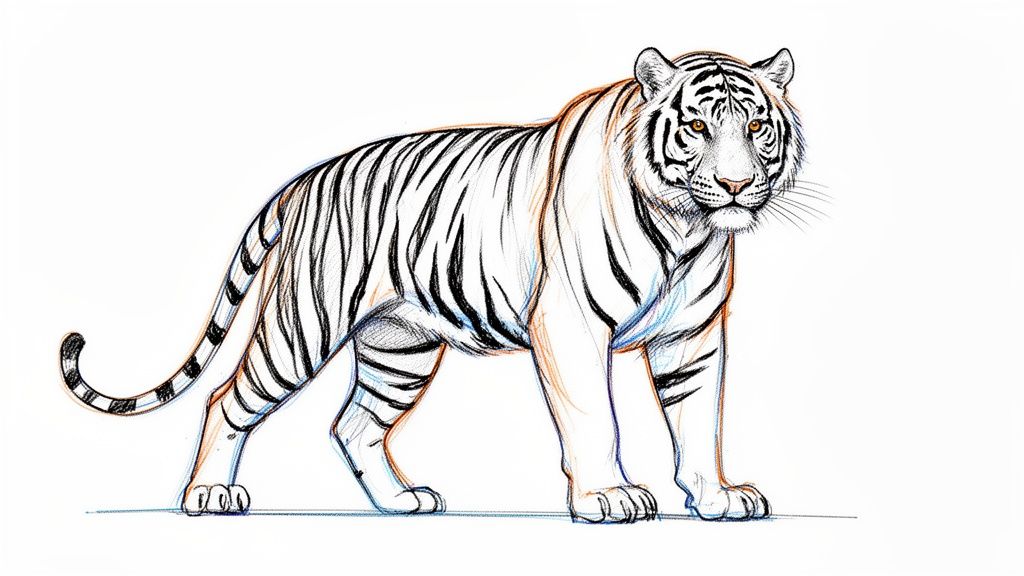
Choosing a tiger tattoo is about more than just getting a striking image; it's a way of connecting with the deep, ancient respect humanity has always held for one of the planet's most formidable predators. It’s a theme we see across different forms of art and adornment. For instance, just as a tiger tattoo embodies raw strength, other powerful animal motifs like panther rings symbolizing female power also carry deep cultural meaning.
For centuries, this majestic cat has stood for a complex mix of ferocity and grace. When you choose a tiger for your tattoo, you're aligning yourself with its core attributes—whether that's its explosive, untamed energy or the quiet, strategic patience of a hunter lying in wait.
Tiger Tattoo Symbolism at a Glance
This blend of meanings is what makes the tiger such a versatile and deeply personal symbol. To cut through the noise, we've broken down the core concepts you'll find woven into nearly every tiger tattoo.
This table gives you a quick overview of what a tiger can represent.
| Symbol | Primary Meaning | Cultural Context |
|---|---|---|
| Power & Strength | Represents raw physical and spiritual strength, dominance, and leadership. | Universal, especially prominent in Asian and tribal cultures. |
| Courage & Bravery | Symbolizes fearlessness in the face of adversity and the will to overcome obstacles. | Widespread, seen in warrior and military traditions. |
| Freedom & Independence | Embodies a wild, untamable spirit and the desire for autonomy. | Modern Western interpretation and ancient nomadic beliefs. |
| Protection & Guardianship | Acts as a talisman to ward off evil spirits, bad luck, and harm. | Deeply rooted in Chinese, Japanese, and Korean folklore. |
Each of these meanings can be amplified or nuanced depending on the tattoo's style, placement, and the other elements it's paired with.
A tiger tattoo is not just about the animal itself; it’s about the spirit it represents. It speaks to the wearer's inner strength, their ability to navigate challenges with courage, and their connection to the untamed aspects of nature.
Ultimately, the symbolism of your tiger tattoo is your story to tell. As we dive deeper into its significance across different cultures and artistic styles, you'll see just how this powerful image can be tailored to express a unique and deeply personal narrative through the art of tattooing.
Diving Into the Tiger’s Global Meanings
To really get what a tiger tattoo is all about, you have to look past the obvious stuff like strength and courage. The tiger's story is deep, and it changes depending on where you are in the world. Think of it like a legend passed down through generations—every culture adds its own chapter, its own layer of meaning.
This is especially true in the East, where the tiger isn't just another animal. It's a guardian of the heavens, a divine protector, and a symbol of kings. To understand its power in tattoo art, we have to start where its legacy is oldest and most profound: China.
A Symbol of Chinese Imperial Power
In Chinese culture, the tiger is a heavyweight. It’s one of the four celestial animals, tasked with guarding the West and representing the autumn season. For centuries, it has stood as a symbol of protection, regal power, and earthly authority. This isn't just folklore; it's baked into the country's history.
Tiger tattoos trace back over 2,000 years in China, where they were worn to channel the animal's bravery and protective force. Emperors during the Han Dynasty even adopted the title 'Imperial Tiger,' splashing its image across banners to project an aura of invincibility. Later, during the 19th-century Opium Wars, Chinese sailors would get tiger tattoos to ward off evil spirits on dangerous voyages. It’s estimated that up to 40% of certain port crews had them for safe passage. You can read more about the long history of tigers in tattooing right here.
But the tiger's journey as a protector didn't stop at China's borders. It traveled across the sea to Japan, where its symbolism took on a new, more nuanced life.
Japanese Folklore and the Guardian Tiger
You won’t find any wild tigers in Japan, but you’ll find them everywhere in traditional Japanese art and, most famously, in Irezumi tattoos. Here, the tiger is seen as a guardian who controls the wind, a force that shields you from demons, sickness, and just plain bad luck.
In Japanese designs, the tiger is rarely alone. It's often paired with other powerful elements to create a sense of harmony:
- Tiger and Dragon: This is the ultimate matchup, representing the balance between earthly power (the tiger) and celestial power (the dragon). Together, they form a perfect harmony—the yin and yang of the cosmos.
- Tiger and Bamboo: Bamboo is famous for its ability to bend without breaking, a perfect symbol of resilience. A tiger moving through a bamboo forest, then, represents raw strength guided by the wisdom to adapt.
This isn't just about brute force. The Japanese tiger is a strategic and spiritual protector.
In Japanese tattoo art, the tiger embodies more than just ferocity. It represents a disciplined strength, a guardian that uses its power wisely to maintain balance and ward off evil forces.
The Divine Spirit in Korea and India
In Korea, the tiger is practically a national symbol. It's a divine spirit, a guardian of the mountains, and a central character in countless founding myths and folk tales. But unlike in other cultures, the Korean tiger is often a wise, friendly figure that helps humans. A Korean-style tiger tattoo can be a powerful nod to this heritage, representing a sacred, protective spirit rooted in wisdom.
Travel to India, and the tiger's symbolism shifts again, becoming entwined with the Hindu deity Shiva—the god of destruction and rebirth. Shiva is often shown wearing or sitting on a tiger skin, a powerful image that signifies his mastery over all forms of power, including nature's most destructive urges. Getting a tiger tattoo in this context is about mastering your own primal instincts and learning to channel your inner power for something greater.
Decoding the Design Elements of Your Tattoo
So, you’ve decided on a tiger. But the real question isn't just what the tattoo is, but how it tells its story. The magic is in the details—the posture, the color palette, and the other symbols it’s paired with. Each choice your artist makes shifts the narrative, turning a powerful image into a story that's uniquely yours.
The tiger’s pose is the first thing that speaks. It’s the body language of your tattoo. A roaring tiger, for instance, is a raw, unapologetic statement of power, ferocity, and dominance. It's an external projection of pure strength.
Contrast that with a stalking or walking tiger. This communicates something entirely different: patience, quiet confidence, and strategic thinking. This pose is all about the hunt—a deliberate, focused journey toward a goal, rather than an explosive display of force.
How Color Changes the Conversation
Color adds another layer of meaning, completely changing the mood and symbolism of the piece. While many tattoo styles embrace a full, vibrant palette, the specific hues chosen can steer the narrative in a new direction.
- Traditional Orange and Black: This is the classic, the one everyone recognizes. That fiery orange speaks of passion, raw energy, and vitality. The bold black stripes? That’s all about strength and sheer willpower.
- The White Tiger: Here’s where the meaning takes a mystical turn. Because they’re so rare in the wild, white tigers symbolize unique spiritual insight, purity, and a kind of power that sets you apart. A white tiger tattoo often points to a one-of-a-kind journey or a deep connection to something otherworldly.
This quick guide breaks down how the tiger’s core symbolism gets filtered through different cultural lenses, with each tradition adding its own unique flavor.
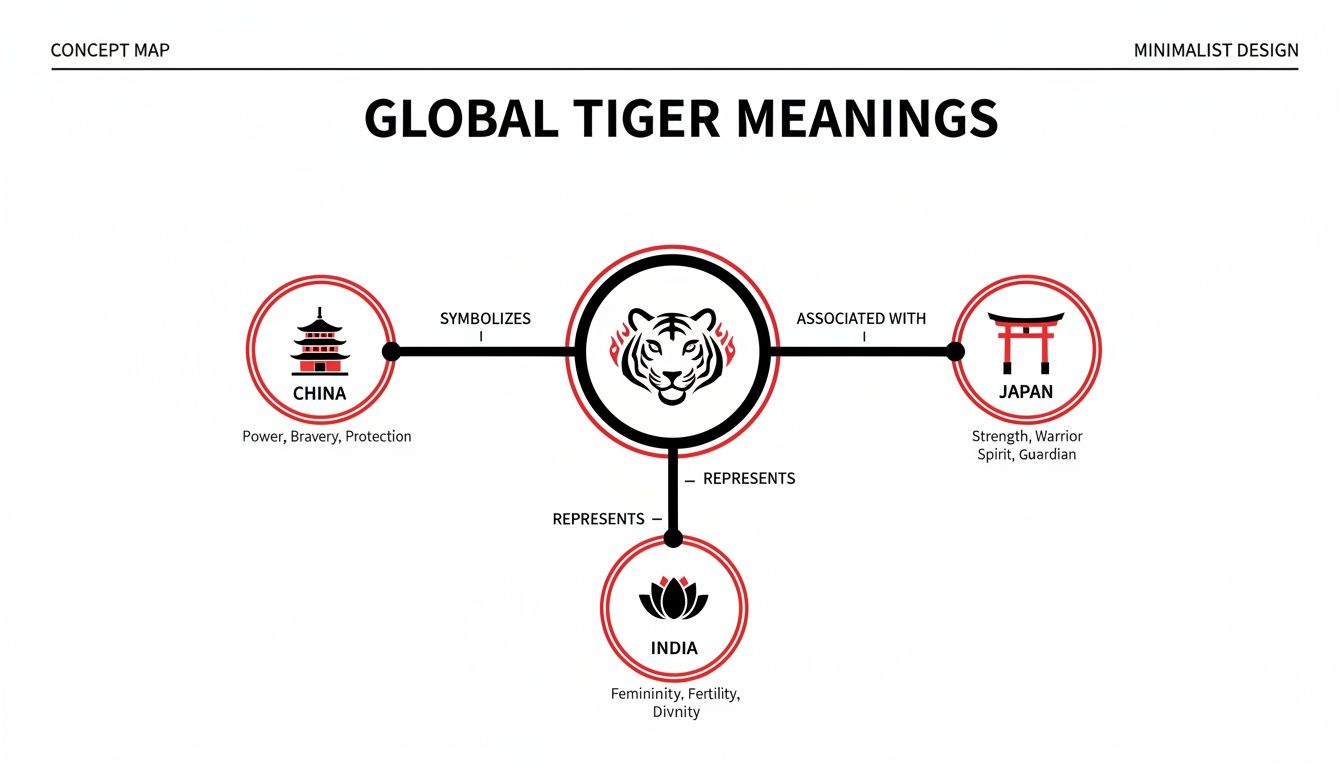
You can see how the central idea of power shifts—from a regal protector in China and a spiritual guardian in Japan to a symbol of divine strength in India.
The Power of Supporting Motifs
Especially in larger, more complex pieces, a tiger rarely stands alone. The elements it’s paired with create a kind of symbolic conversation, adding depth and balance to the tattoo’s story. Getting these pairings right is how you craft a truly rich narrative.
Combining a tiger with another element isn't just for looks; it's a way to create a balanced narrative. It’s the difference between a simple statement of raw power and a more nuanced story of strength guided by wisdom or prosperity.
Some of the most powerful and time-honored pairings include:
- Tiger with a Dragon: This is the ultimate Eastern motif, the perfect balance of power. The tiger represents earthly, physical strength, while the dragon embodies celestial, spiritual force. Together, they create a perfect harmony—the yin and yang of the universe.
- Tiger with Bamboo: Bamboo is famous for its resilience and flexibility; it bends but never breaks. A tiger moving through a bamboo forest symbolizes strength tempered with adaptability. It’s about having the wisdom to overcome obstacles with endurance, not just brute force.
- Tiger with Peonies or Cherry Blossoms: Pairing the ferocious tiger with delicate flowers creates a stunning and meaningful contrast. Peonies, known as the "king of flowers" in Chinese culture, represent prosperity, honor, and beauty. This combination suggests that true power is balanced with grace and that immense strength can also be a protector of delicate beauty.
Choosing Your Tattoo Style: American Traditional vs. Japanese Irezumi
The meaning behind a tiger tattoo is inseparable from its artistic style. Think of it like a story: the words might be the same, but the tone of voice changes everything. In tattooing, the style you choose is that voice, shaping how the tiger’s power, courage, and protective spirit are ultimately expressed.
When it comes to this powerful motif, two of the most timeless and respected styles are American Traditional and Japanese Irezumi. Choosing between them isn’t just about looks; it's a choice between two completely different cultural philosophies. Each has its own rules, history, and symbolic language that will define your tattoo's final story.
American Traditional: The Bold Statement
American Traditional tattoos are the definition of unapologetic strength. This style, born in the early 20th century, is all about bold black outlines, a limited primary color palette (think rich reds, deep greens, and golden yellows), and simple, punchy compositions.
An American Traditional tiger is a direct, in-your-face symbol of ferocity and raw courage. There's less focus on complex mythology and more on creating a visceral, immediate feeling. The tiger stands alone as an icon of power, designed to be instantly recognizable and to hold up for decades, looking just as bold as the day it was done.
Japanese Irezumi: The Flowing Narrative
Japanese tattooing, or Irezumi, comes from a completely different place. It isn't about a single image; it’s about creating a complete, flowing composition that works with the anatomy of your body. An Irezumi tiger is almost always part of a larger story, often shown alongside elements like wind, water, or bamboo.
This style uses varied line weights, incredible detail, and rich, subtle color gradients to create a powerful sense of movement and life. The symbolism here is much deeper and more layered, touching on themes of spiritual guardianship, finding balance with nature, and protection from evil. To go deeper, you can explore the rich world of Japanese traditional tattoo symbolism in our detailed guide.
The choice is between a roar and a whisper. American Traditional shouts its power from a distance, while Japanese Irezumi tells a complex story that reveals more the closer you look.
To really nail down the differences, it helps to see them side-by-side. Here’s a quick breakdown of how each style approaches the tiger.
American Traditional vs. Japanese Style Tiger Tattoos
| Characteristic | American Traditional | Japanese (Irezumi) |
|---|---|---|
| Linework | Bold, clean, black outlines | Varied line weights, detailed and fluid |
| Color Palette | Limited, primary colors (red, yellow, green, black) | Rich, nuanced color gradients and extensive black and grey shading |
| Symbolic Focus | Raw power, bravery, ferocity | Protection, strength, balance with nature, spiritual guardianship |
| Composition | Often a single, bold, standalone image | Integrated into larger compositions with background elements (wind, water) |
| Common Placement | Arms, thighs, chest pieces | Full back pieces, sleeves, body suits that flow with anatomy |
Ultimately, one style isn’t "better" than the other—they just speak different languages. The right choice depends entirely on the story you want your tiger tattoo to tell.
How Placement Adds Another Layer of Meaning
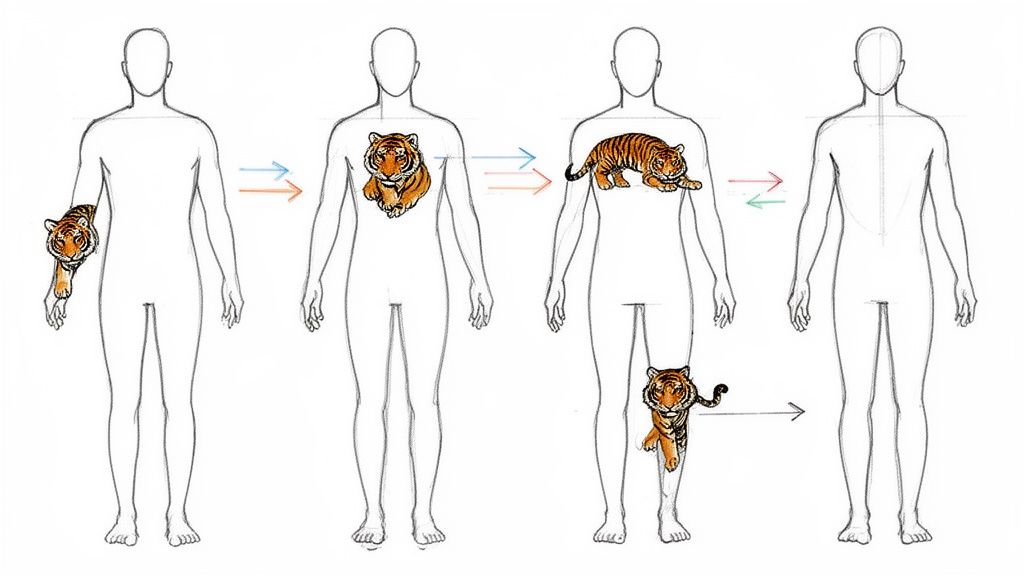
Just like the style and other imagery, where you put a tiger tattoo on your body adds another crucial layer to its story. The spot you pick isn’t just about what looks good; it’s a deliberate choice that can dial up or completely refine the tattoo's core message.
Think of it this way: your body is the canvas, but the placement is the frame that gives the art its final, undeniable context.
A tiger on the arm or bicep, for instance, is a classic move for a reason. This placement is all about showing your strength to the world. It’s visible, it’s dynamic, and it moves right along with you, making it the perfect spot for a tiger that shouts about your courage and readiness to take on whatever comes your way.
On the other hand, a chest piece is a deeply personal and powerful statement. Slapping a tiger right over your heart turns it into a guardian of your deepest passions, emotions, and beliefs. It's a symbol of fierce protection over the things that make you who you are.
Strength From Within and the Path Forward
The meaning keeps shifting as we move around the body. Every location tells a slightly different tale, connecting the tiger's raw power to a specific piece of your identity.
- The Back: A big back piece offers a massive canvas for an epic story. A tiger here often stands for your foundational strength—the very bedrock of your character. It can also be seen as a protector watching your back, guarding you as you move through life.
- The Legs: Tattoos on the thigh or calf are tied directly to movement and progress. A tiger placed here symbolizes your unstoppable drive to push forward, crush obstacles, and stay grounded on your journey.
Your body’s anatomy is a roadmap for meaning. A skilled artist doesn't just place a design on you; they integrate it with the natural flow of your muscles, making the tiger feel alive and enhancing its symbolic weight.
Picking the right spot is a conversation between you and your artist. A true professional can guide you on how a design will flow with your body's natural lines, making sure the final piece not only looks incredible but powerfully tells the exact story you want it to.
Bringing Your Custom Tiger Tattoo to Life
Bringing all the history and heavy symbolism of a tiger into a piece of art that lives on your skin is a true collaboration. It's a journey that goes way beyond just pointing at a design on the wall. This is about co-creating a personal emblem that carries the exact weight and meaning you need it to.
That journey from an idea to a finished tattoo starts with one absolutely critical step: finding an artist who not only has incredible technical skill but also gets the cultural and artistic weight of the style you’re after. A great artist is your guide and your translator, making sure your story gets told the right way.
The Collaborative Design Process
The whole thing kicks off with the consultation. This is where you and the artist talk it all out—your ideas, the meanings you want to capture, and the symbolism that really hits home for you. Your artist will listen, ask the right questions, and offer their expertise on how to best translate your story into an image that flows with your body.
From there, we move into the design phase. The artist takes all those concepts and begins sketching, turning your narrative into a visual language. This is where abstract ideas about strength, balance, or protection start to become concrete lines and shapes, custom-drawn to fit and flatter your unique anatomy.
A custom tattoo is a partnership. The best results always come when a client’s personal vision is combined with an artist’s technical skill and deep knowledge of tattoo tradition. The final piece should feel like a true reflection of you, executed with timeless craftsmanship.
Finally, once the design is perfect and the stencil is on, the real work begins. A skilled, steady hand ensures every line is clean, every shade is packed in solid, and the final piece is a powerful work of art built to look incredible for decades.
Making sure you connect with the right professional is everything. To help you get started, our guide on choosing the right tattoo artist at the best Long Island tattoo shops is packed with practical advice for finding your perfect match.
Still Have Questions About Tiger Tattoos?
Even after digging into the history and symbolism, you probably still have a few questions rolling around in your head. That’s a good thing—it means you’re taking this seriously. Let’s tackle some of the most common ones we hear from clients in the studio.
Are There Any Negative Meanings for a Tiger Tattoo?
It’s a fair question. While tiger tattoos are overwhelmingly seen as symbols of power and courage, context is everything. A tiger depicted in a frenzy of violence or destruction can, of course, represent untamed aggression or ruthlessness.
But honestly, this is rare in well-executed tattoo art. The artist’s design and your personal intention are what truly define the meaning. A thoughtfully composed piece almost always channels the positive, powerful energy the tiger is known for.
What’s the Symbolic Difference Between a Tiger and a Lion Tattoo?
This comes up a lot. Both are apex predators and symbols of strength, but they carry very different cultural weight.
Think of the lion as the social king. It represents royalty, leadership, and the family unit (the pride), with deep roots in Western and African cultures. In contrast, the tiger is a solitary hunter. It symbolizes raw individual power, independence, and a wilder, more primal ferocity, with strong ties to Eastern and Asian symbolism. The choice really boils down to whether you identify more with regal, community-focused strength or untamed personal power.
How Much Does a Custom Tiger Tattoo Usually Cost?
The cost of a custom tiger tattoo can vary wildly depending on a few key factors: the final size, the complexity of the design, the placement on your body, and the individual artist's hourly rate. When you come to a high-end studio like ours, you're not just paying for ink; you're investing in years of expertise for a one-of-a-kind piece of art.
A smaller, simpler tiger design might start in the low hundreds. But for a large, intricate piece—like a full back piece or a sleeve—you're looking at a multi-session investment that will run into several thousands of dollars. The only way to get a real number is to come in for a consultation where we can map out your vision and give you a precise quote.
Once you’ve made that investment, proper healing is non-negotiable. For a complete guide, check out our detailed answers to common tattoo aftercare frequently asked questions.
Ready to bring your own symbol of power to life? The artists at Fountainhead New York specialize in creating custom tattoos with deep meaning and timeless style. Book your consultation today.


