

On the hunt for a real-deal American traditional tattoo in NYC? You’ve come to the right place. The city isn’t just a great spot to get this kind of work—it’s the historic heart of the entire style, with a legacy that beats strong in world-class studios from Manhattan all the way out to Long Island.
This isn't just a style of tattooing; it's the original blueprint, defined by its clean, bold lines, a punchy and limited color palette, and timeless designs that are literally built to last a lifetime.
The Enduring Legacy of American Traditional Tattoos in NYC
American Traditional tattooing is more than an aesthetic—it's a piece of living history etched right into the skin. Think of it as the foundation of modern tattooing, a style forged in the salty air of naval voyages and on the gritty streets of early 20th-century America. Its visual language is direct, powerful, and instantly recognizable.
At its core, this style is engineered for one thing: longevity. Every single element is intentional, designed to look just as crisp and vibrant decades from now as it does the day you walk out of the studio.
- Bold, Black Outlines: This is the non-negotiable bedrock of the style. Thick, clean lines create a powerful frame that holds the entire design together and, most importantly, prevents it from blurring into a mess over time.
- A Simple, Powerful Palette: The color scheme is traditionally limited but incredibly potent. We're talking deep reds, rich greens, bright yellows, and solid, packed-in black. This approach guarantees maximum contrast and a visual punch that lasts.
- Iconic and Readable Imagery: Eagles, anchors, roses, skulls, and daggers are the classics for a reason. Each symbol is drawn with absolute clarity and minimal fluff, making it easy to "read" from across a room.
The New York City Connection
While sailors undoubtedly carried tattooing across the globe, New York City is where it dropped anchor, put down roots, and evolved into a legitimate, professional trade. The city's bustling port and tough, working-class neighborhoods were the perfect breeding ground for this rugged art form. It was right here that the foundational techniques and flash designs were honed, creating a style that was distinctly American.
The story of professional tattooing in the United States really kicks off in Manhattan. Back in 1870, a man named Martin Hildebrandt opened what's widely believed to be the first American tattoo shop at 77 James Street, laying the groundwork for the entire industry. His work, and that of his famously tattooed daughter Nora who toured with circuses, helped drag the art form from the docks into the public eye.
American Traditional isn't just a style; it's a commitment to art that endures. The principles of bold lines and solid color aren't just for looks—they are a time-tested formula for a tattoo that will age gracefully, becoming a true part of you.
This rich heritage is carried on today by dedicated artists who respect its history while still pushing its boundaries. The scene for American traditional tattoos in NYC and out on Long Island is absolutely thriving, filled with studios that honor the craft's origins. Understanding this legacy is the first step in truly appreciating the art you’re about to invest in.
For a much closer look at what makes this style tick, you can dive into the fundamentals with our detailed guide on Traditional American Tattoos.
How to Identify a Quality American Traditional Tattoo
Learning to spot a high-quality American Traditional tattoo is a bit like developing a taste for good whiskey—once you know what to look for, you can’t go back. Not every tattoo that calls itself "traditional" is built the same. The best pieces aren’t just cool designs; they're technically sound works of art engineered to look great for decades.
Think of an exceptional tattoo as having three core pillars: unwavering lines, fully packed color, and a design that actually fits the body. When an artist nails these fundamentals, you get a tattoo that’s both visually powerful and incredibly durable. This knowledge helps you go from being just another client to an educated collector, empowering you to invest in art that will truly stand the test of time.
This infographic breaks down the core components of the style.
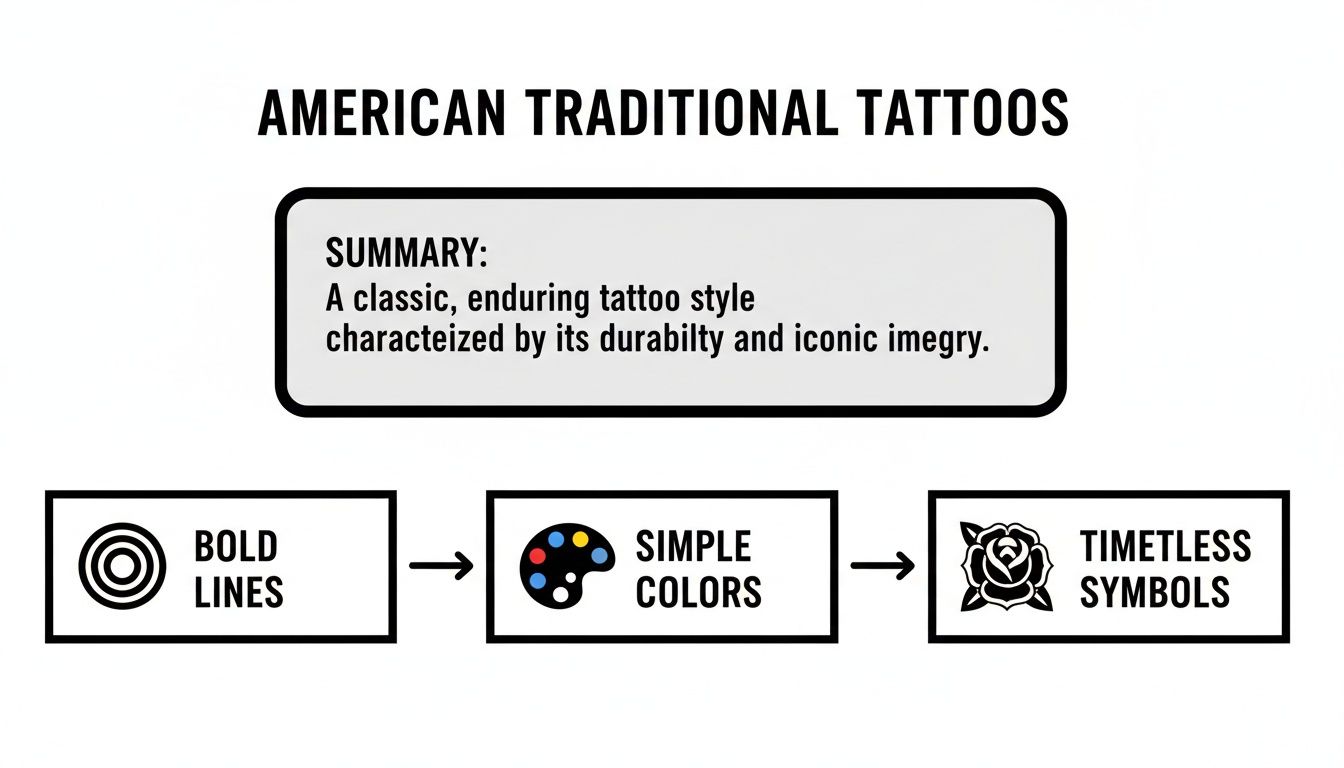
As you can see, the whole style is built on a foundation of bold lines, a simple but powerful color palette, and classic, readable symbols.
The Anatomy of Bold Lines
The single most critical element in American Traditional is the linework. These lines are the skeleton of the tattoo, holding everything together and defining the image with absolute clarity.
What you’re looking for is consistency and confidence. The lines should be one solid weight from start to finish—no wobbles, breaks, or "blowouts" where ink spreads under the skin and makes things look fuzzy. Imagine drawing a perfect circle in one smooth motion versus sketching it with a dozen hesitant little strokes. A great tattoo artist's linework has the confidence of that single, perfect motion.
The Power of Saturated Color and Solid Black
Once the lines are in, the color and shading bring the design to life. In traditional tattooing, the goal is full saturation. This means the color is packed into the skin so densely that you don't see any light or patchy spots, which artists sometimes call "holidays."
Look for richness and uniformity.
- Color Fields: A patch of red should be a solid, vibrant field of red, not a washed-out pinkish tone with lighter areas.
- Black Shading: Black should be deep and velvety smooth. While shading often uses a "pepper shade" or stippled look, it should still feel intentional and evenly distributed, never blotchy.
This meticulous packing is what ensures the colors stay bright and the contrast remains sharp for years to come. A poorly saturated tattoo might look okay when it’s fresh and angry, but it will heal faded and weak.
A healed photo is the ultimate truth-teller. Fresh tattoos can hide flaws with swelling and redness, but a photo of a tattoo that's six months or a year old will reveal the artist's true skill in both linework and color packing.
Design That Flows With the Body
A great tattoo doesn't just sit on the skin; it flows with it. The best traditional tattoos are designed with placement in mind, respecting the natural curves and shapes of the body part they live on.
A well-designed piece looks like it belongs there, whether it's a proud eagle on a chest or a coiled snake wrapping a forearm. The artist should consider how the design will move, stretch, and look from different angles. This attention to composition is what separates a mere "sticker" tattoo from a truly integrated piece of body art that enhances your anatomy. When you're looking for an artist for American traditional tattoos in NYC, their ability to nail this flow is a huge sign of expertise.
To make it even simpler, here's a quick reference guide to help you identify expert craftsmanship when you're checking out an artist's portfolio.
Hallmarks of a Quality American Traditional Tattoo
| Element | What to Look For (High Quality) | What to Avoid (Low Quality) |
|---|---|---|
| Linework | Confident, consistent, single-pass lines. No wobbles or fuzzy edges. | Shaky, inconsistent, or "blown out" lines. Lines that are too thin. |
| Color | Fully saturated, vibrant, and evenly packed. No light spots or gaps. | Patchy, washed-out color. Colors that bleed outside the lines. |
| Black | Solid, rich, and velvety. Smooth, intentional "pepper" shading. | Greyish or inconsistent black. Blotchy, muddy, or uneven shading. |
| Composition | Flows with the body's natural shape. Looks good from all angles. | Awkward placement. Looks like a sticker slapped on the skin. |
| Readability | Design is clear and easy to identify, even from a distance. | Cluttered, muddy details. The image is hard to make out. |
| Aging | Bold lines and solid color hold up over decades. | Fades quickly, lines blur together, and colors look weak after a year. |
Ultimately, training your eye to see these details is the best tool you have. A little bit of knowledge goes a long way in ensuring the tattoo you get is one you'll be proud of for the rest of your life.
Navigating the NYC and Long Island Tattoo Scene
New York's tattoo scene is a massive, incredible ecosystem. It's also completely overwhelming if you don't know where to start, whether you're getting your first piece or your fiftieth. While Manhattan holds a legendary status in tattoo history, the real action has exploded across the five boroughs and, more and more, onto Long Island. This is a huge win for anyone looking for world-class American traditional tattoos in NYC or just a train ride away.
Savvy collectors are realizing that a quick trip out of the city opens up a whole different world. Studios on Long Island often offer a more focused, laid-back vibe compared to the non-stop pace of Manhattan. It's a different kind of experience—less rush, more personal attention, but with the exact same caliber of artistry you’d demand from a top-tier city shop.

Vetting Studios and Artists
Finding the right shop is about so much more than just finding an artist whose work you like. You’re looking for a professional, clean, and inspiring space. Your research needs to go deeper than a quick scroll through an Instagram feed.
When you're checking out a studio, keep an eye out for three non-negotiables:
- Hygiene and Professionalism: Is the shop spotless? Look for signs of proper sterilization, like autoclaves and artists opening fresh, single-use needles for every client. The crew should be professional, easy to communicate with, and happy to walk you through their safety protocols.
- Artistic Integrity: Does the studio have a clear point of view? A truly great shop is a curated team of artists who all share a deep commitment to quality, even if their specific styles vary. Their portfolios should be solid, showing a consistent history of excellent work, not just a few lucky shots.
- Client Experience: What are people saying? Dig into reviews and testimonials to see how past clients felt about their time there. A top-tier studio makes sure every client feels heard, respected, and comfortable from the first email to the final aftercare rundown.
The Power of the Guest Artist
One of the best things about the New York scene is the constant flow of guest artists. World-renowned tattooers from all over the globe will often do short residencies at premier studios. This gives you a rare shot at getting work from an artist you’d otherwise have to fly thousands of miles to see.
Guest spots bring a fresh injection of skill and perspective into the local scene. For a collector, it means the global tattoo community is literally coming to your doorstep.
The absolute best way to stay in the loop is to follow your favorite local shops on social media. Guest artist announcements can drop without much warning, and their books fill up in a flash. You need to be ready to send your inquiry the moment you see the post. Getting a piece from a traveling artist is an incredible way to add something truly unique to your collection from someone at the absolute top of their game.
Whether you're exploring the historic parlors of the city or venturing out to find the incredible talent thriving just a train ride away, your options are better than ever. To see what we mean, check out our guide on some of the best Long Island tattoo artists who are seriously pushing the craft forward.
Choosing Your Artist and Booking Your Appointment
Finding the right artist for your American Traditional tattoo is a lot like picking a creative partner. It’s about more than just liking their art; you’re looking for someone whose specific style, vision, and way of working click with exactly what you have in mind. Getting this step right is everything—it ensures the final piece isn’t just technically solid, but something you’ll be proud to wear for the rest of your life.
The whole thing kicks off with some serious research. Your mission is to find an artist whose portfolio is packed with tattoos you’d genuinely want on your own skin. Don't just settle for "good" work. Look for the specific details that really speak to you.
How to Meticulously Review Portfolios
An artist's portfolio is their visual resume, and you need to learn how to read it. For most tattooers today, Instagram is the go-to portfolio, offering a constant stream of fresh and healed work. As you scroll, pay close attention to their unique spin on the traditional style.
- Analyze Their Style: Does their work have that classic, Sailor Jerry vibe, or do they lean more toward a modern, neo-traditional flair? Look at their color palettes, the weight of their lines, and the common themes they tattoo.
- Look for Healed Photos: This is 100% non-negotiable. A fresh tattoo almost always looks good, but a healed photo is the true test of skill. A tattoo done right will look crisp, bold, and fully saturated years down the road.
- Check for Consistency: A strong portfolio shows a high level of quality across the board. You want to see clean lines, solid color, and thoughtful design in every single piece, not just a few cherry-picked highlights.
Beyond social media, some artists also manage their work and bookings through a dedicated app for artists, which can be a great way to see their best pieces without the clutter of a social feed.
Mastering the Booking Process
Once you've zeroed in on an artist you love, it's time to reach out. This is where clear communication and good etiquette come into play, setting the stage for a great relationship from the start. Most professional artists have a specific way they handle bookings, usually detailed on their website or Instagram bio.
Think of your booking inquiry as the first step in a collaboration. A clear, concise, and respectful request that follows the artist's instructions shows them you value their time and their craft.
You'll typically need to fill out a form or send an email. To make the process go smoothly for everyone, have this information ready:
- A Clear Description of Your Idea: Be specific but not rigid. Instead of just "an eagle," try something like, "an American Traditional eagle, perched on a branch, in a style similar to the one you did back in March."
- Size and Placement: Give the approximate size in inches and state exactly where on your body you want the tattoo. Attaching a clear, well-lit photo of the body part is incredibly helpful.
- Reference Images: Include a few high-quality images that capture the mood or concept you're after. These are for inspiration, not for the artist to copy directly.
Understanding Consultations and Deposits
For larger, more complex custom tattoos, an artist might want to schedule a consultation first. This is just a brief meeting, either in person or online, to hash out your idea, take a tracing of the area, and make sure you’re both on the same page. It’s your chance to confirm they’re the right fit for your vision.
Finally, you will almost always be asked to leave a deposit to lock in your appointment. This is standard practice in the industry. The deposit is not an extra fee—it’s a commitment from both of you. It holds your spot in their busy schedule and gets deducted from the final price of your tattoo, ensuring the artist's time is respected and confirming you’re serious about getting the work done.
What to Expect: Cost, Appointments, and Studio Etiquette
Alright, let's get into the nuts and bolts. You've scrolled through endless portfolios, found the artist, and you're ready to make it happen. Now it's time to talk money, scheduling, and the unwritten rules that make for a great experience. Getting your head around the cost and proper studio etiquette beforehand is key—it ensures everything goes smoothly and respectfully, setting the stage for a tattoo you'll love for life.
Think of a quality tattoo as a commission for a piece of permanent art, not just another purchase. The price tag is a direct reflection of an artist's years of training, their unique skill, the quality of their gear, and the hours they’ll dedicate just to your design. Chasing the cheapest deal is a recipe for regret; you’ll often end up paying a lot more down the road to get it fixed or covered up.
Breaking Down the Price Tag
In the world of American traditional tattoos in NYC and Long Island, pricing usually works in one of two ways. Knowing the difference will help you set a realistic budget.
-
Flash Designs (Flat Rate): These are the tried-and-true, pre-drawn designs you see plastering the studio walls—the real classics. Since the art is already done, artists can give you a set price right up front. It’s a fantastic, time-honored way to get a piece of iconic art with zero guesswork on the cost.
-
Custom Pieces (Hourly Rate): If you're after a one-of-a-kind design made just for you, the artist will almost always charge by the hour. Rates around NYC vary a ton based on an artist's experience and how in-demand they are, so expect to pay a premium for top-tier talent. The clock starts ticking when the needle starts buzzing and pauses for any real breaks.
For bigger custom work, your artist can give you a ballpark estimate on the time, but remember, it’s just a guide. A bunch of things can change the final session time, like how complex the design is, where it's going on your body, and honestly, how well you sit.
What to Expect on Appointment Day
The day you get tattooed is when the real collaboration begins. First thing, you'll go over the final design with your artist. This is your last chance to speak up about any small tweaks before they make the stencil. Don't be shy.
Next up is placement. The artist will apply a purple stencil of the design to your skin, moving it around to make sure it flows perfectly with the lines of your body. Be honest here—getting the placement dialed in is absolutely critical. Once you give the final "hell yeah," it’s time to settle in and let the artist do their thing.
Studio etiquette isn't some rigid list of rules you have to memorize. It all boils down to mutual respect. A professional, clean, and focused vibe lets the artist create their best work and makes sure you have a positive, memorable experience.
Essential Studio Etiquette
Walking into a tattoo studio with a bit of common sense and courtesy goes a long, long way. It shows respect for the artist, their space, and the craft itself.
-
Arrive on Time & Prepared: This is huge. Show up clean, sober, and having eaten a solid meal within a few hours of your appointment. Being well-rested helps, too. This isn't just about being polite; it prepares your body for the physical stress of getting tattooed.
-
Trust Your Artist: You picked them for a reason—their skill and artistic vision. Let them do their job. Micromanaging the process or questioning every decision just throws off their focus and can lead to a worse tattoo.
-
Tip Your Artist: Just like any other service industry, tipping is standard practice and very much appreciated. A tip of 15-25% is the general range and is a great way to show you value their skill, time, and hard work.
-
Communicate Clearly: If you need to tap out for a minute, feel lightheaded, or just have a question, say something. A good artist wants you to be as comfortable as possible through the process.
Your Guide to Tattoo Preparation and Aftercare
Getting a great tattoo is a team effort, and your part of the job starts long before you sit in the chair. How you prep your body and care for your new ink afterward is just as important as the artist’s skill. Think of your skin as the canvas for a painting; a well-prepped canvas always makes for a better final product. Following a solid prep and aftercare plan is the best way to ensure your tattoo heals sharp and stays bold for years to come.
The real work begins about 48 hours before your session. Hydration is key—well-hydrated skin takes ink more easily, which makes the whole process smoother for you and your artist. On the day of, make sure to eat a solid meal a few hours before you come in. This keeps your blood sugar stable and helps you manage the pain so much better.
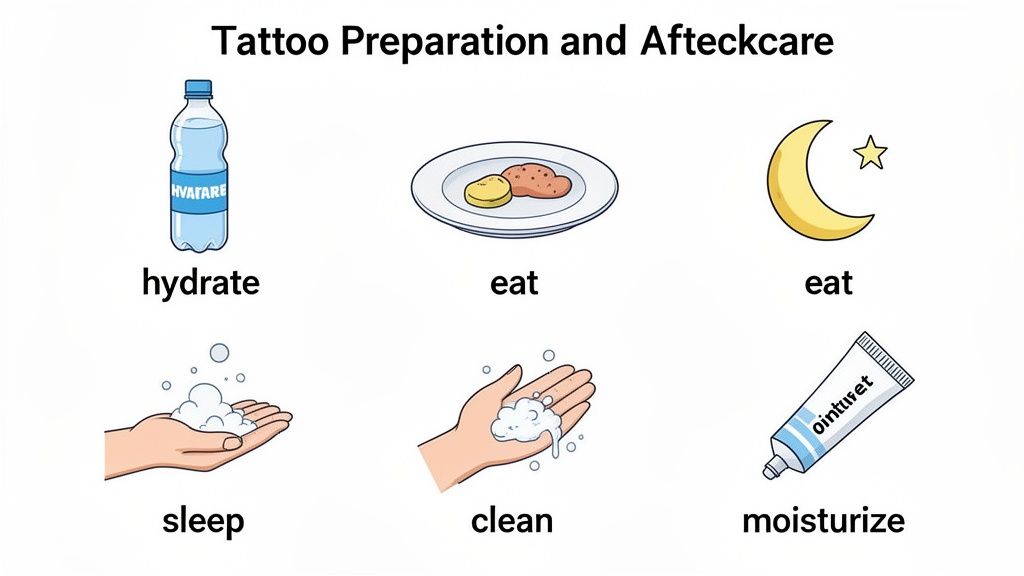
Before Your Appointment: A Simple Checklist
Getting your body ready is pretty straightforward. You just need to give it what it needs to handle the stress of being tattooed and to kickstart the healing process the right way.
- Hydrate Well: Start chugging water one to two days before your appointment. It makes a huge difference.
- Eat a Good Meal: A balanced meal with carbs and protein will keep you from feeling dizzy and give you the stamina to sit through the session.
- Get a Full Night's Sleep: A rested body is a resilient one. Don't show up exhausted from a late night out.
- Avoid Alcohol and Blood Thinners: Stay away from alcohol for at least 24 hours beforehand. It thins your blood and can cause excess bleeding during the tattoo, which affects how the ink settles. Same goes for aspirin.
Aftercare: The Blueprint for a Perfect Heal
Once the tattoo is done, your artist will clean it up and bandage it. This is where your job really begins. A fresh tattoo is essentially an open wound, and treating it right for the first few weeks is crucial for preventing infection and ensuring the ink heals perfectly into your skin.
A tattoo isn't truly finished until it’s fully healed. Your aftercare routine is the final, crucial step in the artistic process, protecting both your health and your financial investment in permanent body art.
The healing journey takes time, so be patient. For a complete day-by-day guide, you can check out this detailed tattoo aftercare timeline that breaks down every stage. In general, the process involves a few key steps that you'll repeat for about two to four weeks.
- Listen to Your Artist: They will give you specific instructions based on your tattoo. Follow them to the letter. Their advice is tailored to their work and your skin.
- Gentle Cleaning: After you take off the initial bandage, wash the tattoo gently with lukewarm water and a mild, fragrance-free soap. Pat it dry with a clean paper towel—never rub it.
- Light Moisturizing: Apply a very thin layer of an artist-recommended aftercare ointment or unscented lotion. The goal is to keep it from drying out, not to suffocate it with a thick glob of product.
- Protect from Sun and Soaking: Keep your new tattoo out of direct sunlight and absolutely do not submerge it in water. That means no pools, hot tubs, or long baths until it's fully healed.
Proper care is what ensures your investment in an American traditional tattoos NYC style will look as bold and crisp as it was meant to—not just for a few months, but for a lifetime.
Your Top Questions About Traditional Tattoos, Answered
Even with a solid plan, stepping into the world of traditional tattooing can kick up a lot of questions. This is especially true when you're navigating a scene as deep and talented as New York's. Getting straight answers is the best way to move forward feeling confident about your investment.
We’ve put together a rundown of the most common questions we hear from collectors, from first-timers to seasoned veterans, who are looking to get American traditional tattoos NYC style. This will help you budget right, understand why this style lasts a lifetime, and decide which creative direction is the best fit for you.
How Much Do Traditional Tattoos Cost in NYC?
Let's be real—cost is a huge factor, and you need to have a realistic budget in mind. Tattoo pricing in the New York City and Long Island area really depends on the artist's reputation, the shop's baseline rate, and the specifics of your piece.
For classic, pre-drawn flash designs, you're almost always looking at a flat rate. A straightforward, palm-sized piece of flash will likely start in the $250 - $400 range. Of course, bigger or more complex flash is going to cost more.
For custom work, artists typically switch to an hourly rate. This can be anywhere from $200 to over $400 per hour, especially for an artist who is in high demand. It's important to remember what you're paying for: a permanent piece of art from a highly skilled professional.
Do American Traditional Tattoos Actually Age Well?
Absolutely. In fact, they age better than almost any other style because they were designed to. The entire American Traditional aesthetic was engineered for longevity, born in an era long before the fancy machines and inks we have today. It's the core reason the style has stuck around for more than a century.
The secret sauce is in the fundamentals:
- Bold Black Outlines: These lines act as a strong container, keeping the entire design from blurring and spreading out as your skin changes over the decades.
- Solid Color Packing: The artist fully saturates the skin with a limited, high-contrast color palette. This is key to ensuring the tattoo stays bright and readable as it ages.
- Simple, Powerful Imagery: The designs are intentionally clean and uncluttered. This ensures the key features of the tattoo stay clear and don't collapse into an unrecognizable blob down the road.
A well-done traditional tattoo doesn't just get old; it settles into the skin. The lines will soften just enough to look like they belong there, while the colors stay punchy. It develops a timeless, lived-in quality that other styles just can't match.
What Is the Difference Between Flash and Custom?
When you walk into a traditional shop, you've got two main paths to getting tattooed: picking a piece of flash off the wall or working with an artist on a custom design. Neither is better than the other—they just offer two totally different experiences.
Flash tattoos are those pre-drawn, time-tested designs you see covering a studio's walls. Think of them as the "greatest hits" of tattooing—iconic symbols like eagles, roses, skulls, and panthers that have been popular for generations. When you choose a flash piece, you're getting a direct link to that history. The design is ready to go, the price is already set, and it's an authentic way to collect a piece of tattoo history.
Custom work, on the other hand, is a partnership. You bring an idea to an artist, and together you create a completely unique, one-of-a-kind tattoo. This is the way to go if you have a specific vision you want brought to life in that artist's particular style. It takes more planning and usually involves a consultation, but the result is a piece of art that is 100% yours.
Ready to invest in a piece of timeless art that will last a lifetime? The artists at Fountainhead New York specialize in creating powerful American Traditional tattoos, whether you're choosing from classic flash or collaborating on a custom design. Explore our artists' portfolios and book your appointment at https://fountainheadny.com.


