

Your new tattoo is going to take about 2 to 4 weeks to heal on the surface, but the deeper layers of skin can take up to 6 months to fully settle in and regenerate. The aftercare clock starts ticking the moment you walk out of our studio. Nailing this process is the single best thing you can do to keep your new art looking sharp for years to come.
The Tattoo Healing Timeline: What to Expect Day-by-Day
Getting a new tattoo is an investment, and protecting that investment starts now. Think of this initial period as protecting an open wound—because that’s exactly what it is. The first 24 hours are critical. They lay the groundwork for a smooth heal and a vibrant, crisp final result.
While everyone heals at their own pace, the journey from a fresh, tender piece to a settled part of your skin follows a pretty predictable path. Understanding these phases helps you know what's normal and what's not, whether you just got a delicate fine-line piece or a full-color traditional design.
A Visual Guide to the Healing Journey
To give you a clear roadmap for the weeks ahead, we’ve put together a visual timeline breaking down the three main stages of healing.
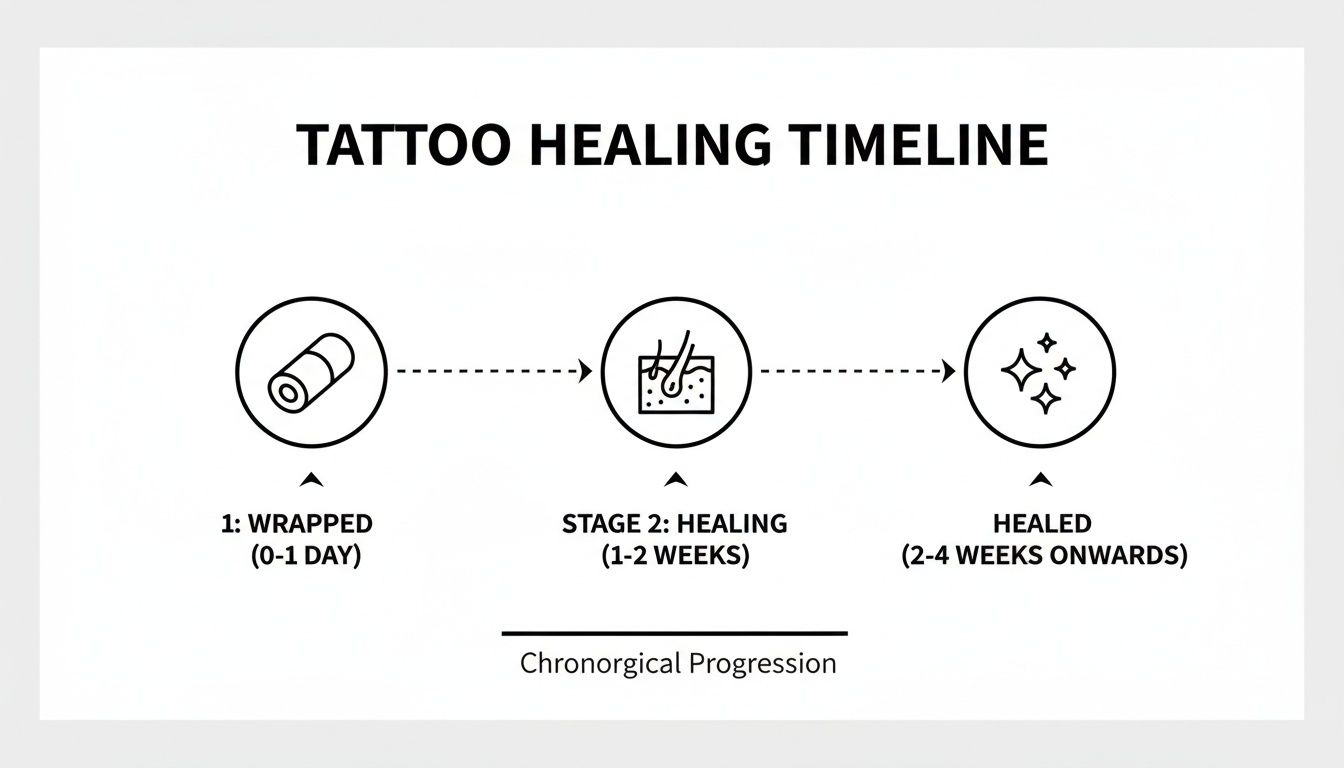
This graphic simplifies the process, taking you from that initial wrapped stage, through the sometimes-annoying peeling phase, all the way to the fully healed artwork. It's a great quick reference for what to expect. Having a solid grasp of how long tattoos take to heal will make the whole experience way less stressful.
Tattoo Healing At A Glance
To break it down even further, here's a quick summary of what to expect, what you'll see and feel, and the most important thing you need to be doing during each phase.
| Healing Stage (Timeline) | What It Looks and Feels Like | Key Aftercare Action |
|---|---|---|
| Days 1-3 | Red, swollen, and tender. It will likely ooze a bit of plasma and excess ink. Basically, it feels like a fresh sunburn. | Keep the initial wrap on for as long as your artist instructed, then start washing it gently 2-3 times a day with antibacterial soap. |
| Days 4-14 | The tattoo will start to feel tight, dry, and itchy. This is when the flaking and peeling starts, much like a healing sunburn. | After each wash, switch from ointment to a very thin layer of unscented lotion. The most important rule: Do not scratch or pick the scabs. |
| Days 15-30 | The top layer of skin looks mostly healed, and the peeling should be done. The tattoo might look a little cloudy or "milky" as the new skin settles. | Keep moisturizing once a day. Now you can start applying sunscreen whenever the tattoo is exposed to the sun. |
This table gives you the core fundamentals of the healing process. Following these simple steps is the best way to ensure your tattoo heals perfectly and looks incredible for the long haul.
Navigating The Critical First Week Of Healing
The first seven days are, without a doubt, the most important stretch in your entire tattoo aftercare timeline. It’s best to think of your new tattoo as a beautiful, delicate open wound. How you care for it now will directly determine its clarity, vibrancy, and how it looks for years to come. Your body is already working overtime to heal, and your job is to give it the perfect, clean environment to do its thing.
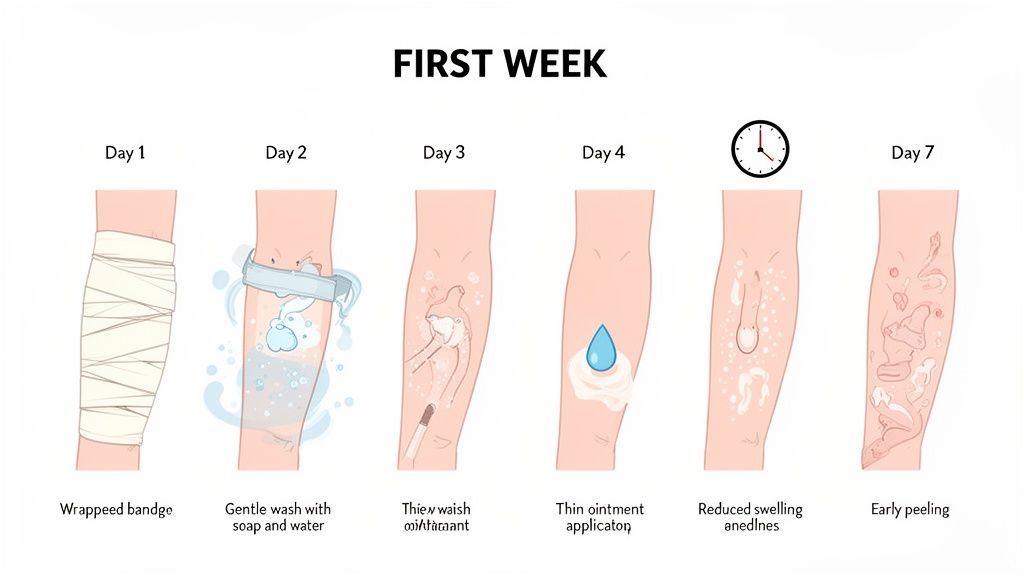
This first week really sets the stage for everything that comes after. From handling that initial swelling to getting through the first peel, your mantra should be consistent and gentle care.
Days 1 To 3: The Weeping Phase
For the first 72 hours or so, expect your new tattoo to be red, a bit swollen, and tender—a lot like a bad sunburn. You’ll also notice it "weeping" some clear or ink-tinged fluid. Don’t panic. This is just a mix of plasma, lymphatic fluid, and a little excess ink, and it's a completely normal part of the healing process.
Your number one job right now is gentle but effective cleaning. We’re not talking about a quick rinse. The goal is to carefully wash away that plasma before it dries and hardens into thick, heavy scabs. Why? Because heavy scabs can rip ink right out of the skin when they fall off, leaving your tattoo looking patchy.
Your routine should look something like this:
- Gentle Cleansing: Always use lukewarm water and a liquid, fragrance-free antibacterial soap.
- Fingertips Only: Lather the soap in your clean hands and gently wash the tattoo in a circular motion. Never use a washcloth, sponge, or loofah—they’re too abrasive and can harbor bacteria.
- Rinse Completely: Make sure every last bit of soap is rinsed away. Leftover residue can dry out and irritate the skin.
- Pat, Don't Rub: Gently pat the area dry with a fresh, disposable paper towel. Skip the bath towel; it can leave behind lint and bacteria.
After it's dry, let the tattoo air out for a few minutes before applying a very thin layer of your recommended aftercare ointment. You want to moisturize it, not suffocate it. For a more detailed breakdown, check out our guide on how often you should be washing a new tattoo.
Days 4 To 7: The Drying And Flaking Stage
Around day four, you'll start to notice a change. The swelling and redness should be mostly gone, and the tattoo will begin to feel tight and dry. This is when the skin regeneration really kicks into gear, and the top layer of damaged skin will start to flake away, kind of like a healing sunburn.
This is a good sign! It means fresh, new skin is forming underneath. But with this stage comes the itch. It can be incredibly intense, but you absolutely must resist the urge to scratch or pick at the flaky skin. Tearing those flakes off too early can pull ink right out with them, causing permanent gaps and faded spots in your tattoo.
Key Takeaway: The single most important rule during this phase is do not scratch or pick. Let the skin peel off naturally on its own, either in the shower or as you gently apply lotion. Your patience here will be rewarded tenfold with a crisp, fully saturated tattoo.
The whole point of this process is about supporting and repairing a damaged skin barrier. This is usually when your artist will tell you to switch from a thicker ointment to a lightweight, unscented lotion. Keep applying a thin layer after each wash to keep the skin hydrated, which will also help take the edge off that maddening itch.
While the surface of your tattoo will look mostly healed in two to four weeks, the layers of skin underneath are still regenerating. A consistent aftercare routine makes a huge difference. In one study, by day 7, between 96-100% of participants using a proper ointment reported little to no discomfort. This just goes to show that the diligence you put in now pays off for a lifetime.
Managing The Itching And Peeling Stages
If the first week is all about diligent cleaning, the next phase is a true test of patience and willpower. Welcome to weeks two and three of your tattoo aftercare timeline—a period defined by some serious itching and a whole lot of peeling. It can be incredibly tempting to pick or scratch, but trust me, this is a fantastic sign that your body is working overtime to regenerate new skin over your tattoo.
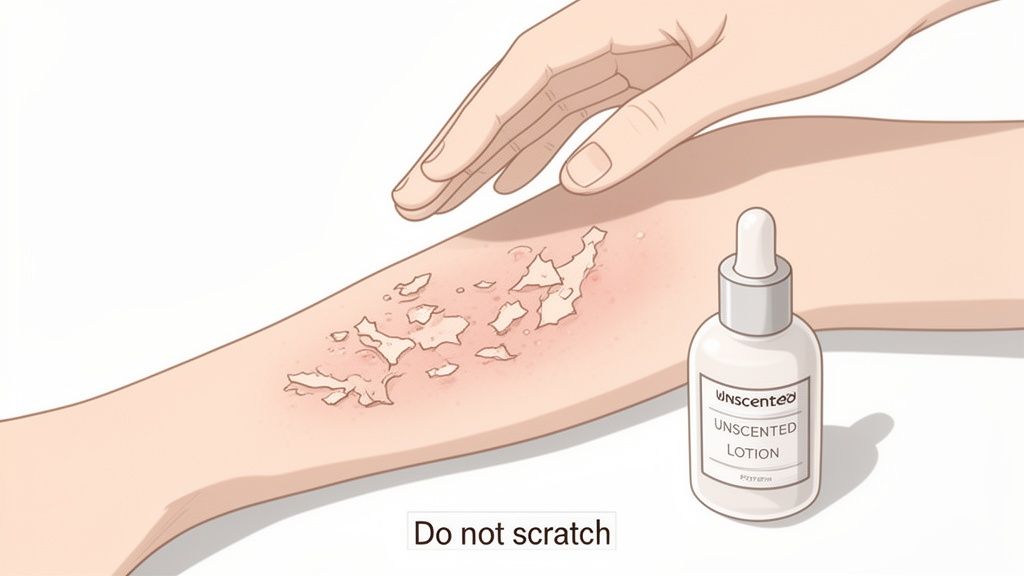
The peeling often looks like a healing sunburn, with thin, ink-colored flakes of skin starting to lift. Your main job here is to resist the urge to "help" them along. Pulling off a flake that isn't ready can reopen the wound, which almost guarantees scarring and can literally pull ink out, leaving a patchy spot in your finished piece.
Making The Switch To Lotion
This stage also marks a crucial shift in your moisturizing routine. The heavy ointment you used for the first few days did its job protecting the open wound. Now that the skin is closing up and starting to peel, it's time to switch to a lightweight, unscented, and dye-free lotion.
This change is non-negotiable because your healing skin still needs to breathe. A thick ointment can suffocate it, trapping moisture and leading to clogged pores or other irritations. A light lotion gives you the hydration needed to soothe the itch and soften the peeling skin without creating a barrier. You can find more details in our guide on what to put on your new tattoo.
Just apply a very thin layer 2-3 times a day, or whenever the area feels tight and dry. Gently rub it in until it’s fully absorbed—you shouldn't see a greasy shine.
Soothing The Itch Without Scratching
That itch can be anything from a mild distraction to a maddening sensation that makes it hard to think straight. Whatever you do, do not scratch. Your fingernails are full of bacteria and can easily tear the delicate new skin.
Instead, here are a few safe ways to get some relief:
- The Gentle Slap: Lightly tapping or slapping the itchy area can provide immediate, temporary relief without causing damage. It sounds odd, but it works.
- Cool Compress: Briefly applying a cool, clean, damp cloth can help calm the irritation. Just make sure it's not too cold or wet.
- Moisturize: More often than not, the itch is just a signal for dryness. A quick application of your lotion can soothe the skin and kill the urge to scratch.
Your skin is doing exactly what it's supposed to. Think of that peeling layer as a natural, protective bandage for the new skin forming underneath. Let it fall off on its own time. Your patience right now will directly impact the vibrancy and clarity of your tattoo for years to come.
This phase is where your gentle, consistent care really pays off. Research shows that picking at scabs can lead to 40% more scarring, while properly moisturizing during the peel can help your tattoo retain up to 25% more color vibrancy. Following a solid aftercare routine makes a huge difference.
Understanding The Cloudy or Milky Phase
Just as the peeling subsides, you might notice something else that can be a little alarming if you're not expecting it. Your tattoo may suddenly look dull, faded, or like it's covered by a milky film. Don't panic—your vibrant ink hasn't vanished.
This is a completely normal and temporary part of the process. You're simply looking at your new tattoo through a fresh, brand-new layer of skin that has just regenerated. It's not fully translucent yet and is still settling in.
Continue to moisturize the area once a day with your lightweight lotion. This daily hydration helps the new skin mature and regain its clarity. Over the next couple of weeks, as this final layer of epidermis fully settles, the "cloudiness" will disappear, revealing the crisp, bright tattoo you've been waiting for. Patience is everything.
Long Term Care For A Lasting Tattoo
So, you’ve made it through the first month. The initial swelling and weeping are distant memories, you’ve conquered the intensely itchy peeling stage, and your tattoo is finally starting to look like, well, a tattoo. From the surface, it probably looks completely healed—the skin is smooth and the flakes are gone.
While you've hit a major milestone, the aftercare journey isn't over. It's just shifting gears.
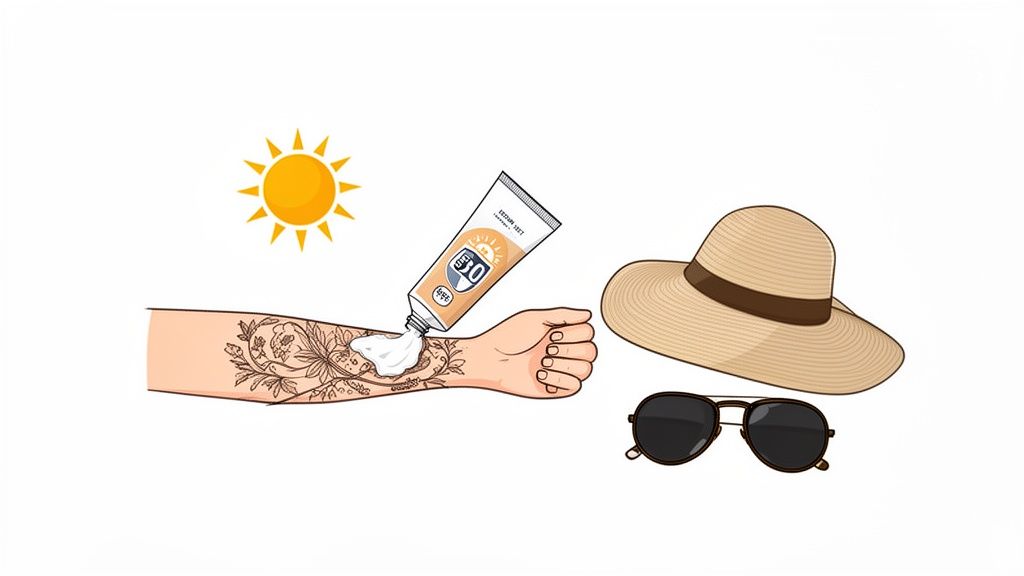
Even though the top layer of your skin (the epidermis) has regenerated, the deeper layers are still working overtime to lock in the ink and fully recover. This final, less intense stage of healing can take anywhere from three to six months. During this period, you’re moving from acute aftercare to a sustainable, long-term maintenance routine.
Getting Back to Your Normal Routine
With the surface fully healed, you can finally reintroduce the activities you’ve been patiently avoiding. The key is to ease back in, not jump in headfirst.
- Swimming and Soaking: Hold off on submerging your tattoo until it's been done peeling for at least two weeks. That means no pools, oceans, hot tubs, or even long baths. Jumping in too soon opens the door to nasty bacteria that can cause serious infections.
- Intense Workouts: You can typically get back to your regular gym routine once the peeling stops. Just be mindful of friction. If an exercise involves clothing or equipment constantly rubbing against the tattooed area, you might want to modify it for a while. Always wash your tattoo with soap and water right after a workout to clear away sweat and bacteria.
Remember, a small tattoo might finish its surface healing in a couple of weeks, but a big project like a sleeve could take a month or more. Even if it looks perfect by Day 30, the real healing is still happening underneath. Sticking to this timeline is critical. Neglecting aftercare can lead to infections, which affect an estimated 10-20% of new tattoos, and can contribute to the 20-40% of fading that happens in the first year without proper maintenance.
Sun Protection: Your Tattoo's Best Friend
If there's one mortal enemy of a tattoo, it's the sun. UVA and UVB rays don't just tan your skin; they penetrate deep and actively break down ink particles. Over time, this is what turns crisp black lines into a blurry, hazy gray and makes vibrant colors look dull and washed out.
The absolute best thing you can do for your tattoo's longevity is to make sun protection a non-negotiable habit. It’s crucial you start understanding the importance of SPF as part of your tattoo’s life.
Key Takeaway: Sunscreen isn't just for the beach. To keep your tattoo looking sharp for decades, you need to apply a high-SPF, broad-spectrum sunscreen every single day it sees the sun.
We recommend a mineral-based sunscreen (look for zinc oxide or titanium dioxide) with an SPF of 30 or higher. These formulas create a physical barrier that’s often less irritating on healed skin than chemical sunscreens. Slather it on about 15 minutes before you head outside and reapply every two hours—more often if you’re swimming or sweating.
When To Think About A Touch-Up
Once you hit the six-month mark, your tattoo is officially settled in for the long haul. This is the perfect time to give it a good, honest look in bright, natural light. Are all the lines perfectly saturated? Did a few stubborn scabs take a fleck of ink with them when they fell off? Is one area just a little less punchy than the rest?
Don’t sweat it—this is completely normal, especially for tattoos on high-movement spots like elbows, hands, and knees. Most artists, including our team here at Fountainhead New York, offer a complimentary touch-up within the first year to address these minor imperfections.
If you spot anything you're unsure about, just reach out. Email us a clear, well-lit photo of your healed tattoo, and we'll schedule a time for you to come in. This final tweak ensures your piece looks as bold and clean as the day we designed it, protecting your investment for a lifetime.
Troubleshooting Common Tattoo Healing Issues
It’s completely normal to stare at your new tattoo and wonder, "Is this supposed to look like this?" Your body is healing an open wound, and a little anxiety is part of the process. While most tattoos heal without a hitch, knowing the difference between a standard healing stage and a real problem is key.
Most of the time, what feels like a major issue is just a normal bump on the road to a beautiful, healed tattoo. But you need to know when to stop WebMD-ing and reach out for professional advice. This guide is here to help you tell the difference.
Normal Healing vs. Potential Problems
It's incredibly easy to mistake the intense itchiness of a healing tattoo for an allergic reaction, or see a bit of redness and assume the worst. The trick is to look at the symptoms in context. How severe are they? What other signs are showing up? This table breaks down what’s normal and what’s not.
| Symptom | Normal Healing (What to Expect) | Potential Red Flag (When to Get Help) |
|---|---|---|
| Redness & Swelling | The skin around the tattoo will be pink or reddish, much like a sunburn. Some mild swelling is common and should go down within 48-72 hours. | The redness spreads far beyond the tattoo's border, feels hot to the touch, or gets worse after day three. Any excessive or painful swelling is a concern. |
| Pain | Expect the area to be tender and sore for the first few days, feeling like a decent sunburn. The discomfort should get a little better each day. | The pain is severe, throbbing, or actually increases after the first couple of days. This is not a normal part of the healing timeline. |
| Itching | Get ready for it—moderate to intense itching is completely normal, especially when the tattoo starts peeling around Days 5-14. | The itching comes with a bumpy red rash, hives, or little pimples right on the tattoo. This could point to an allergic reaction to the ink or aftercare product. |
| Scabbing & Peeling | Light scabbing and thin, flaky peeling (again, like a sunburn) are totally expected. Some of these flakes will be colored with ink. | Scabs are thick, heavy, and ooze a yellowish or greenish fluid. Any foul-smelling discharge or pus is a clear sign of infection. |
Understanding these differences gives you the power to act appropriately. A little redness and peeling is fine; angry, spreading redness is not.
When To Call Your Artist Or A Doctor
Your first line of defense should almost always be your tattoo artist. We’ve seen thousands of tattoos heal and can usually spot what’s normal and what isn’t in a second. That said, there are definitely times when you need a doctor.
Get in touch with your tattoo artist at Fountainhead New York if:
- You’re worried about the amount of scabbing.
- The tattoo looks overly dry, cracked, or "bubbly" from too much ointment.
- You think you might be having a minor allergic reaction to your aftercare lotion.
On the other hand, you need to contact a medical professional immediately if you have any of these symptoms:
- A fever or chills.
- Red streaks spreading out from the tattoo.
- Foul-smelling pus or discharge from the area.
- Excessive pain, swelling, or heat that gets worse over time, not better.
Crucial Insight: Your artist is an expert in tattoos, not medicine. If you suspect an infection, do not wait. Infections can permanently damage your tattoo and, more importantly, pose a serious risk to your health. Call a doctor.
Never hesitate to reach out for guidance. A quick phone call can save you a lot of stress and ensure your new artwork heals perfectly. Making an informed decision is the most important part of the entire aftercare process.
Your Top Tattoo Aftercare Questions, Answered
Once you leave the studio, a million little questions can pop up. Instead of getting lost in contradictory advice from a late-night Google search, here are the straightforward, artist-approved answers to the questions we hear most often.
When Can I Stop Washing My Tattoo So Much?
For the first 3-5 days, you need to be diligent. Washing your new tattoo 2-3 times a day with a fragrance-free antibacterial soap isn't just a suggestion—it's essential. This process gently removes any weeping plasma and surface bacteria, which is key to preventing the formation of thick, heavy scabs that can pull out ink.
After about a week, once the initial peeling really kicks in, you can usually dial it back to once a day. Once all the flaking is completely finished (usually around the two or three-week mark), you can go back to your normal daily shower routine. Just keep being gentle with the area for a little while longer.
Can I Just Use Coconut Oil Or Vaseline?
We get this one a lot, and the answer is a hard no. Please, stay away from Vaseline, petroleum jelly, or any heavy oils like coconut oil while your tattoo is in its initial healing phase. These products are occlusive, which is a technical way of saying they create a barrier that doesn't let your skin breathe.
Trapping moisture and bacteria against what is essentially an open wound is a recipe for disaster. It can lead to clogged pores, nasty irritation, or even a full-blown infection. Your best bet is always a dedicated tattoo aftercare product or the specific light, unscented lotion your artist recommended.
Why Does My Tattoo Look Faded And Cloudy After It Peels?
Seeing your vibrant new tattoo suddenly look dull and cloudy can be alarming, but take a deep breath—it's a completely normal and temporary part of the healing process. We call this the "milky stage."
It happens because a brand new, fresh layer of skin has just regenerated over the ink. This new skin isn't totally translucent yet, giving the tattoo underneath a muted appearance. Just be patient. Keep moisturizing every day, and as that new layer of skin settles in over the next few weeks, your tattoo's true color and vibrancy will pop right back out.
How Soon Can I Get Back To The Gym?
Give it a little time. You'll want to avoid any intense workouts and excessive sweating for at least the first 48-72 hours. After that, you can start easing back into your routine, but you still need to be smart about it. Pay close attention to any movements that might rub or pull on the tattooed skin.
A few ground rules for working out with a new tattoo:
- Wash it immediately after: As soon as you’re done with your workout, head straight to the sink and gently wash your tattoo. Don't let sweat and gym germs sit on it.
- Stay out of certain areas: The gym's sauna, steam room, and especially the swimming pool are completely off-limits for a minimum of 3-4 weeks. You need to wait until the surface of your skin is fully healed and closed over.
At Fountainhead New York, every artist provides detailed aftercare instructions tailored specifically to your tattoo to make sure it heals perfectly. If any questions come up during your healing process or you're ready to book your next piece, get in touch with us online.


