

So, you just walked out of the studio with some incredible new ink. That excitement is exactly what we live for, but now the most important part of the journey begins: healing it properly. Knowing what to put on your tattoo—and when—is the single biggest factor in making sure your art looks as sharp and vibrant years from now as it does today.
The process isn't complicated, but it does change. Think of it like this: first, you protect an open wound, then you moisturize healing skin, and finally, you shield your long-term investment from the sun.
Your Quick Guide to Tattoo Aftercare Products
Proper aftercare isn’t just a friendly suggestion from your artist; it’s a mandatory part of getting a tattoo. What you apply to your skin directly impacts how the ink settles, how the colors stay bright, and how crisp your lines remain for decades to come.
The tattoo world has grown massively, with the market expected to hit USD 4.83 billion by 2032. With so many people getting tattooed, aftercare knowledge is more critical than ever. The wrong product or technique can lead to fading, infection, or a disappointing final result.
Key Products for Each Healing Stage
Walking down the pharmacy aisle can feel overwhelming, but great tattoo aftercare is surprisingly simple. Your needs will evolve as the tattoo heals, but the main philosophy is always "less is more." You just need a super-thin layer of the right product to keep the skin protected and moisturized without suffocating it.
For a soothing, natural option during the healing process, a pure Aloe Vera Gel can be a great addition. Its calming properties can offer gentle relief, especially if the skin feels a little irritated.
Remember: A fresh tattoo is an open wound. The products you choose must be gentle, clean, and completely free of fragrances, dyes, or harsh chemicals that could cause a reaction and mess with the healing process.
This timeline gives you a great visual for how simple the transition is, moving from initial protection to long-term maintenance.
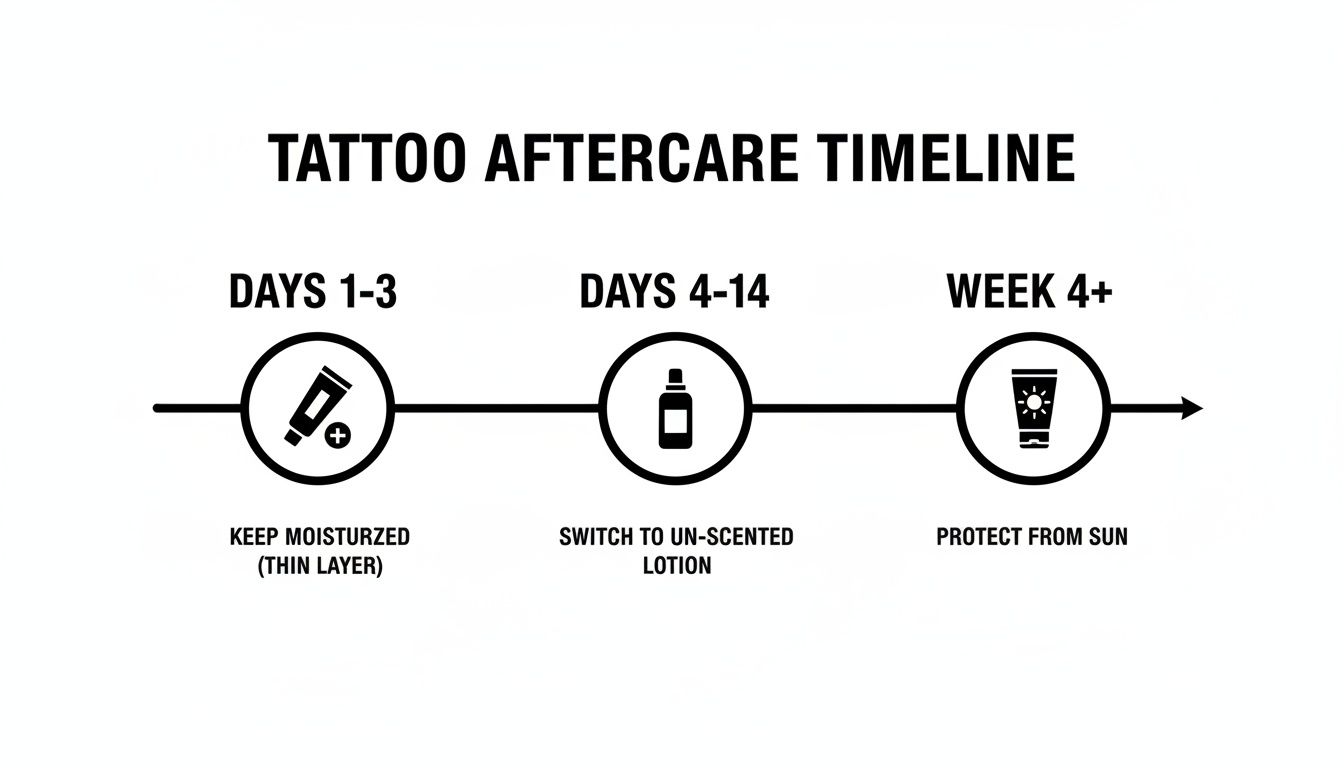
To make it even clearer, here's a quick breakdown of what to use as your tattoo heals.
Tattoo Aftercare Timeline: What to Use and When
This table summarizes our go-to recommendations for each stage of the healing journey.
| Healing Stage | Recommended Product | Application Frequency |
|---|---|---|
| Days 1-3 (Fresh Wound) | Thin layer of antibacterial ointment (like A&D or Aquaphor) | 2-3 times daily, after washing |
| Days 4-14 (Peeling & Itching) | Unscented, gentle lotion (like Lubriderm or Cetaphil) | 2-3 times daily, or as needed for dryness |
| Day 15+ (Healed) | High-SPF sunscreen (SPF 30+), applied over moisturizer | Daily on exposed tattoos |
The key takeaway is that your routine needs to adapt. You start with a protective barrier (ointment), switch to a breathable moisturizer (lotion), and then make sunscreen a permanent part of your daily routine to defend against UV damage. It’s a simple formula for keeping your artwork pristine.
The First 48 Hours: Protecting Your Fresh Tattoo
Those first two days after you leave the studio are, without a doubt, the most critical part of the entire healing process. It's best to stop thinking of your new piece as a finished product and start thinking of it as what it is: a beautiful, open wound. Your absolute top priority is creating a sterile shield against the outside world to kickstart the healing process on the right foot and prevent any chance of infection.
Once your artist's initial wrap comes off, your first move is always to gently wash the area. Use lukewarm water and a fragrance-free, antibacterial soap to carefully clean away any plasma, leftover ink, and blood. When caring for your new tattoo, it's vital to learn the critical distinction between cleaning and sanitizing to ensure you're giving it the best possible care.
After you've washed it, pat it completely dry with a fresh paper towel. Steer clear of your regular bath towels—they can be a breeding ground for bacteria you don't want anywhere near a fresh tattoo. Only then is it time to think about a protective barrier.
Choosing Your Initial Protective Layer
During this extremely fragile stage, the goal is simple: seal out environmental germs while still allowing your skin to breathe. You’ve got two main options, and your artist will have recommended the best one for your specific tattoo, placement, and skin type.
- Protective Tattoo Film: You've probably heard this called "second skin." These are breathable, waterproof bandages that create the perfect healing environment. They lock in the right amount of moisture and protect your new ink from friction and contaminants for several days.
- Sterile Ointment: A very thin, almost invisible layer of a product like Aquaphor or A&D ointment also provides a solid protective barrier. The key word here is thin. Smothering your tattoo in a thick layer of ointment can suffocate the skin and actually trap bacteria, which is the last thing you want.
This initial phase isn't about moisturizing; it's about pure, unadulterated protection. You're just trying to keep the area clean and guarded while your skin begins its natural repair process.
Your artist's advice is paramount. Different tattoo styles, placements, and even ink types can require slightly different approaches. Always follow the specific instructions you were given at the studio.
For instance, our artists at Fountainhead New York who specialize in intricate realism often suggest a specific routine to protect all that detailed work. They might recommend starting with a sterile petroleum jelly for the first 24-48 hours to create an effective seal, then transitioning to a product like Aquaphor for the following weeks, applying just a pea-sized amount a few times a day.
This initial period truly sets the foundation for your entire healing journey. Keeping it simple and clean is the best thing you can do for your new art. To get a better handle on what comes next, check out our guide on how long tattoos take to heal.
Navigating the Peeling Stage with Lotions and Balms
After those first 48 hours of heavy protection, your new tattoo enters a totally different phase of healing. This next chapter, which usually kicks in around day three and lasts for about two weeks, is when the real fun begins: the peeling and itching.
Don't panic—this is a perfectly normal part of the process. Think of it like a sunburn healing itself. Your body is hard at work repairing the skin, and your aftercare strategy needs to evolve right along with it. It's time to switch from a thick, protective ointment to a much lighter, hydrating lotion.
The reason for the switch is all about breathability. A heavy ointment was fantastic for creating a seal against bacteria on what was essentially an open wound. But if you keep slathering it on now, you risk clogging your pores and suffocating the healing skin. That can lead to annoying pimples, irritation, and a much slower healing process. The goal now is to provide gentle moisture without trapping anything, letting your skin breathe and shed those flaky layers on its own.
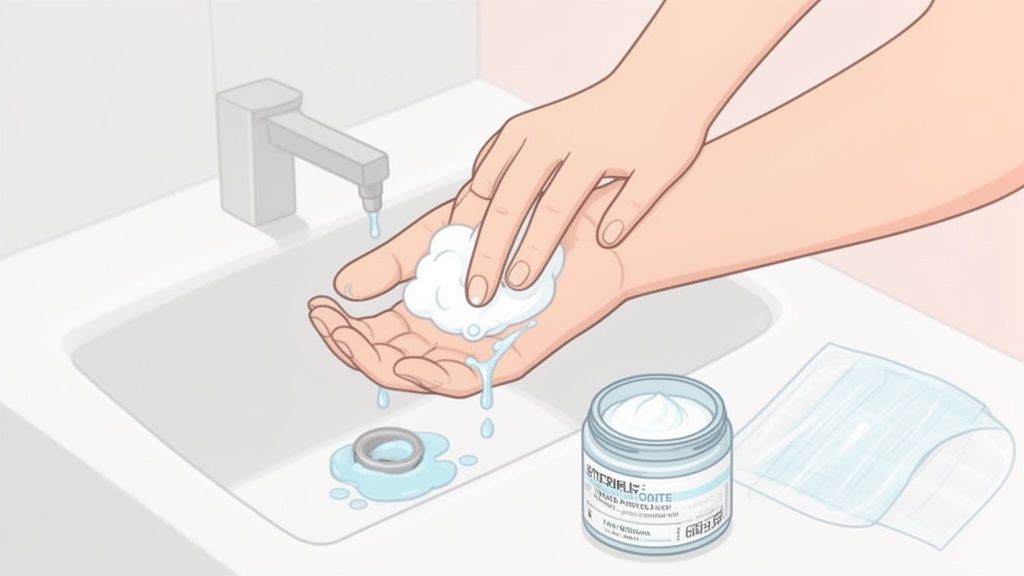
Choosing the Right Moisturizer
When you’re deciding what to put on your peeling tattoo, the golden rule is to keep it simple and gentle. Look for products that are lightweight, fragrance-free, and dye-free. Anything with heavy perfumes or colors is just asking for irritation on sensitive, healing skin.
Here are a few solid options that get the job done right:
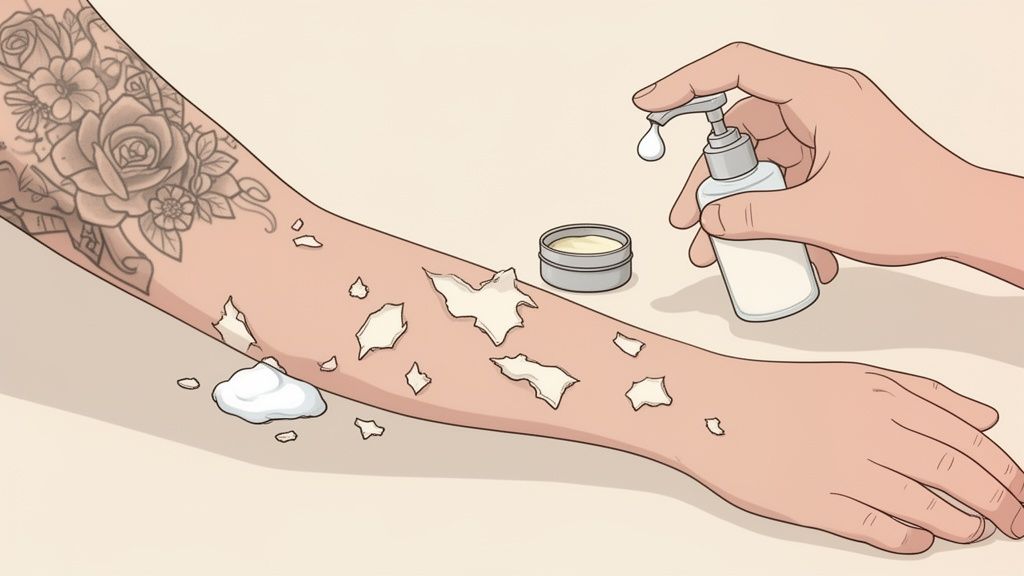
- Lightweight, Unscented Lotions: You can't go wrong with brands like Lubriderm, Cetaphil, or Eucerin. They’re made for sensitive skin and deliver hydration without leaving a greasy mess.
- Dedicated Tattoo Balms: The market has plenty of balms made specifically for tattoo aftercare. These often pack in skin-soothing ingredients like panthenol, which helps keep the skin elastic and can cut down on heavy scabbing.
For certain styles, like the American Traditional or Japanese work done by artists like our own Matt Beckerich or Phil Szlosek, this stage is crucial for preserving their meticulous craftsmanship. We typically recommend applying a fragrance-free moisturizer very thinly 2-3 times a day for the first couple of weeks. A little goes a long way—too much can smother the skin.
Application Tips and Managing the Itch
How you apply the lotion is just as important as which one you choose. Always, always start by washing your hands and the tattoo itself with a gentle antibacterial soap. Then, pat it completely dry with a clean paper towel. Our guide on how often you should wash a new tattoo breaks this critical first step down in more detail.
Next, apply a very thin layer of your chosen lotion or balm. You’re aiming for a slight sheen, not a greasy, wet-looking coat. If it looks shiny, you’ve definitely used too much.
The itch can be maddening, but whatever you do, do not scratch. Scratching can literally pull ink out of your healing skin, leaving you with patchy spots and potential scarring. It's the worst thing you can do.
If the itching becomes unbearable, gently pat or tap the area. This can help relieve the sensation without doing any damage. By choosing the right light moisturizer and fighting the urge to scratch, you're setting your tattoo up to heal clean, sharp, and vibrant.
Long-Term Care to Keep Your Tattoo Vibrant
Once your tattoo is fully healed—usually somewhere around the four to six-week mark—your aftercare routine completely changes. You’re no longer focused on healing a wound; you’re playing the long game of preservation. The habits you build now will be the difference between a tattoo that looks sharp for decades and one that fades into a blurry memory.
Think of your finished tattoo like a priceless photograph. You wouldn’t just leave it sitting on your dashboard to bake in the sun every day, would you? Of course not. It would fade, yellow, and lose every ounce of its crisp detail. Your tattoo is no different, and its number one enemy is the sun.
Making Sunscreen a Daily Habit
If you take only one thing away from this guide, let it be this: sunscreen is the most important product you can ever put on a healed tattoo. Period. UV rays are relentless, penetrating your skin and actively breaking down the ink pigments that form your artwork. Over time, this constant assault turns bold blacks into murky grays and makes vibrant colors look dull and washed out.
This isn't a small thing—it’s the main reason tattoos look old. For our clients here on Long Island and in NYC, skipping sunscreen can be a disaster. Even the incidental sun you get walking to the train or sitting by a window can lead to 50% faster fading. Slapping on an SPF 50+ lotion can prevent up to 60% of that damage. That’s a huge return on investment, especially if you love hitting the beach. You can get more details on what makes tattoos last from recent tattoo market research.
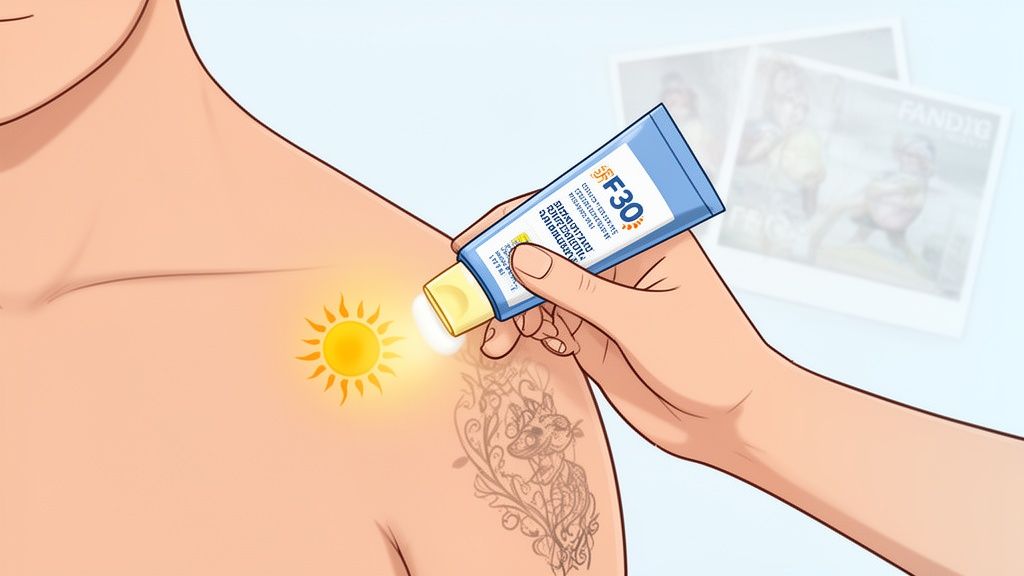
The best defense is a good offense. Applying a broad-spectrum sunscreen with at least SPF 30 to any exposed tattoos every single day is non-negotiable for long-term vibrancy.
Make it a mindless part of your morning routine, just like grabbing your keys. Find a formula you don't hate wearing, because consistency is everything. Whether it’s a lightweight lotion, an easy-to-apply spray, or a mineral stick, the best sunscreen is the one you’ll actually use daily.
A quick guide on what to look for can make choosing the right sunscreen a lot easier. Different types work better for different situations and skin types.
Sunscreen Guide for Tattoos
| Sunscreen Type | Key Ingredients | Best For | Pros & Cons |
|---|---|---|---|
| Mineral (Physical) | Zinc Oxide, Titanium Dioxide | Sensitive skin, fresh tattoos (after full healing) | Pros: Sits on top of skin, less irritating, immediate protection. Cons: Can leave a white cast, thicker consistency. |
| Chemical | Oxybenzone, Avobenzone, Octinoxate | Daily use, swimming, active lifestyles | Pros: Absorbs into skin, lightweight, rubs in clear. Cons: Can irritate sensitive skin, needs 20 mins to activate. |
| Hybrid | Combination of mineral and chemical agents | Everyday wear for most skin types | Pros: Offers benefits of both; good protection with a better feel. Cons: Can still contain potential irritants for some. |
| Stick/Balm | Often Zinc-based in a solid form | Small tattoos, touch-ups, faces | Pros: Very portable, easy to apply without mess. Cons: Can be harder to spread evenly on large areas. |
Ultimately, the goal is consistent protection. Find what works for you and stick with it.
The Power of Consistent Moisturizing
Beyond just shielding your ink from the sun, the overall health of your skin is crucial for keeping your tattoo looking its best. Think of it this way: healthy, hydrated skin is like a clean, clear piece of glass over your artwork.
- Improves Clarity: When your skin gets dry and flaky, it's like looking at your tattoo through a dusty window. Regular moisturizing keeps the surface smooth and supple, letting the ink beneath pop with definition.
- Maintains Skin Elasticity: Well-hydrated skin is more elastic, which helps your tattoo adapt and age gracefully as your body naturally changes over the years.
- Prevents Itchiness: Even tattoos that healed ages ago can get dry and itchy. A good, fragrance-free moisturizer solves that problem before it starts.
You don’t need to buy a fancy "tattoo-specific" moisturizer for this stage. Any high-quality, unscented lotion that you’d trust on the rest of your body will do the job just fine. Combine daily moisturizing with diligent sun protection, and you’ve built the ultimate defense system for preserving your art for life.
Products You Must Avoid on a Healing Tattoo
Knowing what to put on your new tattoo is only half the battle. Just as important—maybe even more so—is knowing what to keep far, far away from it. The wrong product can turn a perfect heal into a complete nightmare, causing irritation, infection, or even permanent damage to your new art.
Think of your healing tattoo as an open wound, because that's exactly what it is. It's incredibly sensitive skin that's working overtime to repair itself. Products you might grab for a simple cut or scrape are often way too aggressive for this delicate process. The wrong stuff can strip away essential moisture, introduce nasty bacteria, or trigger an allergic reaction that wrecks the final look of your piece.
Harsh Chemicals and Antiseptics
It seems like common sense to blast a new tattoo with the strongest antiseptics you can find, right? Wrong. This is one of the biggest mistakes you can make. These products are far too harsh for healing skin and will absolutely do more harm than good.
Steer clear of these items completely:
- Rubbing Alcohol: This is your tattoo's worst enemy. Alcohol is incredibly dehydrating. Using it can dry out the skin by as much as 25%, which leads to cracking, brutal scabbing, and ink falling right out. Just don't do it.
- Hydrogen Peroxide: Sure, it kills bacteria. The problem is, it also kills all the healthy new skin cells your body is desperately trying to build. This torpedoes the healing process and can cause ugly discoloration in your tattoo.
- Scented Soaps and Lotions: Fragrance is one of the most common culprits behind skin irritation and contact dermatitis. Scented products can cause redness, rashes, and an unbearable itch—and scratching your tattoo is the cardinal sin of aftercare.
The tattoo industry in the U.S. is bigger than ever, and with that comes a better understanding of how to make ink last. Making smart choices with your aftercare products can extend the life and vibrancy of your tattoo by up to 50% over a decade. You can learn more about the growth of the tattoo industry and its trends from industry reports.
Occlusive and Irritating Products
Beyond the obvious chemical culprits, some seemingly innocent products can also create a hostile environment for your healing tattoo. The main offenders are things that either suffocate the skin or introduce unnecessary irritants.
A healing tattoo needs to breathe. While keeping it moisturized is key, you have to avoid smothering it under a thick, non-breathable barrier, especially after the first day or two.
Make sure you avoid these products after that initial 48-hour window:
- Petroleum Jelly (like Vaseline): A super thin layer might be okay for the first day if your artist recommends it, but that's it. Continued use will clog your pores and trap moisture and bacteria against the skin. This is a surefire way to get pimples or an angry heat rash right on top of your fresh ink.
- Sunscreen: Never, ever put sunscreen on a tattoo that is still an open wound—meaning it's fresh, peeling, or scabbing. The chemicals in sunscreen are incredibly irritating to damaged skin. Wait until the tattoo is fully healed and the skin is completely sealed over (usually 4-6 weeks) before you start slathering on the SPF.
Your Tattoo Aftercare Questions Answered
Figuring out the do's and don'ts of tattoo aftercare can feel like navigating a minefield, but a few straight answers can make all the difference. We've gathered some of the most common questions our artists hear day-in and day-out to help you feel confident as your new artwork heals.
Can I Use Coconut Oil On My New Tattoo?
While coconut oil gets a lot of hype as a natural moisturizer, it’s not something you want to put on a fresh tattoo. The problem is that it's highly comedogenic, which is a fancy way of saying it clogs pores. For healing skin, that's a recipe for disaster—it can trap bacteria, leading to little pimples or even a full-blown infection that messes with how the ink settles.
During those crucial first few weeks, just stick to what your artist recommends. That usually means a thin layer of a product like Aquaphor or a specialized, non-comedogenic tattoo balm. Once your piece is fully healed and the skin is totally smooth again, feel free to use coconut oil for general moisturizing if you know your skin handles it well.
How Do I Know If My Tattoo Is Infected?
It’s completely normal for a new tattoo to be a little red, slightly swollen, and tender for the first few days. The key thing to watch for is progress. Those symptoms should be getting better each day, not worse.
Keep an eye out for these clear warning signs that something might be wrong:
- Spreading Redness: The redness is expanding beyond the edges of the tattoo.
- Excessive Swelling: The area is puffy and feels hot when you touch it.
- Pus or Discharge: Any yellow or green fluid seeping from the tattoo is a major red flag.
- Bumps or Rash: The skin on or around your tattoo gets bumpy or breaks out.
- Prolonged Pain: The pain gets more intense after the first 48 hours.
- Foul Odor: Any unpleasant smell coming from the tattooed area.
If you spot any of these symptoms, especially if you start running a fever, don't wait. Call your tattoo artist and get in touch with a medical professional immediately. Never try to treat a suspected infection on your own.
For a deeper dive into common concerns, you can check out our detailed guide covering tattoo aftercare frequently asked questions.
When Can I Go Swimming After Getting a Tattoo?
You need to keep your new tattoo completely out of any standing water for at least two to four weeks. That means no pools, no ocean, no lakes, no hot tubs, and definitely no long, soaking baths.
Think of it this way: a healing tattoo is an open wound. Submerging it is like inviting bacteria to a party on your skin, which can lead to a nasty infection. Soaking the skin can also oversaturate it, causing ink to pull out and leaving you with a faded, patchy tattoo. Quick, gentle showers are totally fine—just don't let the water beat down on it for too long.
At Fountainhead New York, we believe that exceptional aftercare is the final, crucial step in creating a masterpiece. From the initial consultation to long-term preservation, our team is here to guide you. Book your next piece with us at https://fountainheadny.com.


