

Picking your tattoo artist is the single most important decision you'll make on your tattoo journey. It defines not just the final piece of art on your skin, but the entire experience from start to finish. It really boils down to three key actions: researching artists who live and breathe your desired style, digging into their portfolios to check their technical chops, and sitting down for a consultation to make sure the chemistry is right.
Your Guide to Finding the Right Tattoo Artist
A tattoo is a serious investment—in money, time, and your own skin. The artist you choose is your partner in this commitment. This goes way beyond just liking a few photos on Instagram; it's about finding a true professional who has the artistic vision, technical skill, and unwavering commitment to safety to create something you'll love for the rest of your life.
The whole process can feel a little overwhelming, especially with the incredible amount of talent across Long Island and NYC. Think of this guide as your roadmap. We’ll walk you through how to:
- Pinpoint the exact tattoo style you're after.
- Analyze a portfolio like a seasoned collector.
- Spot the signs of a clean, professional, top-tier studio.
- Walk into your consultation with total confidence.
Honestly, the process of finding a great artist isn't so different from finding any other trusted professional. It involves the same kind of due diligence and gut checks you'd use in this guide to finding a psychologist. You have to do your homework and trust your instincts.
This flowchart breaks the entire process down into three straightforward stages.
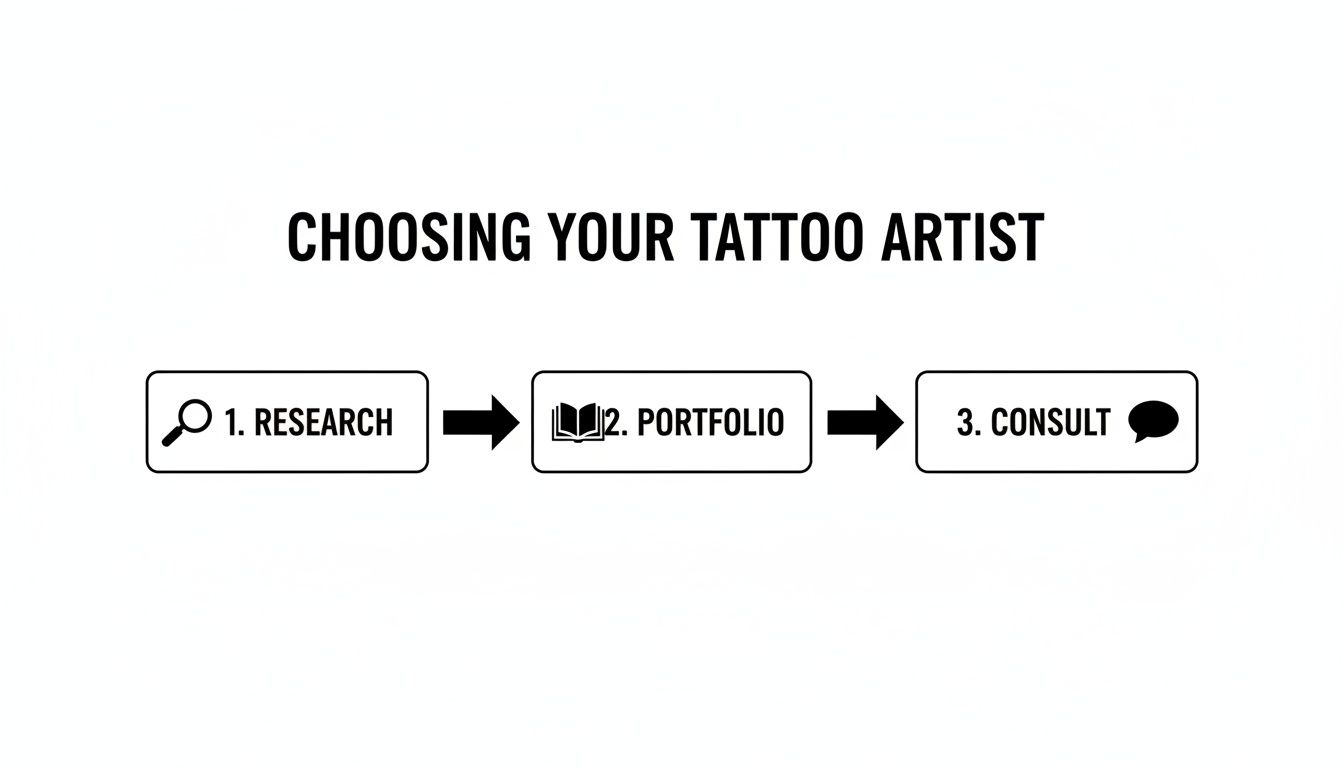
Moving logically from broad research to a focused one-on-one meeting is the key to a successful outcome. It's a proven path.
The tattoo industry is absolutely booming in the US, projected to hit $1.3 billion in revenue by 2025. With more than 23,774 tattoo businesses out there, finding a true specialist—not just a jack-of-all-trades—takes a discerning eye. Studios like Fountainhead New York really set the standard for the kind of world-class craftsmanship you should be looking for in this thriving market.
Finding Your Tattoo Style and Vision
Before you even think about scrolling through artist profiles, the real first step happens in your head. You need to turn that fuzzy idea floating around into something concrete. Getting this part right is everything—it’s what stops you from picking an amazing artist who just isn’t the right creative fit for what you actually want.
You don’t have to become an art historian overnight, but you do need to figure out what you’re visually drawn to. Start a collection. Use Instagram, use Pinterest, whatever works. But don’t just save tattoos. Grab anything that has the right vibe: paintings, movie stills, cool textures, photos of nature. You’re building a mood board for your future tattoo.
Going From Vague Ideas to a Clear Direction
A request like "I want a flower tattoo" is an artist's nightmare. It could mean a hundred different things. To get the result you're imagining, you need to give them better clues. Look at the images you’ve saved and start asking yourself some specific questions.
- What kind of lines do you see? Are they thick, bold, and in-your-face? Or are they super delicate, like they were drawn with a single needle?
- What about the color? Is it bright and fully packed in, or is it all black and grey with soft, subtle shading?
- What’s the overall feeling? Does the art feel aggressive and powerful? Or is it more illustrative and gentle?
Answering these questions helps you build a better vocabulary. Instead of "a flower tattoo," you can say, "I'm looking for an illustrative blackwork peony on my forearm, done with fine lines and stippled shading." That kind of clarity is gold for an artist.
The point here isn't to design the tattoo yourself—leave that to the professional. Your job is to create a visual language that helps the artist see what you see, giving them a solid, compelling launchpad for a custom design.
Getting a Handle on Core Tattoo Styles
Knowing the basic styles is like having a map. It helps you find artists who already live and breathe the aesthetic you're after. The Long Island and NYC scene is packed with specialists, and at Fountainhead New York, you'll find artists who have dedicated their careers to perfecting iconic styles like American Traditional and Japanese.
A good way to start is by understanding the fundamental differences between major styles.
Matching Your Vision to an Artist's Specialization
This table can help you quickly connect the dots between the style in your head and the type of artist you should be looking for.
| Tattoo Style | Key Characteristics | What to Look for in an Artist |
|---|---|---|
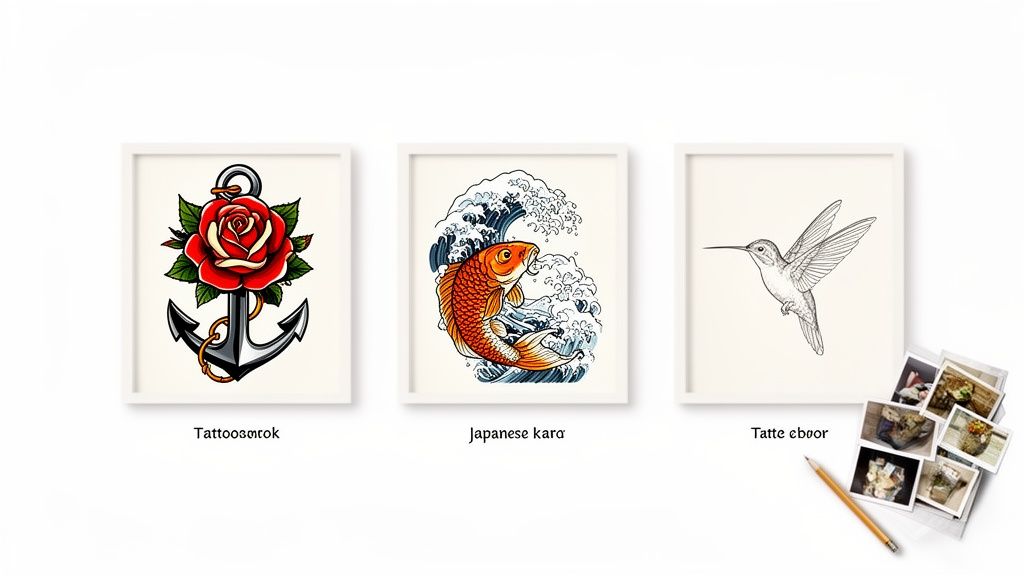
| American Traditional | Bold black outlines, limited color palette (red, yellow, green), iconic imagery like eagles, roses, and anchors. | A portfolio full of clean, powerful lines and solid, vibrant color packing. Consistency is key. |
| Japanese (Irezumi) | Large-scale pieces, mythological themes (dragons, koi), and intricate backgrounds like waves and clouds. | Experience with large, flowing compositions that fit the body. Look for masterful shading (bokashi). |
| Fine Line | Delicate, thin lines, often using a single needle. Minimal shading, creating an elegant, subtle look. | A steady hand is non-negotiable. Check for crisp, consistent lines that don't blow out or look shaky. |
| Black and Grey | Uses only black ink in various dilutions to create depth, contrast, and texture, much like a charcoal drawing. | Portfolios showing smooth gradients, rich blacks, and a strong understanding of light and shadow. |
| Realism | Aims to replicate an image or photo as accurately as possible, whether in color or black and grey. | Look for an artist who can capture not just likeness but also texture and depth. Portraits are the ultimate test. |
Knowing the difference between these styles is crucial. An artist who excels at the powerful simplicity of American Traditional—with its bold outlines and classic color palette—is working with a completely different skill set than one who focuses on the storytelling and flow of Japanese (Irezumi) tattoos, which are defined by large-scale compositions and mythological subjects.
If you’re still figuring out what clicks for you, our in-depth tattoo style guide is the perfect place to go deeper. Understanding these distinctions ensures you don’t just find a good artist, but the right artist whose entire body of work is dedicated to the exact style you want on your skin.
How to Analyze an Artist's Portfolio
An artist's portfolio is their resume, and learning to read it like a pro is one of the most important steps in finding the right person for your tattoo. This is about looking past the cool designs to see the raw technical skill underneath. It's how you separate the true professionals from the hobbyists.
You're not just looking for art you like; you're looking for proof of mastery. Every photo in a portfolio is a promise, and your job is to make sure the artist can consistently deliver on it.
Look for Clean and Confident Lines
Linework is the skeleton of any great tattoo. It’s the first thing you should be looking at and the most fundamental skill to get right. Zoom in on those photos. Are the lines solid, clean, and consistent?
Pay attention to whether the lines hold a uniform thickness where they're supposed to. They should look smooth and intentional, not shaky or wobbly. A skilled artist’s hand moves with confidence, creating crisp lines from beginning to end. This is especially critical in styles like American Traditional, where those bold, unwavering outlines define the entire piece. For a masterclass in precision, you can explore the work of artists like Philip Szlosek to see what top-tier linework truly looks like. Check out this artist profile on Philip Szlosek to learn more.
Assess Shading and Color Saturation
Next up, turn your eye to the shading and color. For black and grey tattoos, you want to see smooth, buttery transitions between the different tones. The shading should create real depth and dimension, not look patchy or splotchy.
If you’re going for a color piece, the saturation needs to be rich and solid. Are the colors packed evenly right to the edge of the lines, or do you see little gaps or "holidays"? Great color blending should be seamless, with no harsh lines between different shades unless it’s an intentional part of the style.
Key Takeaway: An artist’s ability to pull off flawless shading and color work is a direct reflection of their technical control. This is what makes a tattoo pop off the skin and stay vibrant for years.
Why Healed Photos Are Non-Negotiable
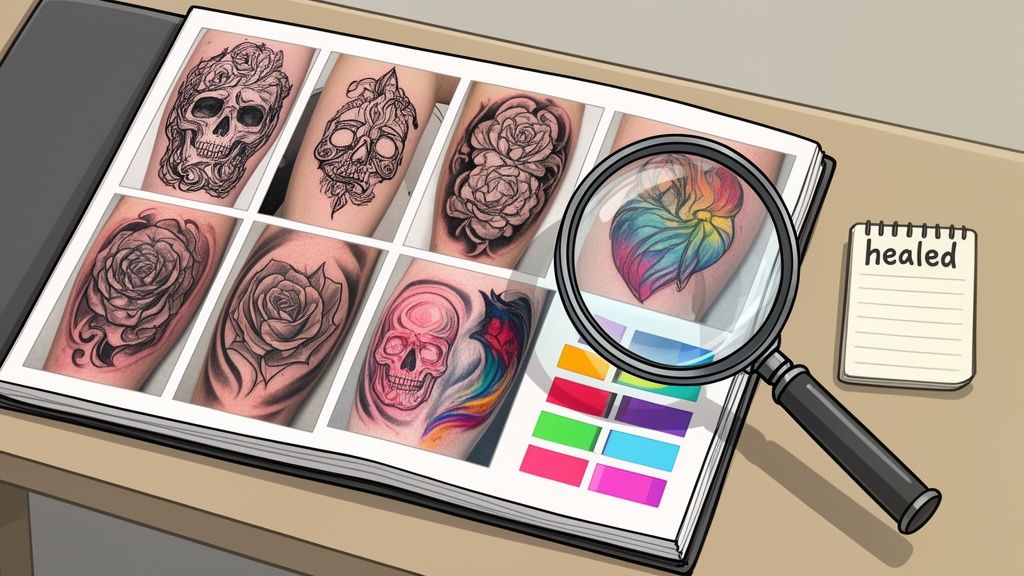
This might be the single most important part of analyzing a portfolio. A fresh tattoo almost always looks good—the skin is swollen, the ink is new, and the irritation can actually hide flaws. The real test of an artist's skill is how a tattoo settles into the skin over time.
A truly professional portfolio should be loaded with photos of healed work. This is your proof of:
- Longevity: How well the ink actually holds up months or even years down the road.
- Line Integrity: Did the lines stay crisp, or have they blown out and gotten blurry?
- Color Retention: Are the colors still vibrant, or have they faded into a muddy mess?
If an artist’s portfolio is missing healed work, that's a major red flag. It could mean their application technique is poor, and their tattoos simply don't stand the test of time.
In a competitive market like NYC, the depth of a portfolio says a lot. Seeing at least 100+ well-documented healed tattoos shows a serious commitment to quality and longevity. Considering that 40-50% of tattoo regrets are linked to how poorly a tattoo ages, this isn't something to overlook. An artist who is proud of how their work holds up will be eager to show it off.
Evaluating Studio Safety and Professionalism
A technically brilliant artist is still the wrong choice if their studio is unsafe or unprofessional. The quality of the art is crucial, of course, but your health and comfort are completely non-negotiable. When you pick a tattooer, you’re also picking their studio—evaluating the space itself is just as critical as digging through their portfolio.
The vibe of a professional studio, like the client-focused, art-driven environment we’ve built at Fountainhead New York, genuinely shapes your entire experience. A clean, well-lit, and organized space is the first sign you’re in good hands. It shows a fundamental respect for the craft and, more importantly, for you.
What to Look for During a Visit
Your consultation is the perfect time to size up the studio's hygiene standards. Don't feel weird about looking around and taking mental notes. A reputable shop has absolutely nothing to hide and will actually appreciate that you care about your safety.
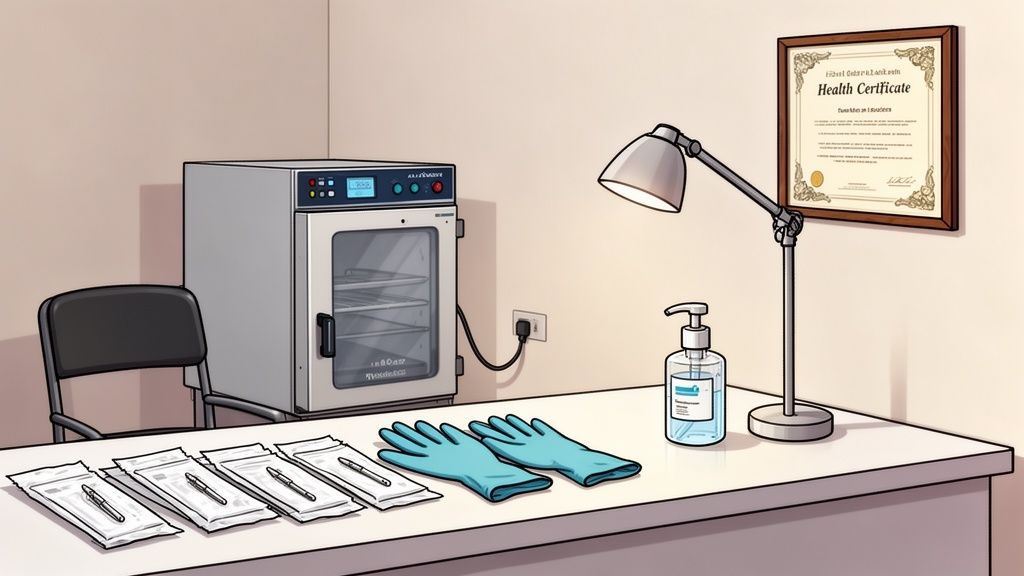
Here are the absolute must-haves for any professional studio:
- Single-Use Needles: Your artist must open new, single-use, pre-sterilized needles in front of you. This isn't optional; it's the bare-minimum industry standard.
- Protective Barriers: Look for plastic wrap or disposable barriers on everything the artist might touch mid-session—the tattoo machine, power supply, clip cord, and spray bottles should all be covered.
- Sharps Container: A designated, puncture-proof container for used needles needs to be clearly visible. Proper disposal is a core part of preventing cross-contamination.
- Clean Surfaces: All stations, chairs, and armrests should be made of non-porous material and wiped down with a hospital-grade disinfectant between every single client.
When checking out a shop's safety game, look for an artist who follows rigorous infection prevention protocols, the same kind of diligence you’d see in a medical setting. That level of care protects everyone involved.
Spotting Potential Red Flags
Sometimes, what a studio lacks is more telling than what it has. Your gut feeling is a powerful tool here. If a place feels "off," there's probably a good reason. Trust that instinct and don't ever compromise your safety just for a cool design.
A professional studio is proud of its cleanliness and safety procedures. Any hesitation to answer your questions about sterilization or hygiene is a massive red flag. Walk away without a second thought.
Keep an eye out for other warning signs. Is the artist dismissive of your questions or trying to rush you through the process? Is the shop cluttered, dusty, or just generally grimy? These are all clear signs of an unprofessional environment that could put your health on the line.
For a deeper dive into what separates the best shops from the rest, our guide on how to find the best tattoo shop on Long Island lays out more detailed benchmarks.
Ultimately, the studio should make you feel confident and comfortable. Choosing an artist who works in a meticulously clean and professional space ensures your entire tattoo experience is a positive one, from the first email to the final photo.
Navigating the Artist Consultation
Alright, this is the moment of truth. The consultation is where all your research, reference hunting, and daydreaming finally comes together in a real conversation. Think of it less like a simple meeting and more like a creative jam session. It's your chance to see if you and the artist click, to make sure they truly get your idea before a needle ever touches your skin.
Walking into this conversation prepared and confident changes everything. You’re not just a customer; you're a collaborator. You’re interviewing them for a serious role, and they’re sizing up your project to see if it’s a good fit for their skills and passion. A great artist is just as invested as you are in creating something you'll love forever, and this talk is the foundation for making that happen.
Preparing for Your Meeting
Showing up prepared is about more than just being organized; it's about showing respect for the artist's time and expertise. Don't just arrive with a vague notion of what you want. Do the groundwork first so you can clearly and efficiently communicate your vision.
Bring a tight, curated collection of 3-5 high-quality reference images. These aren't for the artist to copy, but to illustrate the style, subject, and mood you're after. You also need to have a solid idea of where the tattoo will go and its approximate size in inches.
During the chat, pay close attention to how the artist engages with your ideas. Are they just nodding along, or are they actively listening and asking smart questions? A true professional will offer constructive feedback. They might explain why a certain detail won’t hold up at the size you want or suggest a slight shift in placement to make the design flow better with your body. That back-and-forth dialogue is the sign of a real partnership.
Key Questions to Ask Your Artist
The consultation is your shot to get straight answers and leave with zero uncertainty. Having a few questions locked and loaded will ensure you cover the critical details. This isn't just about the art; it’s about the logistics of the entire project.
Here are a few essential questions to get the ball rolling:
- Creative Process: "Looking at my references, how would you approach designing this? And what's your timeline for showing me a drawing?"
- Pricing Structure: "Do you charge by the hour or a flat rate for this kind of piece? What’s your deposit policy?"
- Scheduling and Timeline: "What’s your booking schedule look like right now? How many sessions do you estimate this will take?"
The way they answer tells you everything. If you get vague responses on pricing or they get defensive about you asking to see a design, those are major red flags. A pro artist, like the ones here at Fountainhead New York, will be transparent and happy to walk you through every step. They want you to feel completely comfortable and informed before moving forward.
Experience is everything when you choose a tattoo artist, especially in a booming industry. Going with a veteran is the surest way to avoid the 20-30% regret rate that often comes with less-experienced work. Artists who have logged over 10,000 hours often have near-perfect client satisfaction rates for a reason. You can dig into the details of the thriving $1.3 billion US tattoo industry by exploring key market statistics.
Common Questions About Choosing an Artist
Even after you've done your homework, a few last-minute questions always seem to surface right before you're ready to commit. Think of this as the final checklist—the practical details that give you the confidence to move forward and book your tattoo.
Getting these things straight is often the final piece of the puzzle. We'll walk through the common concerns that pop up once you've narrowed down your choices.
How Much Does a Quality Tattoo Really Cost?
Let's get right to it: good tattoos aren't cheap, and cheap tattoos are rarely good. The cost of high-quality work isn't arbitrary; it reflects the artist's years of experience, the complexity and size of your design, and the professional standards of the studio.
Here in a competitive market like Long Island and NYC, you'll find that most established artists charge by the hour. Rates can vary widely, typically falling somewhere between $200 and over $500. Most professional shops also have a minimum price, often around $100-$150, to cover the cost of a fully sterile, single-use setup, even for the smallest tattoo.
Be wary of any artist whose main selling point is being the cheapest option. A low price is often a major red flag for inexperience, rushed work, or cutting corners on safety. This is a permanent investment in art on your body—the price reflects skill, time, and professionalism.
What Is the Difference Between a Resident and Guest Artist?
Understanding this distinction can seriously expand your options for finding the perfect artist for your piece.
- Resident artists are the shop's full-time crew. They are the core of the studio's identity and have consistent, ongoing availability for consultations and new projects.
- Guest artists are talented tattooers from other cities, states, or even countries who work at a shop for a very limited time—maybe a week or two at most.
Top-tier studios like Fountainhead New York are constantly hosting renowned guest artists, which is an amazing opportunity for collectors. It gives you direct access to world-class talent without needing a plane ticket. If a guest artist's work catches your eye, don't wait. Their books fill up incredibly fast.
What if I Am Unhappy with the Artist's Design?
It is completely normal and expected to ask for adjustments. This is a collaboration, and any true professional wants you to be 100% in love with the design before the needle ever touches your skin. The key is how you communicate your feedback.
Take a moment to really look at the drawing. Instead of a vague, "I'm not sure I like it," offer specific, constructive input. Something like, "This is beautiful, but could we make the rose a little larger and maybe shift it slightly to the left?" is much more helpful. A professional artist will always be open to reasonable tweaks.
However, if an artist gets defensive, dismisses your concerns, or flat-out refuses to make minor changes, see it for what it is: a massive red flag. That's not the creative partner you want. It's always better to walk away than to settle for a permanent design you don't absolutely love.
Ready to start a project with an artist who is as committed to craftsmanship as you are? Check out the work of our resident and guest artists at Fountainhead New York and tell us about your idea through our booking form. You can find us at https://fountainheadny.com.


