

Getting a tattoo is a huge commitment, and figuring out how to book a tattoo appointment is the very first step toward getting art you’ll love for the rest of your life. It’s more than just a transaction; it's about finding the right artist, presenting your idea clearly, and understanding how the shop operates to lock in your spot. This guide will walk you through the whole journey, from that first spark of an idea to finally sitting in the chair.
Your Roadmap to Securing an Appointment
Booking a tattoo has changed. Gone are the days of just walking into any shop off the street and getting inked on the spot. Today, landing an appointment with a talented artist, especially one in high demand, takes a bit of prep work and a clear understanding of the process. Think of it less like a simple purchase and more like commissioning a custom piece of art.
This whole process is designed to make sure you and the artist are on the same page about the design, the cost, and the schedule before any needles ever touch your skin. It protects everyone involved and leads to a much better final tattoo.
Understanding the Modern Booking Funnel
The path from a cool idea to a finished tattoo follows a pretty clear funnel. This visual breaks down the three main stages you'll go through.
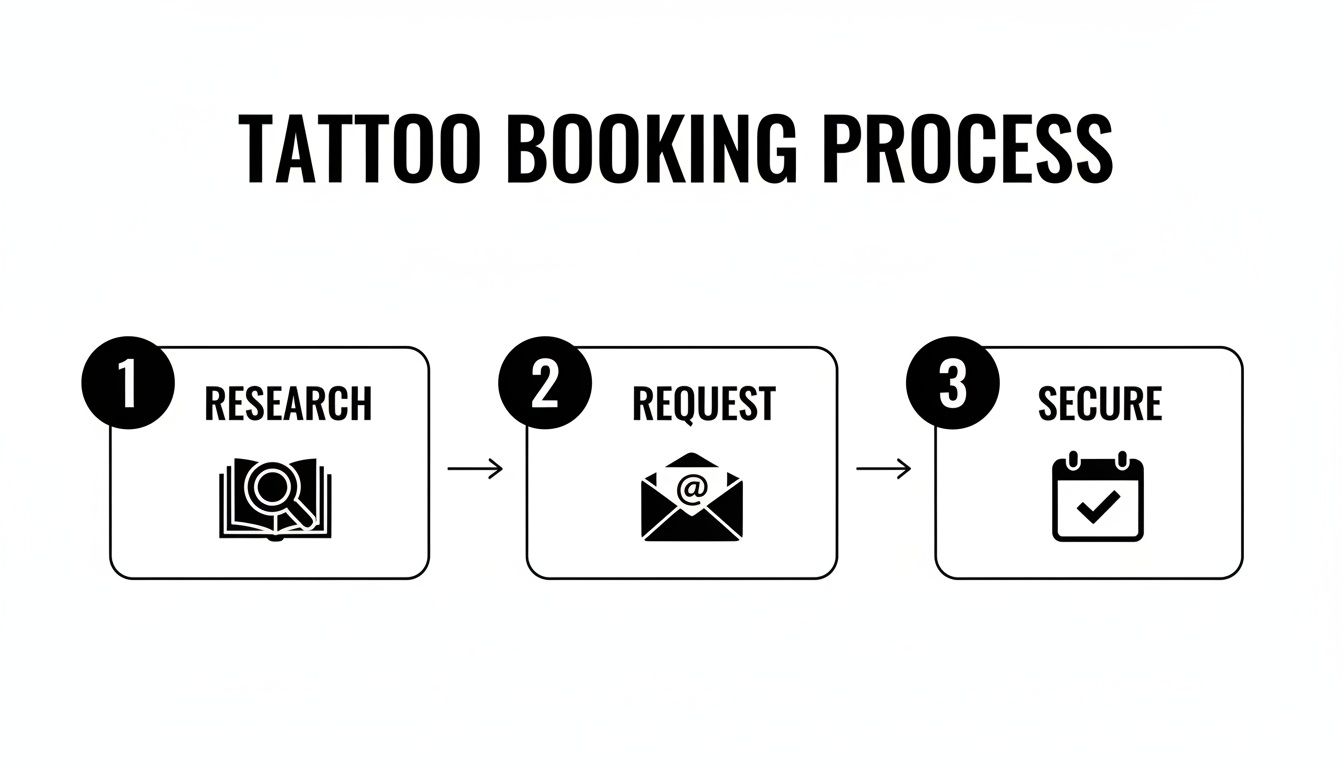
Each step—Research, Request, and Secure—builds on the one before it. Nailing each one is the key to a smooth, professional experience for both you and your artist.
The demand for high-quality tattoos has never been higher. The global tattoo industry was valued at a staggering USD 2.22 billion in 2024 and is expected to nearly double by 2032. Yet, a recent survey found that 79% of potential clients couldn't book their dream artist because of confusing communication or unclear booking policies. It's a real problem, and it's why so many modern studios are getting serious about organizing their client intake. Some shops are even exploring things like the role of AI phone receptionists in tattoo parlors to keep things running smoothly.
Key Takeaway: A successful booking isn’t just about finding an artist you like. It's about presenting your idea professionally through the studio's specific channels. Artists get flooded with DMs and emails, so a well-prepared inquiry that follows their rules is way more likely to get a yes.
Before you can do any of that, you need to know what a good shop even looks like. Our guide on how to find the best tattoo shop on Long Island is a great place to start your research.
Tattoo Booking Process At a Glance
Feeling a bit overwhelmed? It's really not that complicated once you see it laid out. This table breaks down the entire journey into three simple stages.
| Stage | Key Action | Why It Matters |
|---|---|---|
| Research | Find artists whose style matches your vision and check their work. | This ensures you're commissioning art from someone who specializes in what you want. Mismatched styles lead to bad tattoos. |
| Request | Submit a clear, detailed inquiry through the artist's preferred channel. | A good request with solid references makes it easy for the artist to say "yes" and quote you accurately. |
| Secure | Pay your deposit, confirm the date, and understand all shop policies. | This officially reserves your time on the artist's calendar and prevents any surprises about cost, cancellations, or day-of prep. |
Think of these stages as your checklist. Following them in order will make the entire process feel straightforward and professional, setting you up for an amazing tattoo experience from start to finish.
Finding the Right Artist and Defining Your Vision
Before we even get into the nuts and bolts of how to book a tattoo, we have to tackle the two most important questions: who are you going to trust with your skin, and what exactly are you asking them to create? Getting this part right is everything. It’s where the real work begins, and honestly, it sets the stage for the entire experience.
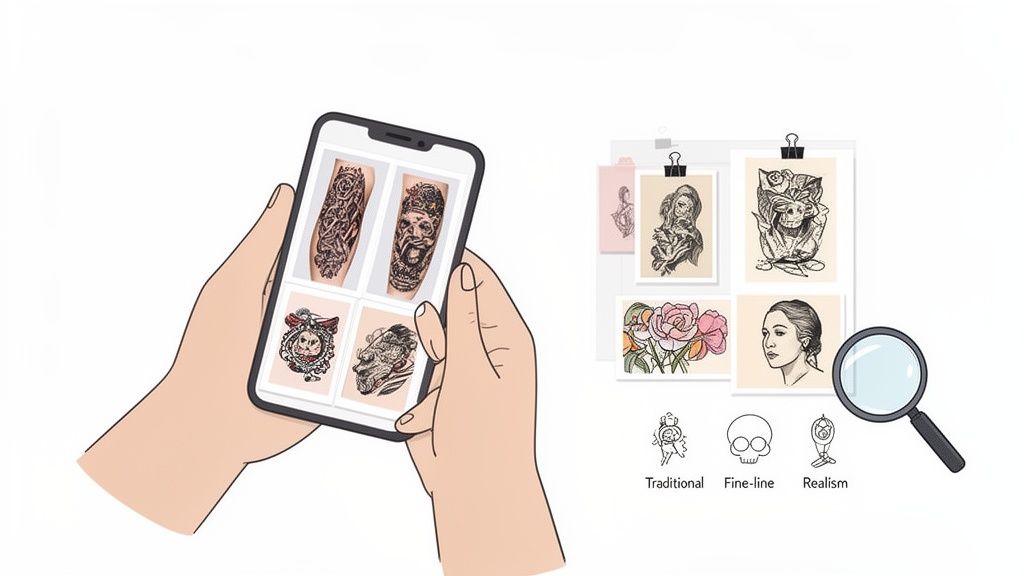
Your journey starts with research. Today, Instagram is the undisputed global gallery for tattoo artists. It's where you'll find portfolios, see work fresh off the needle, and get a genuine feel for an artist’s style and professionalism. Don't just punch in a generic hashtag like #tattoo; that’s like boiling the ocean. Get specific. Search for styles like #AmericanTraditional, #FineLineTattoo, or #JapaneseTattoo to start zeroing in on artists who live and breathe the style you’re after.
This initial deep dive is about more than just finding cool pictures. You're looking for an artist whose style genuinely resonates with the idea in your head. If you’re dreaming of a bold, classic American eagle, you shouldn’t be scrolling through the feed of an artist who exclusively posts delicate, single-needle floral pieces. It sounds obvious, but you’d be surprised.
Analyzing a Tattoo Artist's Portfolio
A killer portfolio is more than just a highlight reel of a few great tattoos. To find a truly skilled and reliable artist, you have to look a little deeper. Pay close attention to the consistency across their entire body of work—are the lines clean and solid in every single piece? Is the color saturation rich and even?
Here’s what you should be looking for as you scroll through their feed:
- Healed Work: Fresh tattoos always look incredible—they’re sharp, dark, and vibrant. The real test, though, is how they settle into the skin over time. Look for artists who proudly post photos or videos of their work months or even years down the road. It shows they’re confident in the quality and longevity of their application.
- Application Consistency: This is where you separate the pros from the amateurs. Check for crispy lines, smooth shading, and solid color packing. An artist’s technical skill is on full display in their ability to nail these fundamentals every single time.
- Artistic Style: Does their unique artistic voice line up with your vision? Don’t just find someone who can do the style you want; find someone who loves to do it. You can feel that passion in the final product, and it makes all the difference.
A great artist has a distinct, recognizable style. When you find someone whose work makes you stop scrolling and say, "That's it," you're on the right track. Their portfolio should feel like a curated collection with a clear point of view, not just a random assortment of different aesthetics.
For a more detailed breakdown, our complete guide on how to choose a tattoo artist goes even deeper into what separates a good artist from a truly great one.
Building Your Mood Board of References
Once you've got an artist (or maybe a short-list of a few) in your sights, it's time to get your ideas organized. A "mood board" is basically just a collection of images that helps communicate your vision. Trust me, this is way more effective for showing your artist what you want, rather than just trying to describe it with words.
Your board should include a mix of different elements. Of course, you should find examples of tattoos you like, but don't stop there. Pull in other forms of art, photography, or illustrations that capture the specific mood, color palette, or composition you're picturing. This gives your artist clear creative direction without boxing them into just copying someone else’s tattoo—which is a major no-go. This prep work is the foundation for a killer collaboration.
You’ve found the artist. Their work is exactly what you’ve been looking for. Now comes the part that trips a lot of people up: making first contact.
Crafting a good booking request is a skill, and honestly, a well-prepared inquiry is way more likely to get a quick, positive response from a busy artist.
Most professional artists have a system. It’s how they stay organized and sane. Before you do anything, check their Instagram bio or website. They’ll almost always have a link to a booking form or list a specific email address. Sometimes they even ask for a particular subject line.
Following these instructions is your first test. It shows you’ve done your homework and respect their process.
Whatever you do, don't just slide into their DMs with a vague, "Hey, how much for a tattoo?" That’s the fastest way to get ignored. It gives them absolutely nothing to work with.
What to Include in Your Booking Request
Think of your inquiry as the creative brief for your project. You need to give the artist a crystal-clear picture of what’s in your head so they can immediately see your vision and decide if it’s a good fit for them. Vague or incomplete requests get pushed to the bottom of the pile.
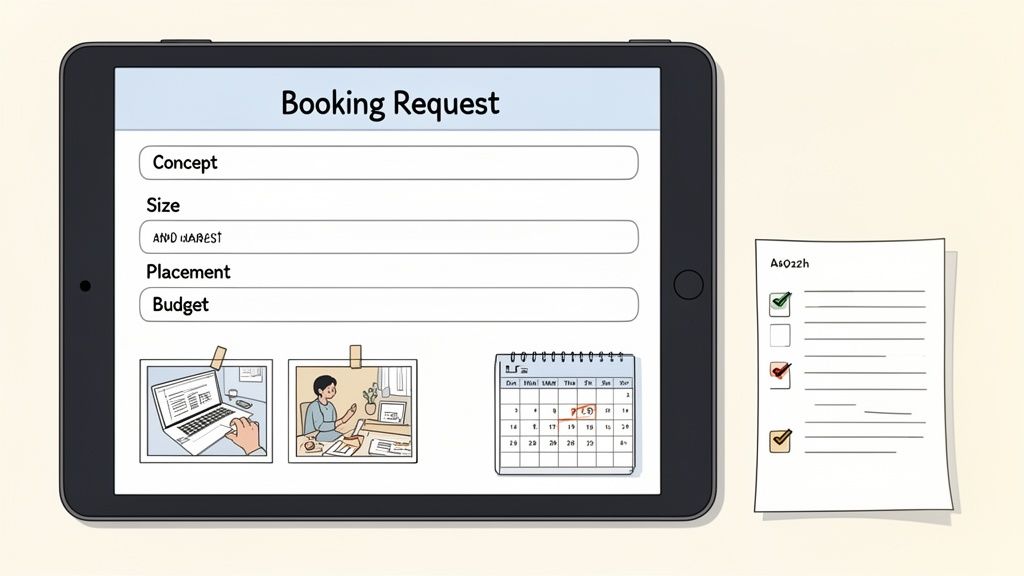
Your request should always nail these key details:
- A Clear Concept: Briefly describe your idea. Instead of just "a dragon," get more specific: "a traditional Japanese-style red dragon for my full back, wrapping over my right shoulder blade."
- Size and Placement: Be precise. Don't say "on my arm." Say "on my outer bicep, about 6 inches tall and 4 inches wide." Use inches or centimeters.
- Reference Images: Attach that mood board you put together. Send 3-5 high-quality images that capture the style, subject, and overall vibe you’re going for.
- Your Budget: Don’t be shy about this. Being upfront about your budget helps the artist know if the size and complexity you want are realistic. If not, they can suggest adjustments to make it work.
Pro Tip: When you describe your idea, focus on the core elements but leave a little room for their creativity. Adding a line like, "I really trust your artistic vision to bring this to life," shows respect and often results in a much stronger, more unique design.
The Consultation: From Request to Reality
Once your request is in, the next step is usually a consultation. This could be a quick email chain, a video call, or an in-person meeting at the studio. This isn’t just a formality—it’s where the collaboration really begins.
During the consult, you’ll lock down the design details, confirm the final size and placement, and get a solid price quote. It’s your chance to ask any lingering questions and make sure you and the artist are on the exact same page.
Honestly, it’s also a vibe check. You’re about to spend hours with this person, possibly over multiple sessions. You need to feel comfortable and confident in their ability. A good consultation solidifies the plan, gets you even more excited for your appointment, and moves you one step closer to getting that new tattoo.
Navigating Deposits, Pricing, and Studio Policies
So, you've had your consultation, you and the artist are on the same page, and you’re ready to get on the books. This is the part where we talk logistics—the money, the rules, and how to make the entire process run smoothly. Getting a handle on deposits, pricing, and studio policies right from the start is the key to a professional, stress-free experience for everyone involved.
Think of a tattoo deposit as your official commitment. It’s a non-refundable payment that locks in your appointment date and signals to the artist that you’re serious about the project. This protects them from the financial hit of a last-minute cancellation or a no-show, especially after they’ve already invested hours in designing your piece.
The deposit amount can vary, but it's usually either a flat fee or a percentage of the tattoo's estimated cost. In nearly every case, this payment comes off the final price of your tattoo when you settle up at the end of your session.
Decoding Tattoo Pricing Models
Artists typically price their work in one of two ways. Knowing which method your artist uses is crucial for budgeting and managing expectations, so don't be afraid to ask for clarity.
- Hourly Rate: This is the standard for big, multi-session projects like a full sleeve or a back piece. The artist will give you a rough time estimate, but the final price will depend on the actual hours clocked in the chair.
- Flat Rate (Price-Per-Piece): For smaller tattoos that can be finished in one sitting, artists will almost always quote you a set price for the whole job. This price is based on the design's complexity, size, and where you're getting it on your body.
Your deposit isn't some extra fee—it's the first installment on your new artwork. It covers the artist's drawing time and secures your spot, showing you're all in.
Understanding Key Studio Policies
Every professional studio runs on a clear set of policies designed to protect both the artists and their clients. These rules cover everything from what happens if you need to reschedule to how you should act on the day of your appointment.
Before you put any money down, make sure you've read and understood the shop’s policies on cancellations, rescheduling, and no-shows. Most studios require at least 48-72 hours' notice if you need to move your appointment without losing your deposit. Respecting these rules is a big deal, and many shops have adopted specific strategies for reducing no-show appointments to keep their schedules tight and efficient.
It’s no surprise that a recent survey found 79% of clients have bailed on booking with an artist because of confusing pricing or disorganized communication. Professional studios like Fountainhead New York work hard to avoid this by providing clear online booking instructions, transparent deposit info, and easy-to-find policies. It builds trust and makes sure the process is straightforward. Taking a few minutes to read the fine print ensures there are no surprises down the line, letting you focus on what matters—the art.
How to Prepare for Your Tattoo Appointment
The deposit is paid, the date is locked in. The hard part is over, right? Almost. What you do in the **24 to 48 hours** before your session can make a huge difference in your experience and how well your tattoo heals. Think of it as the final, crucial step in the process.Your skin is the canvas, and the better its condition, the more smoothly the ink goes in. This prep work starts days before you even walk into the studio. Start hydrating now. Drinking plenty of water makes your skin more supple and resilient, which helps the artist and ultimately benefits the final piece.
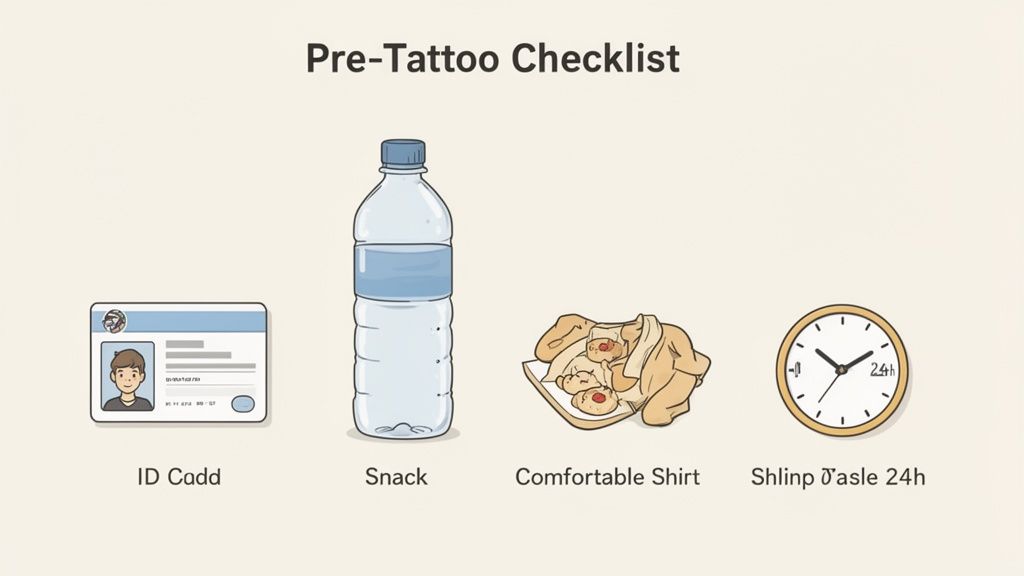
Your Pre-Session Checklist
The goal is simple: show up feeling your best. Getting tattooed is a physically demanding process, and being well-rested, fed, and hydrated makes it so much more manageable for your body. The night before, make it a priority to get a full night's sleep. Don't stay out late.
On the day of, eat a solid, balanced meal about an hour before you head to the shop. Something with protein and complex carbs will give you sustained energy and help prevent the blood sugar crashes that can leave you feeling dizzy or lightheaded, especially during a long sit.
For longer appointments, what you bring with you can be a game-changer. Pack a small bag with the essentials.
- Valid Government-Issued ID: This is 100% non-negotiable. You absolutely must have your driver's license or passport to prove your age and identity. No ID, no tattoo.
- Comfortable Clothing: Wear something loose that gives the artist easy access to the area being tattooed. Keep in mind that ink can splatter, so this probably isn't the day to wear your favorite white shirt.
- Snacks and Water: A granola bar, some fruit, or trail mix can be a lifesaver during a break. Staying hydrated and keeping your energy levels stable is key to a comfortable session.
- Headphones or a Book: A good distraction can make the time fly and help you manage discomfort, particularly during the line work.
Don't Forget the Basics: Showing up well-rested and with a full stomach is just as important as choosing the right design. Your body is about to undergo a physically demanding process, and giving it the fuel it needs will make your session far more comfortable.
What to Avoid Before Your Appointment
What you don't do is just as important as what you do. The number one thing to avoid is alcohol for at least 24 to 48 hours beforehand. Alcohol thins your blood, which can cause excessive bleeding during the session. This makes your artist's job harder and can negatively affect how the ink settles into your skin.
Similarly, stay away from blood-thinning painkillers like aspirin or ibuprofen. If you need to take something, check with your artist first, but acetaminophen (Tylenol) is generally considered a safer option. Also, skip the heavy sun exposure leading up to your date—we absolutely cannot tattoo over sunburned or freshly damaged skin, and your appointment will have to be rescheduled.
Ultimately, proper preparation sets the stage for a better experience in the chair and a smoother healing process. It’s the final step before you can shift your focus to our detailed tattoo aftercare instructions to keep your new art looking incredible.
Frequently Asked Questions About Booking a Tattoo
Even with the best plan, you're bound to have some questions when you're figuring out how to book a tattoo appointment. The whole process can feel a little intimidating, especially when you're trying to get on the schedule of a popular artist whose books seem to fill up instantly.
We get it. We hear these questions all the time. This section is designed to give you clear, straightforward answers to the most common things people ask, so you can move forward with total confidence.
How Far in Advance Should I Book a Tattoo Appointment?
Timing is everything in the tattoo world, and how far out you need to book really boils down to the artist's demand. For highly sought-after artists, it’s not uncommon for their schedules to be booked solid for months—sometimes even a full year. The best way to stay in the loop is to follow their social media or check their website for updates on when their books open for new clients.
As a general rule of thumb, plan on starting your research and booking process at least 2-3 months before you’d ideally like to get tattooed. This cushion gives you enough time to find the right artist, put together a thoughtful inquiry, and hopefully snag a spot that works for you without feeling rushed.
If an artist’s books are currently closed, the worst thing you can do is send them a booking request anyway. Instead, sign up for their mailing list and turn on post notifications for their social media. It’s the most respectful way to be first in line when they’re ready for new projects.
Is It Okay to Negotiate the Price of a Tattoo?
In a professional tattoo studio, the price is not up for negotiation. An artist's quote is a careful calculation based on their skill, their years of experience, the time spent drawing your design, and the hours it will take to actually apply the tattoo. It’s a direct valuation of their craft.
Instead of trying to haggle, the best approach is to be upfront and honest about your budget from the very beginning. A good artist can often work with you to make adjustments that bring the project into a range you're comfortable with.
This could mean:
- Adjusting the size: Making the piece a little smaller can have a big impact on the time and cost.
- Simplifying the design: A less complex or detailed concept will naturally take fewer hours to complete.
- Splitting it into sessions: For large-scale work like a sleeve or back piece, you can plan multiple sessions spaced out over time to manage the cost.
Can I Bring a Friend to My Tattoo Appointment?
Every studio has its own policy on guests, so this is a question you absolutely need to ask ahead of time. Many shops, especially in the last few years, have moved to a "client-only" policy to minimize distractions for the artist. They need to be in a state of deep focus, and extra people can disrupt that.
Flying solo also helps maintain the calm, sterile environment that’s essential for safety and high-quality work. We understand wanting a friend there for support, but the tattoo session is really a collaboration between you and your artist. If you feel you really need someone with you, just ask the studio about their specific guest policy when you book. Never assume it's okay to bring a plus-one.
At Fountainhead New York, our entire team is here to make the booking process as clear and straightforward as possible, from your first idea to the finished tattoo. Explore our artists' portfolios and learn how to book your next tattoo with us today.


