

The products you choose for your tattoo aftercare are just as important as the artist you choose for the tattoo itself. Once you walk out of our studio, the responsibility for how that ink heals and settles into your skin is entirely in your hands. The right soaps, balms, and lotions aren't just accessories; they are the essential tools that protect your investment and ensure your new art looks incredible for years to come.
Why Your Aftercare Routine Is Non-Negotiable
A fresh tattoo is, for all intents and purposes, a beautiful and precisely created open wound. How you treat that wound over the first few weeks dictates everything—the sharpness of the lines, the vibrancy of the colors, and the overall health of your skin. A lazy aftercare routine can lead to faded ink, patchy healing, or even a nasty infection that ruins the piece entirely.
This is about more than just grabbing whatever lotion is in your medicine cabinet. The goal is to create the perfect healing environment. You need to keep the area meticulously clean without stripping away its natural moisture, hydrate it deeply without suffocating the skin, and shield it from bacteria and friction.
- Preventing Infection: Using a gentle, antimicrobial soap is your first line of defense against bacteria that can compromise the healing process.
- Preserving Ink Vibrancy: Proper hydration with a purpose-made product prevents the skin from drying out and forming thick, heavy scabs that can pull ink right out of the skin when they fall off.
- Supporting Skin Health: The right ingredients will soothe inflammation and help strengthen your skin barrier, allowing your body to do its job more effectively.
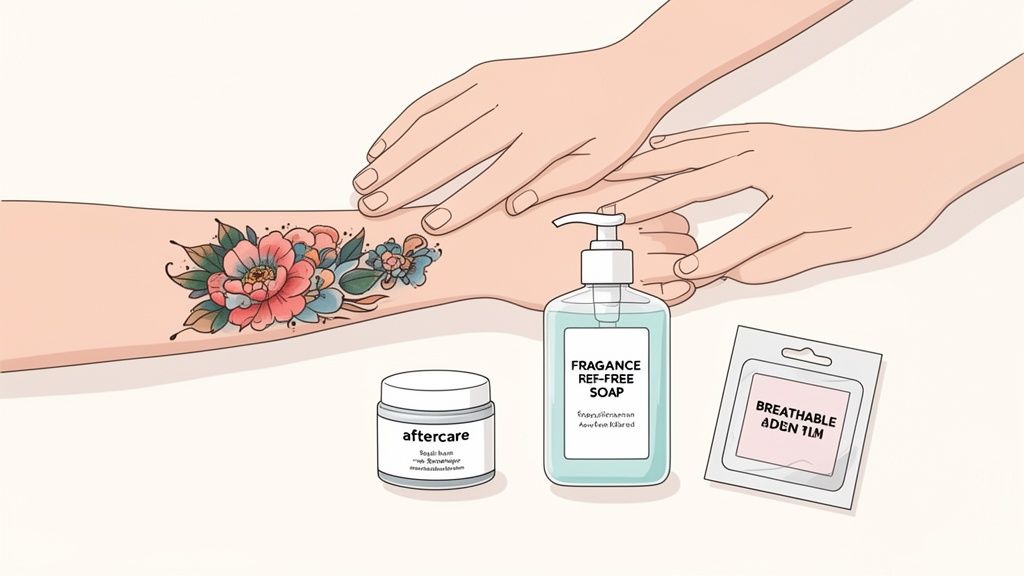
A Smarter Approach to Healing
This focus on dedicated aftercare isn't just something we preach in the studio; it's a massive shift in the industry. Clients are more educated than ever, and they understand that protecting their art is part of the process.
The global market for tattoo aftercare products has exploded, hitting around USD 110 million in 2021 and is projected to keep climbing. This isn't just hype. With over 40% of Americans now having at least one tattoo, the conversation has moved toward a more sophisticated, dermatologically-aware approach to long-term skin health.
At Fountainhead NY, we see the results firsthand. Clients who commit to a solid aftercare plan using quality products come back for their next session with tattoos that are crisp, vibrant, and perfectly healed. It’s the critical bridge between getting a great tattoo and having a great tattoo for life.
Mastering the First 72 Hours of Tattoo Care
The first three days after you leave our studio are, without a doubt, the most critical for the entire life of your tattoo. This isn't an exaggeration. How you handle this initial healing window directly impacts everything—from the vibrancy of the color to the sharpness of the lines for years to come.
Think of it as laying the foundation for a house. If you get it wrong, the whole structure suffers. Your aftercare journey starts the second your artist finishes up and applies that first protective covering.
The Initial Wrap Showdown: Traditional vs. Modern Film
Your artist will cover your new tattoo with one of two options, and knowing which one you have—and what to do with it—is step one.
- Traditional Plastic Wrap: This is the old-school method you’ve probably seen a million times. It’s meant to be a short-term shield against bacteria and bumps for the trip home. The key thing to remember is that it’s not breathable. You’ll want to leave this on for a minimum of two hours but take it off after no more than four.
- Adhesive Medical Film (e.g., Saniderm): This is the modern "second skin" approach. It's a game-changer because it's both waterproof and breathable, allowing oxygen to get in while trapping your body's natural healing fluids. You can typically leave this film on for three to five days, which really simplifies those crucial first few days.
A quick heads-up: if you start to see significant redness or feel irritation around the edges of an adhesive film, you might have a sensitivity to the adhesive. If that happens, don't wait it out. Carefully remove the film, give the area a gentle wash, and switch over to the traditional aftercare routine.
The All-Important First Wash
Taking that wrap off and washing your new tattoo for the first time can feel a little nerve-wracking, but it’s a straightforward and essential process. The goal is simple: gently clear away any residual ink, blood plasma, and ointment without irritating the raw skin.
The best way to remove the wrap is under lukewarm running water, which helps loosen any adhesive without a fight. Never, ever rip it off like a band-aid.
Once the wrap is off, it’s time to wash.
- Get the Right Soap: You need a mild, liquid, fragrance-free antibacterial soap. The perfumes and harsh chemicals in regular bar soap or body wash can cause serious irritation. Lather the soap up in your clean hands before it ever touches your skin.
- Wash Gently: Use only your fingertips. Gently massage the lather over your tattoo in a circular motion. You’ll feel a slick, slimy layer—that’s the plasma, and your goal is to remove it completely.
- Rinse Completely: Let lukewarm water flow over the tattoo until every last bit of soap is gone. Hot water can open up your pores and cause more inflammation, so stick to lukewarm.
- Pat, Don’t Rub: Use a clean, disposable paper towel to gently pat the area dry. Avoid using a bath towel; they can harbor bacteria and leave behind lint that can get stuck in your healing tattoo. Let it air-dry for another 5-10 minutes before you think about putting anything on it.
It's totally normal to see some ink coming off during the first few washes. This isn't your tattoo fading. It's just excess pigment and plasma being pushed out of the skin as it heals.
What to Expect in These Early Days
For the next 72 hours, expect your new tattoo to feel tender and sore, a lot like a decent sunburn. Some redness and minor swelling are completely normal. Your only job during this time is to keep it clean and leave it alone.
Plan on washing the tattoo two to three times a day using the exact method we just covered. For a more detailed schedule, check out our guide on how often you should wash a new tattoo.
During this initial phase, less is more when it comes to products. A very, very thin layer of a recommended aftercare product can be applied after it's been washed and fully dried, but the main goal is to let your skin breathe. An open wound needs air to heal. Smothering it in a thick ointment will only slow things down.
Stick to clean, loose-fitting clothes and be mindful of how you sleep to avoid rubbing or sticking to your sheets. Nail these first 72 hours, and you've set your new art up for a perfect, vibrant heal.
Navigating the Itch with the Right Moisturizers
Once you're past the initial 72-hour window, your tattoo shifts into a new and often frustrating healing phase. The soreness fades, but in its place comes a distracting, sometimes maddening itch. This is a good thing—it’s a sign your skin is working hard to regenerate.
As fresh skin forms, the top layer of damaged skin and dried ink starts to flake and peel, a lot like a healing sunburn. It might look a little alarming, but this shedding process is totally normal. The trick is to manage it with the right products and let your body do its thing without you picking or scratching at it.
Why You Must Not Scratch
I can't stress this enough: resisting the urge to scratch your itchy tattoo is non-negotiable.
Scratching can easily rip off scabs and peeling skin before they're ready, pulling ink out and leaving you with patchy spots. Worse, it introduces bacteria from your fingernails directly into what is essentially an open wound, creating a serious risk of infection that can completely ruin your new art.
This is where a high-quality, lightweight moisturizer becomes your best friend. A thin layer protects the skin, keeps it hydrated, and most importantly, calms that itch so you aren’t tempted to scratch.
Think of your healing skin like delicate, wet paper. Any harsh friction, like scratching, can tear it easily. A good moisturizer keeps that paper supple and strong, protecting the ink underneath as it heals.
Choosing the Right Moisturizer for This Stage
During the itching and peeling phase, your skin needs hydration, but it also needs to breathe. Those heavy ointments we recommend for the first couple of days are too much now. Smothering the tattoo can trap moisture and clog pores, leading to irritation or even little pimples around your new piece.
It's time to switch to something lighter. Look for a product that is:
- Lightweight: You want a lotion or a specialized tattoo balm that absorbs quickly without leaving a greasy film behind.
- Fragrance-Free: Artificial scents are one of the biggest culprits of irritation on sensitive, healing skin. Always go for unscented products.
- Nourishing: Ingredients like shea butter or calendula are fantastic for soothing inflammation. Something like aloe vera can also be incredibly calming. For a deeper dive, you can explore the benefits of aloe vera for rashes and itching to see just how effective it can be.
Application: The Art of Less Is More
How you apply your moisturizer is just as important as which one you choose. Before you even think about putting lotion on, you have to wash and dry your tattoo. Applying moisturizer over dirty skin just traps bacteria and completely defeats the purpose of your cleaning routine.
The process is simple but crucial. Follow these steps every single time.
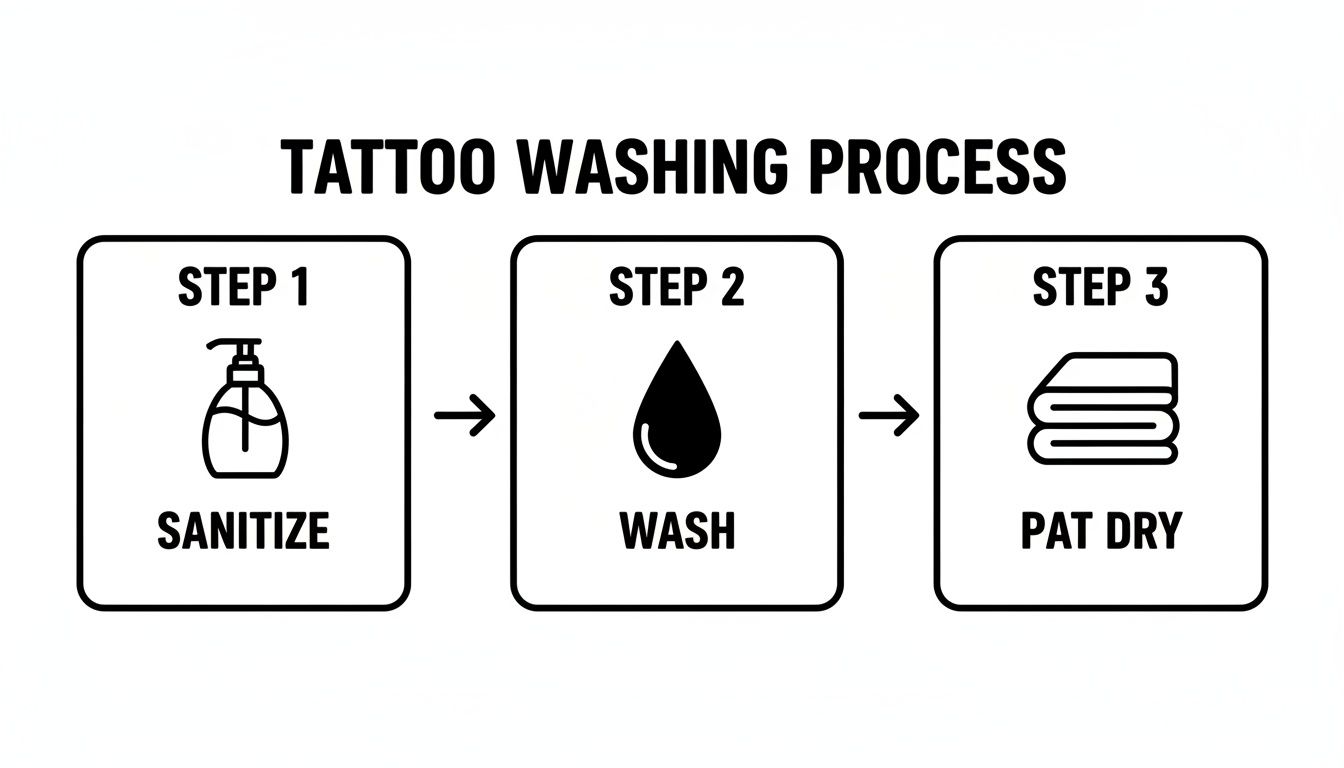
This Sanitize, Wash, and Pat Dry method ensures your tattoo is perfectly prepped for moisturizer.
Once your tattoo is clean and has air-dried for a few minutes, work in a very thin layer of your lotion or balm. You only need enough to give the skin a slight shine. If it looks wet or goopy, you’ve used too much. Gently rub it in until it’s fully absorbed. Repeat this process two to three times per day to keep the skin hydrated and the itch under control.
Adapting Aftercare to Your Tattoo Style
Different tattoo styles can mean slightly different healing experiences. The core principles of washing and moisturizing stay the same, but the density of the ink affects how the skin feels and peels.
- For Fine-Line Tattoos: These delicate pieces involve less trauma to the skin, so they often itch and peel less intensely. A very light lotion is usually all you need to keep the area comfortable.
- For Heavily Saturated Pieces: Tattoos with large fields of solid black or bold color work are more traumatic for the skin. They tend to scab and peel more heavily and can feel uncomfortably tight as they heal. A slightly richer—but still breathable—tattoo balm can provide some much-needed relief and hydration.
No matter the style, consistency is key. A disciplined routine of washing and moisturizing will get you through this itchy phase with your tattoo’s color and detail perfectly intact, setting it up for a lifetime of vibrancy.
Choosing Your Aftercare: Ingredients to Embrace and Avoid
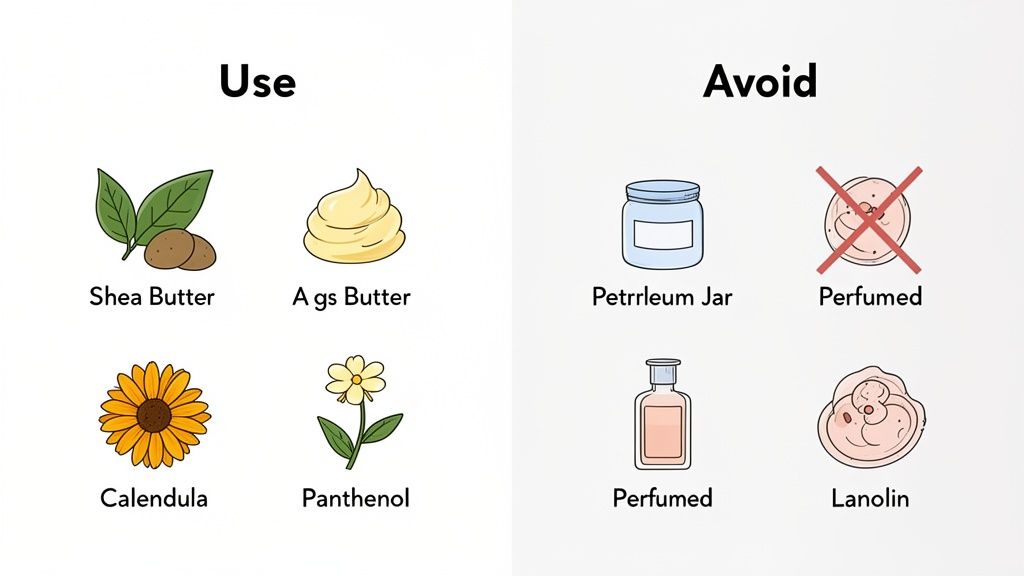
Walking down the skincare aisle can feel overwhelming, especially when you’re trying to find the right thing for new ink. The labels are packed with ingredients, and honestly, knowing which ones help versus which ones hurt is the most critical part of aftercare.
Not all moisturizers are created equal. What works for your face or hands might be the absolute wrong choice for a healing tattoo. This guide will help you decode those labels with confidence, so you know exactly what you’re looking for and what to run from.
Ingredients That Nurture Your Ink
When you're scanning a product label, you want to see ingredients known for being gentle, hydrating, and anti-inflammatory. Think of these as the support crew for your skin's natural healing process, helping it regenerate while keeping that ink locked in.
- Shea Butter: This stuff is a fantastic emollient, which is just a fancy way of saying it soothes and softens dry, angry skin. It’s loaded with vitamins A and E, helping your skin stay elastic and heal up without feeling heavy or greasy.
- Calendula: Extracted from marigold flowers, calendula is a botanical hero for its calming and antiseptic qualities. It's brilliant for reducing the initial redness and swelling that comes with any fresh tattoo.
- Panthenol (Vitamin B5): This is a powerful humectant, meaning it pulls moisture into the skin and holds it there. It helps repair your skin's natural barrier, cuts down on the itch factor, and keeps the whole area comfortably hydrated.
These ingredients work with your body, not against it. They provide the support your skin needs to do its job, ensuring your tattoo stays sharp and vibrant for the long haul.
At Fountainhead NY, we emphasize that the best aftercare feels supportive, not suffocating. Your skin needs to breathe. Choosing products with high-quality, beneficial ingredients ensures you're helping, not hindering, the healing process.
Common Irritants to Strictly Avoid
Just as important as knowing what to look for is knowing what to leave on the shelf. Some of the most common skincare ingredients can spell trouble for a healing tattoo, leading to clogged pores, allergic reactions, or even a faded final product.
You’ll want to be wary of these in any aftercare product you consider:
- Petroleum and Mineral Oil: Sure, products like Vaseline create a barrier, but that’s the problem—they're occlusive. They don’t let the skin breathe, which traps moisture and bacteria. This can slow down healing and lead to nasty breakouts or infections.
- Lanolin: This comes from sheep's wool, and it’s a surprisingly common allergen. Slapping it on a fresh tattoo can trigger an itchy rash or full-blown contact dermatitis, which is the last thing you want to deal with.
- Artificial Fragrances and Dyes: These are probably the number one cause of skin irritation. A healing tattoo is incredibly sensitive, and the chemicals used for scents can cause redness, burning, and allergic reactions. Always, always go for fragrance-free.
- Certain Alcohols: While some fatty alcohols are perfectly fine moisturizers, many simple alcohols (like SD alcohol or denatured alcohol) are incredibly drying. They strip your skin of its natural oils, which can lead to cracking, scabbing, and poor healing.
It really just comes down to reading the label and understanding what each ingredient does. For more specific recommendations, check out our guide on what you can safely put on your tattoo.
Ointments, Balms, and Lotions Explained
The type of product you use matters just as much as what's in it. Ointments and balms have historically dominated the aftercare market, pulling in over 30.50% of revenue share back in 2021. This isn't surprising—their ability to deeply moisturize tattooed skin with breathable butters and oils makes them a solid choice for the initial healing stages.
To make sense of the options, here's a quick breakdown of the three main types.
Comparing Aftercare Product Types: Ointment vs. Balm vs. Lotion
The format of your aftercare—whether it's a thick ointment, a waxy balm, or a light lotion—should change as your tattoo heals. Each one serves a different purpose at a different stage. This table breaks down when and why you'd choose one over the other.
| Product Type | Best For | Key Ingredients to Look For | When to Use |
|---|---|---|---|
| Ointment | The first 1-3 days of healing. Provides a protective, breathable barrier when the skin is most vulnerable and raw. | Panthenol, Shea Butter, Vitamin E. Avoid petroleum. | For that initial, critical healing phase right after you get tattooed. |
| Balm | Early to mid-healing, especially when scabbing starts. Offers deep hydration without being as greasy as an ointment. | Calendula, Beeswax (for texture), Coconut Oil, Shea Butter. | Once the initial sensitivity calms down and you're moving into the peeling/scabbing phase. |
| Lotion | Mid-to-late healing and long-term daily care. Lightweight and absorbs quickly, perfect for managing the itchy phase. | Aloe Vera, Vitamin B5 (Panthenol), natural, non-irritating moisturizers. Must be fragrance-free. | Once the scabs have fallen off and for everyday maintenance to keep the ink looking fresh. |
Ultimately, the best choice depends entirely on your skin and where you are in the healing process. A good strategy is to start with a breathable ointment or balm for the first few days, then switch over to a lightweight, unscented lotion as the tattoo starts to peel and itch. By choosing the right ingredients and the right product type, you're giving your new art the best possible shot at healing perfectly.
Protecting Your Tattoo for a Lifetime
Once the peeling and itching are finally over, your tattoo isn't just healed—it's settling in for the long haul. The hardest part is behind you, but this is where the focus shifts from short-term healing to a lifelong maintenance routine. Keeping your art looking as sharp and vibrant as the day you got it is now the name of the game.
Think of your tattoo as a permanent part of your skin. Its longevity is directly tied to how well you care for that skin over the years. Things like sun exposure, hydration, and your overall health will ultimately decide whether your ink stays crisp and bold or fades into a blurry memory. This is especially true for the work we do at Fountainhead NY, where intricate styles like fine-line and realism depend on every tiny detail staying put.
Sun Protection: The Ultimate Ink Preserver
Sunlight is, without a doubt, the number one enemy of your tattoo. UV radiation literally breaks down the ink pigment sitting in your skin, causing colors to wash out and black lines to blur into a soft, hazy grey. It’s like leaving a photograph in a sunny window—the vibrant colors eventually fade, and the same thing happens to your tattoo, just much more slowly.
To stop this from happening, sunscreen is completely non-negotiable. For the first few weeks after your tattoo is fully healed on the surface, your best bet is to simply keep it covered with clothing. After that, applying a high-quality sunscreen needs to become part of your daily routine.
Look for a broad-spectrum sunscreen that protects against both UVA (aging) and UVB (burning) rays. We recommend a minimum of SPF 30, but going for SPF 50 or higher is an even smarter move to protect your investment. Mineral-based sunscreens with zinc oxide or titanium dioxide are fantastic, especially for sensitive skin, because they create a physical barrier on top of the skin instead of being absorbed.
Protecting your tattoo from the sun isn't just a suggestion; it's the single most effective thing you can do to keep it vibrant for decades. A few seconds of applying sunscreen can add years to the life of your art.
Consistent Moisturizing for Crisp Lines
Beyond shielding your tattoo from the sun, daily moisturizing is the next crucial step to keeping it looking its best. Well-hydrated skin is healthy and elastic, and it reflects light better, which makes your ink appear brighter and more defined. On the flip side, dry, flaky skin can make even the most brilliant tattoo look dull and muted.
For long-term care, you can graduate from specialized tattoo aftercare products to any high-quality, fragrance-free body lotion you like. We often suggest looking for products with nourishing ingredients like shea butter, ceramides, or hyaluronic acid that help support a strong, healthy skin barrier.
This simple daily habit pays off in big ways:
- Prevents Fading: Healthy, hydrated skin holds onto pigment more effectively over time.
- Keeps Lines Sharp: Supple skin helps prevent the microscopic cracking and blurring that can happen as skin ages.
- Enhances Color: Moisturized skin just looks healthier, which makes colors pop and blacks look richer and deeper.
The Role of Overall Health
Finally, always remember that your tattoo is part of a living canvas—your body. How it looks is a direct reflection of your overall health. One of the easiest things you can do is stay well-hydrated by drinking plenty of water, which keeps your skin plump and healthy from the inside out.
A balanced diet rich in vitamins and antioxidants also plays a huge role in your skin's resilience and ability to repair itself. It might seem disconnected, but how you treat your body will ultimately show in your skin and, by extension, in the clarity and longevity of your tattoo. Combine diligent sun protection with daily moisturizing and a healthy lifestyle, and you'll ensure your art remains a bold statement for a lifetime.
Troubleshooting Common Tattoo Healing Issues
Even when you follow every aftercare instruction to the letter, healing can sometimes throw you a curveball. Seeing your new tattoo doing something unexpected can be stressful, but most of the time, these little hiccups are minor and easy to manage. Knowing how to spot and react to common healing quirks is the key to keeping your tattoo (and your sanity) on track.
This is your practical guide for navigating those moments. We'll cover everything from stubborn scabs and annoying pimple outbreaks to the more serious signs of an allergic reaction or infection. The goal here is to give you the confidence to handle small setbacks and, more importantly, to know when it’s time to call your artist or a doctor.
Dealing with Heavy Scabbing
While some light flaking is a totally normal part of the process, thick, heavy scabs can signal a problem. They often pop up if the tattoo was allowed to dry out too much in the early stages or if the area got rubbed or bumped around a lot.
Whatever you do, do not pick the scabs. Picking them off prematurely can literally pull ink right out of your skin, leaving you with patchy, faded spots that will definitely need a touch-up.
Instead, focus on gentle care to help them heal and fall off on their own. Keep up your routine of washing the area two to three times a day, but be extra gentle. When you apply moisturizer, just dab it on carefully instead of rubbing it in to avoid disturbing anything. Patience is your best friend here.
Allergic Reactions to Aftercare Products
Sometimes, the culprit isn't the tattoo itself—it's the lotion you're putting on it. If you notice a red, bumpy, and intensely itchy rash developing on or around your tattoo, you might be having an allergic reaction to one of your aftercare products. This is often caused by fragrances, dyes, or specific ingredients like lanolin that can be found in some lotions.
The fix is usually straightforward:
- Stop Using the Product Immediately: Ditch the lotion or balm you suspect is causing the problem.
- Wash the Area: Gently clean your tattoo with a fragrance-free antibacterial soap to get rid of any residue.
- Switch Products: Grab a different, hypoallergenic, and fragrance-free moisturizer. If you're not sure what to get, just call the studio. We'll have a recommendation for you.
A true allergic reaction to a product will typically cause a rash that spreads beyond the edges of the tattoo itself. If the redness and irritation are confined strictly to the inked lines, it could be a rare ink allergy, and that's a conversation you need to have with your doctor.
Annoying Tattoo Pimples
Seeing a breakout of little pimples on your new tattoo is incredibly common and usually points to one thing: over-moisturizing. While keeping your tattoo hydrated is crucial, smothering it with a thick layer of ointment or lotion will clog your pores. Your skin is already sensitive from being tattooed, and all that trapped moisture and oil creates the perfect storm for pimples.
To fix it, just scale back your moisturizing routine. Make sure you're only applying a very thin layer of product—just enough to give the skin a slight sheen, not a greasy, shiny coating. If the pimples are stubborn, try cutting back to moisturizing just once or twice a day until the breakout clears up.
When to See a Doctor
Look, most healing issues are minor annoyances, but it's vital to recognize the signs of a real infection. While they're rare, infections require immediate medical attention.
You need to seek professional medical advice if you experience any of these:
- Pain that gets worse after the first three days.
- Thick, yellow, or green pus oozing from the tattoo.
- A foul odor coming from the area.
- Red streaks spreading outward from the tattoo.
- You develop a fever or generally feel unwell.
Normal healing involves some redness, tenderness, and peeling. An infection, on the other hand, will feel like it's getting progressively worse, not better. Your health is always the top priority, so don't ever hesitate to contact a doctor if you suspect something is seriously wrong.
Common Questions About Tattoo Aftercare Products
Even with a solid plan, questions always pop up during the healing process. Let's be honest, navigating the world of aftercare products can be confusing, so we’ve pulled together the most common questions we hear at the studio to give you clear, straightforward answers.
Think of this as your quick-reference guide. Getting these small details right makes a massive difference in how your tattoo heals and how it will look for a lifetime.
Can I Use Regular Lotion on My New Tattoo?
It’s tempting to grab whatever lotion is already in your bathroom cabinet, but you really need to avoid most regular body lotions for the first 2-3 weeks. A fresh tattoo is an open wound, and many of those lotions contain fragrances, dyes, and alcohols that will do more harm than good. They can seriously irritate the area, causing a burning sensation or even an allergic reaction.
Stick to products specifically made for tattoos or a gentle, fragrance-free moisturizer your artist recommends. Once your tattoo is fully healed and the skin surface is completely closed, a quality unscented body lotion is perfect for daily, long-term maintenance.
How Do I Know if My Tattoo Is Infected?
First, don't panic. Normal healing involves some redness, mild swelling, and peeling—that's just your body doing its job. The signs of an actual infection are much more severe and should be taken seriously.
Key warning signs of an infection include redness that spreads and worsens after day three, a thick yellow or green discharge, a foul odor, or developing a fever. If you experience any of these symptoms, contact a doctor immediately.
Infections are rare when you follow proper hygiene, but they require prompt medical treatment to protect both your health and your new tattoo. For a more detailed breakdown, you can learn more from our tattoo aftercare frequently asked questions guide.
When Can I Go Swimming After Getting a Tattoo?
This one is a hard no. You must avoid submerging your new tattoo in any still water for at least 2-4 weeks. This isn't just a suggestion; it's a critical rule for proper healing.
This includes:
- Pools
- Hot tubs
- Lakes and oceans
- Baths
Soaking a healing tattoo is a surefire way to introduce bacteria, which can lead to a serious infection. Beyond the infection risk, it also oversaturates the skin, causing ink to heal poorly and resulting in a faded, patchy mess. Showers are perfectly fine—in fact, they're necessary—just don't let the water spray directly on your new piece for too long.


mh4fpi