

Proper tattoo care starts the second you walk out of the studio, and it all boils down to two simple things: keep it clean and keep it moisturized. The first 48 hours are absolutely critical. This is where you’ll leave the initial wrap on for a few hours, do your first gentle wash with the right soap, and carefully apply the first layer of ointment.
This initial period truly sets the stage for how your tattoo will look for the rest of its life. Get it right, and you're locking in that vibrancy for years to come.
Your First 48 Hours with New Ink
Walking out with that fresh ink is an incredible feeling. The artist’s work is done, but now the responsibility is yours. How you treat your new tattoo over the next two days will directly impact its longevity, color saturation, and the crispness of its lines.
Think of your new tattoo as a beautiful, controlled wound. Your job is to protect it from bacteria while giving it the perfect environment to heal.
Handling these first few hours correctly makes a world of difference. Did you know that proper aftercare can dramatically boost how long your tattoo looks great? Tattoos that are well cared for can retain 85-90% of their vibrancy after five years, compared to just 50% for neglected ones. Studies also show that consistent moisturizing in the first four weeks can slash fading by 40%, while simply staying out of the sun can prevent another 35% of color loss. These numbers aren't just stats; they're proof that what you do now really matters.
Leaving the Studio
Your artist will wrap your new tattoo, and this is your first line of defense. This barrier keeps the vulnerable skin safe from airborne bacteria, friction from your clothes, and any accidental bumps.
- Saniderm or "Second-Skin": This is a clear, medical-grade adhesive film. Your artist will give you specific instructions, but it typically stays on anywhere from 24 hours to four days.
- Traditional Bandage: If you got a classic absorbent pad with tape, the rule of thumb is to take it off after 2 to 4 hours. Leaving it on any longer traps moisture and can quickly become a breeding ground for bacteria.
Once you’re home, find a clean spot to handle the removal. Don't just rip it off in a rush.
To help you keep track of these initial crucial steps, here's a quick checklist.
Immediate Aftercare Checklist
This table summarizes the most important actions to take right after your tattoo session to kickstart a healthy healing process.
| Timeframe | Action Required | Why It's Important |
|---|---|---|
| First 2-4 Hours | Keep the initial bandage on as instructed. | Protects the open wound from bacteria and contaminants. |
| After 2-4 Hours | Gently remove the bandage and perform the first wash. | Cleans away plasma, blood, and excess ink to prevent thick scabs. |
| Immediately After Washing | Pat the area dry with a clean paper towel. | Prevents irritation and lint transfer from cloth towels. |
| After Air Drying | Apply a very thin layer of approved aftercare ointment. | Moisturizes the skin and provides a protective barrier. |
Following these simple actions lays the groundwork for a tattoo that heals beautifully and stays vibrant.
The First Wash Is the Most Important
Washing a new tattoo for the first time can feel a little nerve-wracking, but it's a straightforward and absolutely vital step. This wash gets rid of any dried blood, plasma, and extra ink, which is key to preventing scabs from getting too thick and heavy.
- Wash Your Hands First: Before you even think about touching your tattoo, wash your hands thoroughly with antibacterial soap.
- Use Lukewarm Water: Hot water can open your pores and might cause ink to bleed out, while cold water can be a shock to already sensitive skin. Lukewarm is just right.
- Use a Gentle Soap: Grab a mild, liquid, fragrance-free antibacterial soap. Work up a lather in your hands and gently wash the tattoo using only your fingertips. Do not use a washcloth, sponge, or loofah.
- Rinse It All Off: Let the lukewarm water run over the tattoo until every last bit of soap is gone.
- Pat, Don't Rub: Use a clean, disposable paper towel to gently pat the area dry. A regular bath towel can hold bacteria and leave behind lint fibers. Let it air dry for another 5-10 minutes before you put anything on it.
Key Takeaway: The goal of this first wash is to be incredibly gentle. You aren't scrubbing—you're carefully cleaning a sensitive area. Rushing this or using harsh products is one of the easiest ways to mess up your new ink.
For a complete guide on what to expect as your tattoo heals, check out our day-by-day tattoo aftercare timeline for more detailed information.
Your Tattoo's Healing Timeline: What to Expect
Think of your new tattoo as a controlled, artistic wound. Your body is going to treat it like one, and knowing what to expect during the healing process can save you a lot of anxiety. The next month is a journey with a few distinct phases, from the initial raw feeling to the final, settled look of your art.
Understanding what’s coming helps you stay calm and avoid classic mistakes, like scratching an itchy, peeling tattoo. This is your week-by-week guide to what's happening under your skin and how to best care for your tattoo as it becomes a permanent part of you.
Here's a quick look at the first few crucial milestones.
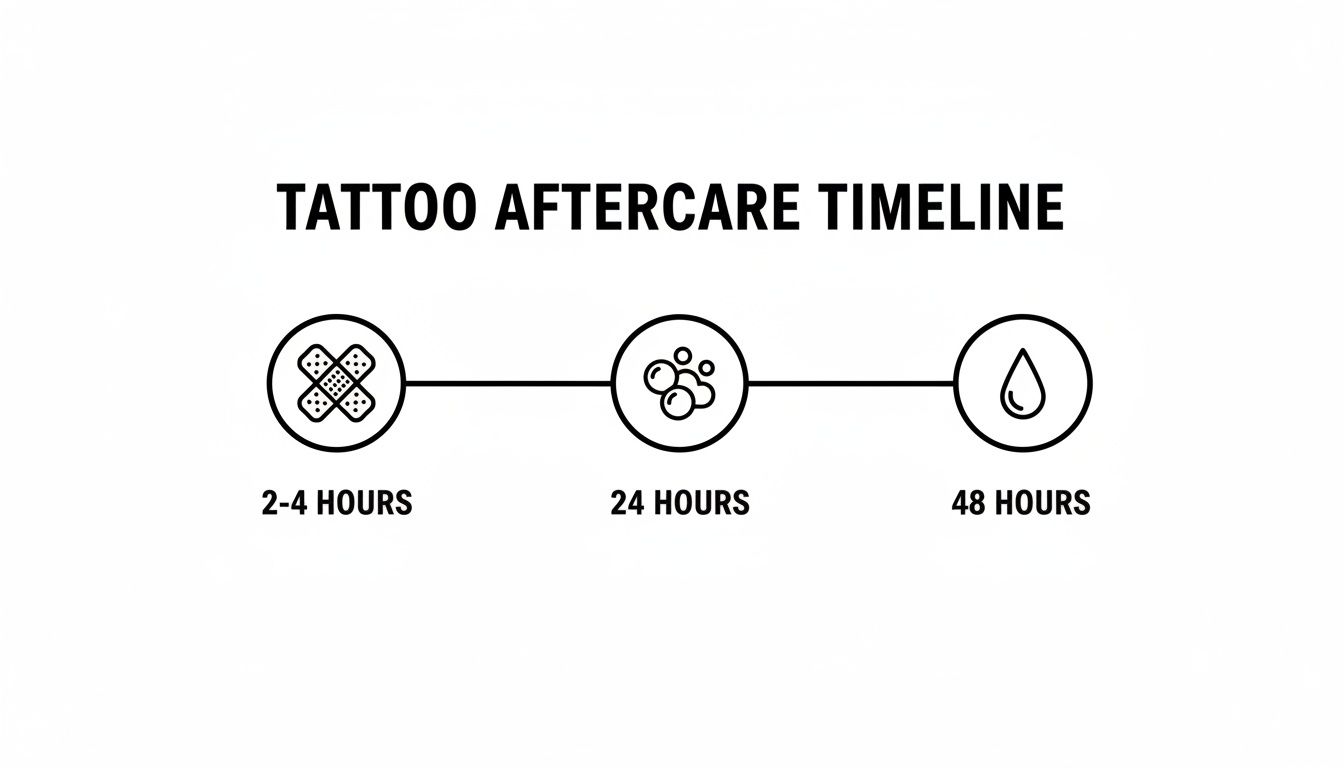
This visual guide breaks down your first three critical checkpoints: getting the bandage off, the first wash, and the initial layer of moisturizer—all within the first 48 hours.
Week One: The Open Wound Phase
For the first week or so (roughly Days 1-6), your tattoo is at its most vulnerable. Right after your session, the area will probably be red, swollen, and tender, a lot like a bad sunburn. You might also see some clear plasma and excess ink "weeping" from the skin.
This is a totally normal immune response. Your body is rushing healing cells to the site to start repairs. Your only job during this time is to keep the area spotlessly clean to prevent infection. Just stick to the washing and moisturizing routine we covered, 2-3 times daily.
Pro Tip: Don’t freak out if the area feels warm for the first day or two. That’s just your body's inflammatory response kicking into gear. However, if that warmth sticks around past day three or you see excessive pain or pus, call your artist right away.
As the week goes on, the initial swelling and redness will start to fade. The tattoo will begin to feel tight as it dries out, which is the signal that it’s getting ready for the next phase.
Week Two: The Itchy and Flaky Phase
Brace yourself for what is easily the most annoying part of the process. Around Days 7-14, your tattoo will start peeling and flaking, almost exactly like a healing sunburn. This usually comes with some intense itching, which is a good sign—it means your skin is regenerating.
It is absolutely critical that you do not scratch or pick at the flakes. You can literally pull ink right out of your skin, leaving you with patchy spots that will need a touch-up.
- Tackle the Itch: Instead of scratching, you can gently tap or even lightly slap the area. A thin layer of your approved, fragrance-free moisturizer can also bring some much-needed relief.
- Let It Go: The flakes will come off on their own when you're in the shower or on your clothes. Just let them fall away naturally; you want to protect that delicate new skin underneath.
As your tattoo heals, you're essentially helping your skin do its job. A healthy top layer is crucial for the best results, so you'll want to do everything you can to repair your skin barrier and support this natural process.
Weeks Three and Four: The Final Stretch
Once the main peeling show is over (around Days 15-30), your tattoo might look a little… off. This is often called the "milky" or "cloudy" stage, where the art looks dull, hazy, or less vibrant than you remember. Don't worry, this is also completely normal.
What you're seeing is a fine, semi-translucent layer of new skin that has formed over the ink. It hasn't fully settled yet, and it's obscuring the true vibrancy of the tattoo. It's like looking at a bright painting through a sheet of wax paper.
During this final phase, your job is simple: keep moisturizing and protect it from the sun.
- Keep Moisturizing: Stick with a lightweight, unscented lotion once or twice a day. This keeps that new skin healthy and hydrated.
- Avoid the Sun: Your new skin is incredibly sensitive to UV rays. Keep the tattoo covered with clothing or stay in the shade. Sunscreen is a no-go until the tattoo is fully healed, which is usually after that one-month mark.
By the end of the first month, that cloudy layer will have settled, and you'll see the sharp lines and brilliant color of your healed tattoo. Even after it’s healed, long-term care—especially sun protection—is the key to keeping your art looking crisp for years to come.
Mastering Your Daily Cleaning Routine
A consistent cleaning and moisturizing routine is the absolute bedrock of proper tattoo aftercare. Get this part right, and you’re setting your new ink up for a vibrant, healthy life. This isn't just generic advice; this is the hands-on, practical guidance we give every single client to ensure their tattoo heals perfectly.
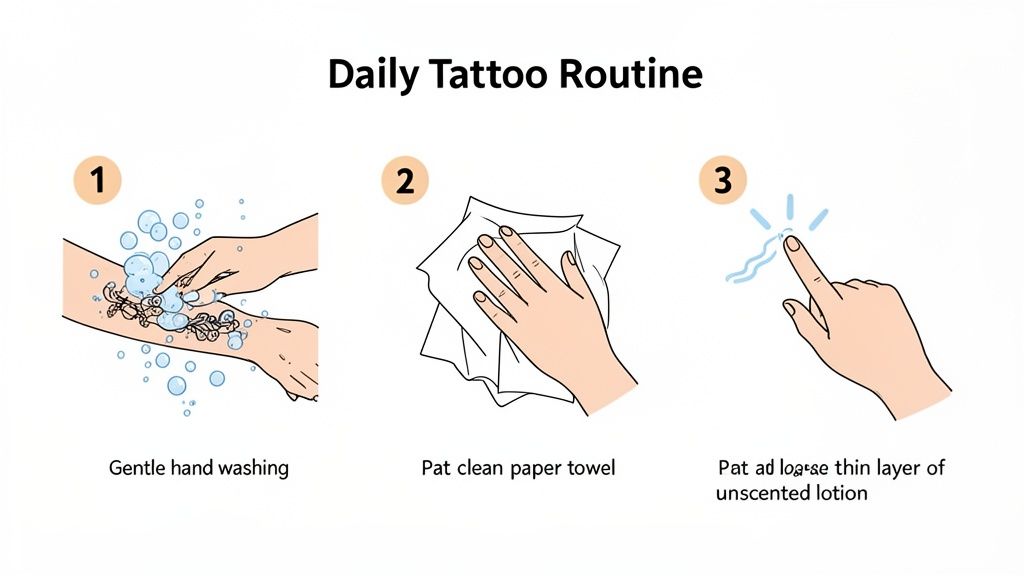
The goal is simple: keep the area clean to head off infection and keep it properly moisturized to help your skin do its job. It's a delicate balance. Too little care can lead to heavy scabbing and fading, while too much can literally suffocate the healing skin.
Selecting The Right Products
Your choice of soap and moisturizer matters more than you might think. Using the wrong stuff can introduce irritants, trigger allergic reactions, or even pull ink from the skin. When it comes to healing tattoos, simplicity and purity are your best friends.
For cleaning, a fragrance-free, liquid antibacterial soap is non-negotiable. Don't even think about using a bar of soap—they're notorious for collecting bacteria on their surface between uses. The soap’s job is to gently wash away any plasma, excess ink, and airborne particles without stripping your skin of its necessary oils.
When it comes to moisturizing, the products you use will actually change as the tattoo heals.
- First Few Days (Ointment Phase): You'll want to start with a dedicated tattoo healing ointment like Aquaphor or A+D. These create a light, protective barrier that still allows the skin to breathe.
- After Peeling Starts (Lotion Phase): Once you see the initial flaking begin (usually after 3-5 days), it's time to switch. A gentle, unscented lotion is perfect. We always recommend trusted brands like Lubriderm, Cetaphil, or Eucerin.
Critical Tip: Absolutely avoid any products containing petroleum jelly, like Vaseline. It might seem protective, but it creates a waterproof seal that completely suffocates the tattoo. This traps moisture and bacteria, creating a perfect storm for infection and breakouts.
The Art of Application
How you apply these products is just as critical as which ones you use. The mantra we drill into our clients is "less is more." The single most common mistake we see is people slathering on a thick, goopy layer of ointment, thinking more is better. It's not. That heavy layer clogs your pores and traps moisture, leading to a bubbly, poorly healed tattoo.
- Start with a Clean Slate: Always, always wash and thoroughly dry your tattoo before putting anything on it.
- Use Clean Hands: Your hands should be freshly washed every single time you touch your new tattoo. No exceptions.
- Apply a Thin Layer: Take a tiny, pea-sized amount of ointment and gently rub it into the skin until it's fully absorbed. The tattoo should have a slight sheen, not a greasy, wet look. If it's shiny, you’ve used too much—just blot the excess gently with a clean paper towel.
This 'thin layer' rule is the secret to providing moisture without oversaturating the skin. If you're still unsure about the washing part of the equation, our guide on how often you should wash a new tattoo breaks down the schedule in more detail.
Building a Consistent Schedule
Consistency is what turns good advice into great results. For that crucial first week, your goal should be to wash the tattoo two to three times per day. Think once when you wake up, once before bed, and maybe a third time midday if you've been sweating or it got exposed to any dirt.
After each wash, pat it dry completely and apply that thin layer of ointment. Once you transition to lotion, you can stick to that schedule or just apply it whenever the skin feels tight or dry.
This daily ritual is your direct contribution to the final outcome of the artwork. By following this simple but vital process, you are actively ensuring your tattoo heals cleanly, looks sharp, and stays brilliant for years to come.
How to Spot and Handle Healing Complications
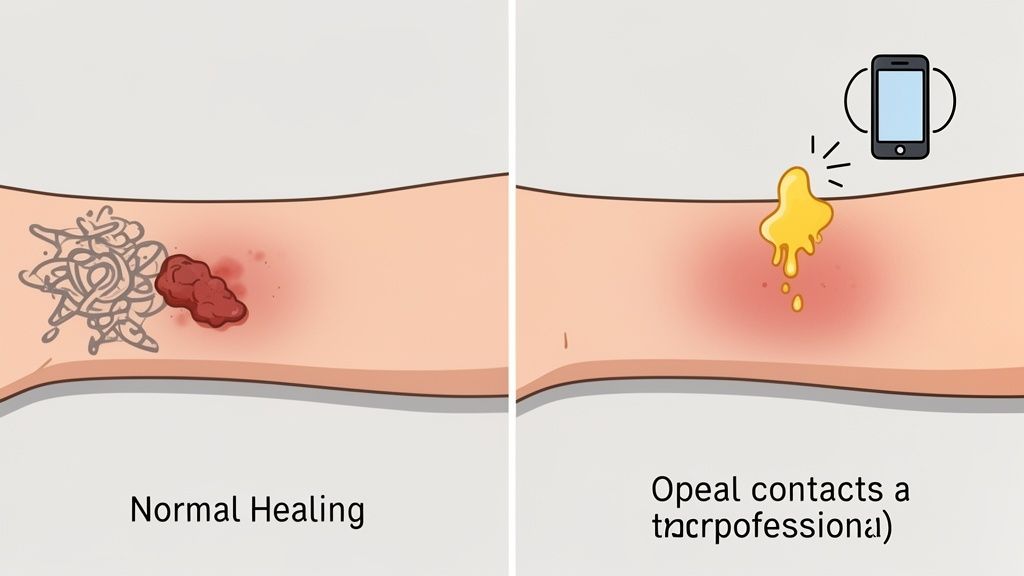
While complications are pretty rare when you're working with a pro, your best defense is always knowing how to spot a problem early. Understanding the difference between a normal healing process and a potential red flag gives you the power to act fast, protecting both your health and your new art.
Most of the time, your tattoo will heal without a single issue. But at the end of the day, an open wound is an open wound, and it needs to be treated with respect. This isn’t about causing alarm; it's about being prepared so you can navigate the healing journey with confidence.
Recognizing The Signs of an Infection
An infection is the most common hiccup, but thankfully, it's also highly preventable with a solid cleaning routine. The trick is learning to distinguish between normal healing symptoms and the warning signs of something more serious. A little redness and soreness in the first 48 hours is totally expected, but a true infection will show up with much more aggressive symptoms.
Keep an eye out for these key indicators:
- Persistent Redness: If the redness around your tattoo spreads or gets darker after the first couple of days, that's a red flag.
- Prolonged Swelling: Swelling should really peak within 48 hours and then start to go down. If the area stays puffy or gets worse, pay close attention.
- Pus or Discharge: Any thick, cloudy, yellow, or green fluid is a clear sign of infection. The clear, slightly yellowish plasma that weeps in the first day is normal; pus is absolutely not.
- Increasing Pain: The initial soreness should be fading by day three. If the pain gets worse, becomes sharp, or starts to throb, it’s a major warning sign.
- Foul Odor: A healing tattoo shouldn't have a strong smell. Any unpleasant odor coming from the area points to a bacterial issue.
- Fever or Chills: If you start feeling sick—running a fever or getting chills—it means the infection could be spreading. This requires immediate medical attention.
For a deeper dive into wound care, it's worth learning how to prevent Staphylococcus aureus, a common bacterium that can cause serious tattoo infections.
Allergic Reactions and Other Issues
Beyond infections, there are a couple of other, less common issues to watch for. An allergic reaction to the ink itself can sometimes happen, though it's pretty rare with the high-quality pigments used in professional studios today.
An allergic reaction often looks like an angry, bumpy rash right on the tattooed lines. The skin might get intensely itchy, raised, or even scaly, sometimes weeks or months after you got the tattoo. Historically, red inks were the most frequent culprits, but any color can potentially trigger a reaction.
Another thing to watch for is excessive scabbing. While some light flaking is a normal part of the process, developing thick, hard scabs can be a problem. This usually happens if the tattoo wasn't cleaned properly in the first few days or if it was allowed to get too dry. These heavy scabs can crack open and bleed, creating another path for infection and potentially pulling ink out as they fall off.
To make it easier to tell what's normal and what's not, here’s a quick side-by-side comparison.
Normal Healing vs. Potential Complication
| Symptom | Normal Healing Sign | Potential Red Flag |
|---|---|---|
| Redness | Mild, localized redness that subsides within 48-72 hours. | Redness that spreads, darkens, or has red streaks radiating from the tattoo. |
| Swelling | Minor swelling that peaks around day two and then decreases. | Swelling that worsens after 48 hours or feels hot to the touch. |
| Pain | General soreness, similar to a sunburn, that fades each day. | Sharp, throbbing, or increasing pain after the third day. |
| Discharge | Small amounts of clear or slightly yellowish plasma (weeping) in the first 24-48 hours. | Cloudy, thick pus that is yellow or green; any foul-smelling discharge. |
| Scabbing | Light, flaky peeling like a sunburn; thin scabs that fall off naturally. | Thick, hard, cracking scabs that are deep and may bleed. |
| Overall Feeling | The area feels tender but you feel fine overall. | You feel sick, have a fever, chills, or body aches. |
This table is just a guide. When in doubt, always reach out for a professional opinion.
What to Do When You Suspect a Problem
If you notice any of the warning signs of an infection or allergic reaction, don't just wait and hope it gets better on its own. The right course of action is straightforward.
First, Contact Your Artist. Send them clear, well-lit photos of the area and describe exactly what you’re seeing and feeling. Experienced artists have seen it all. They can often tell you if what you're experiencing is a normal part of healing or a genuine cause for concern and can provide initial guidance.
Second, if your artist confirms your fears or if your symptoms are severe—especially if you have a fever or see pus—you must see a doctor immediately. A tattoo infection is a medical issue that needs a professional diagnosis and, most likely, a course of antibiotics. Please don't try to self-treat with advice you found online. Your health is always the top priority.
Choosing a reputable, professional studio is your first and best defense against all of this. The numbers don't lie: infection rates plummet to under 0.5% in studios that follow gold-standard hygiene protocols. Staying vigilant during aftercare is simply the final piece of a successful and safe tattoo experience.
Long-Term Care For A Tattoo That Lasts
So, you’ve made it through the peeling, itching, and initial healing. Congratulations. But the real work of keeping that tattoo looking incredible for a lifetime has just begun. The focus simply shifts from short-term healing to long-term preservation.
This is the commitment that separates a tattoo that looks okay from one that stays sharp, vibrant, and stunning a decade down the line. Think of your healed tattoo like a piece of art hanging in a gallery. You wouldn’t let it get baked by the sun or covered in dust, would you? The same rules apply to the art on your skin.
The Unseen Enemy of Ink
Let's be blunt: the sun is the single biggest threat to the life of your tattoo. Its ultraviolet (UV) rays are relentless, constantly working to break down the ink particles your artist carefully packed into the dermis. Over time, this exposure is what turns rich blacks into muddy grays, vibrant colors into faded memories, and crisp lines into blurry suggestions of what they once were.
This isn't just an old wives' tale artists tell you. The science is solid. UV radiation can obliterate a tattoo, with studies showing it can cause a staggering 30-50% fade in just a couple of years if left unprotected. Considering North America is a leader in the global tattoo market, experts are constantly hammering home the need for broad-spectrum sun protection. You can read more about tattoo market growth and care trends here to see just how critical this has become.
Key Takeaway: Sun exposure is the number one cause of tattoo degradation. Nothing you do will preserve your ink more effectively than making sunscreen a non-negotiable part of your daily routine.
Your Daily Defense Against Fading
The best insurance policy for your artwork is integrating sun protection into your everyday life. For any healed tattoo that sees the light of day, this means applying a quality, broad-spectrum sunscreen every single morning—even when it's cloudy.
- Go for High SPF: Don't mess around with low numbers. You need at least SPF 30, but we always recommend SPF 50+ for the best possible defense.
- Broad-Spectrum is a Must: This is crucial. It ensures you’re shielded from both UVA rays (the ones that age skin and fade ink) and UVB rays (the ones that cause sunburn).
- Apply It Right: Slather it on a good 15-20 minutes before you head outside. And don't forget to reapply every couple of hours, especially if you’ve been swimming or sweating.
It’s simple, really. A few seconds applying sunscreen now will save you from the disappointment of a washed-out tattoo and the potential cost of getting it touched up or lasered later.
Beyond Sunscreen: The Role of Healthy Skin
While the sun is public enemy number one, the overall health of your skin plays a huge supporting role in how well your tattoo ages. Think of it this way: healthy, hydrated skin is a much better canvas for ink, helping it stay crisp and defined.
Don't stop moisturizing just because the initial healing is over. Keeping your tattooed skin hydrated with a solid, unscented lotion maintains its elasticity and health. This simple step prevents that dry, scaly look that can make even the best tattoo appear dull and lifeless. And yes, drinking plenty of water helps hydrate your skin from the inside out.
A little gentle exfoliation can also work wonders. Once or twice a week, using a mild exfoliant on the area helps slough off the dead skin cells sitting on top of your tattoo, instantly revealing the brighter, more vibrant ink underneath. Just be careful not to scrub aggressively, which can irritate the skin. If you need more ideas on safe products, check out our guide on what you can put on your tattoo. It's all part of a simple routine that will pay off for decades.
Common Tattoo Aftercare Questions Answered
Even with the best instructions, the healing process always throws a few curveballs. We've heard every question imaginable in our studio, from worries about hitting the gym to anxiety over how a tattoo looks when it's peeling. We get it.
To give you complete peace of mind, we've gathered the most common questions our artists answer day in and day out. Think of this as your go-to guide for those "is this normal?" moments that pop up along the way.
Can I Work Out After Getting A New Tattoo?
This is easily one of the top questions we hear, and the short answer is: you need to give it a rest. We strongly recommend holding off on any serious workouts for at least the first week.
Remember, your new tattoo is essentially an open wound. Excessive sweat is a huge problem because it can trap bacteria against the skin, creating a perfect breeding ground for infection. On top of that, moisture-logged skin under tight workout clothes can't breathe, which can lead to scabbing issues and a poor heal.
Then there's the physical stress on the tattoo itself.
- Friction: Your gym clothes rubbing against the fresh ink can cause major irritation, chafing the sensitive area and even pulling out ink.
- Stretching: Constant, repetitive movement—especially for tattoos near joints like your elbow or knee—can stretch and pull the healing skin, which can distort the artwork and cause fallout.
Light activity, like a casual walk, is usually fine after a couple of days. But for anything more intense, wait until the main peeling stage is finished, which is typically about a week in.
When Can I Go Swimming Or Take A Bath?
This one is a non-negotiable, hard-and-fast rule: you have to avoid fully submerging your new tattoo for a minimum of two to three weeks. This is one of the most critical parts of proper tattoo care.
That means staying out of everything:
- Swimming pools
- Oceans, lakes, and rivers
- Hot tubs and jacuzzis
- Baths
Soaking a healing tattoo is one of the riskiest things you can do. Pools, lakes, and even your own bathtub are filled with bacteria that can lead to a nasty infection. The chemicals in pools and hot tubs, like chlorine, are also incredibly harsh on healing skin. They can cause severe irritation and can literally pull ink out, leaving you with a faded, patchy tattoo that will definitely need a touch-up.
The Golden Rule: Stick to quick showers. It’s fine to let water run over your tattoo, but don’t blast it directly with the showerhead. Once it's fully healed—meaning no more scabs, flakes, or shiny skin—you're clear to get back in the water.
What Should I Do If My Tattoo Is Extremely Itchy?
First off, don't panic. Itching is a totally normal—and actually a good—sign that your skin is healing and regenerating new layers. It usually gets most intense right as the tattoo starts to flake and peel. But as maddening as it gets, you absolutely cannot scratch it.
Your fingernails will tear off flakes and scabs that aren't ready to fall off, pulling ink out with them. This can lead to blank spots, scarring, and a ruined tattoo.
Instead of scratching, try one of these tricks for relief:
- Gently Tap It: A light, open-palmed slap or gentle tapping on and around the itchy area can trick the nerves into settling down without causing any damage.
- Apply a Thin Layer of Lotion: Often, the itch is just from dry, tight skin. A very thin layer of your recommended fragrance-free moisturizer can provide immediate relief.
- Use a Cool Compress: For really intense itching, you can briefly apply a clean, cool, damp cloth to the area for a few minutes. Just don't leave it on so long that the tattoo gets waterlogged.
If the itch is unbearable or comes with a raised, bumpy rash, it might be an allergic reaction. Get in touch with your artist right away.
Why Does My Tattoo Look Dull After Peeling?
This is another moment that sends people into a spiral, but it's a completely normal part of the process. Artists call this the "milky" or "cloudy" phase. Once the top layer of flaky skin is gone, a very thin, semi-translucent layer of new skin has formed over the ink.
This fresh layer of skin isn't fully settled yet, and it temporarily obscures the ink below, making your tattoo look faded or hazy. It's frustrating to see your vibrant new piece look so lackluster, but trust us, it's temporary.
Don't worry. Over the next few weeks, as your skin completes its regeneration cycle, that milky layer will settle and become more transparent. The true, crisp colors of your tattoo will pop right back through, often looking even bolder than before. Just keep it moisturized and, most importantly, protected from the sun.
At Fountainhead New York, we believe a world-class tattoo deserves world-class aftercare. Our artists are dedicated to giving you the best work and the knowledge to protect it for life. Explore our artists' portfolios and book your next piece with a team that values craftsmanship from the first line to the final heal.


