

Kicking off your search with "traditional tattoo shops near me" is the easy part. The real work begins when you have to sift through those results to find a place that truly understands the craft—a studio where timeless art and modern safety standards meet.
Finding a Shop That Will Do Your Tattoo Justice
Getting a traditional tattoo isn't just about finding the closest artist. It's an investment in a piece of permanent art that needs to look incredible for decades. This style, famous for its bold lines and classic imagery, requires a very specific skill set that you won't find at just any studio.
Your mission is to find a shop that not only honors the legacy of traditional work but also operates with the highest level of professionalism and care. It’s a process that involves digging into an artist's skill, the shop's hygiene, and the overall vibe of the place itself.
The Makings of a Top-Tier Tattoo Shop
When you're evaluating a shop, a few things should stand out immediately.
-
Real Artistic Skill: Don't just look at their single best photo on Instagram. Dive deep into the portfolio. You're looking for clean, powerful lines, colors that are packed in solid and bright, and designs that are well-balanced. Consistency across dozens of tattoos is the sign of a true professional.
-
Serious About Hygiene: This is completely non-negotiable. A reputable shop will be upfront about its sterilization methods. You should see single-use needles being opened for you, proper plastic barriers on all equipment, and a workspace that is visibly clean and organized. If it feels messy, walk away.
-
Clear and Respectful Communication: From your first email to your final aftercare instructions, the entire experience should feel professional and respectful. A great artist will listen to your ideas but also give you honest, expert advice on what will actually look good and hold up over time as a tattoo.
A tattoo is always a collaboration. The best shops create an environment that feels welcoming and professional, making you feel confident and comfortable from the initial chat all the way through the healing process.
Ultimately, finding the right shop is far more about quality than convenience. Putting in the effort to properly check out an artist and their studio is what ensures your tattoo will not only look amazing right after it's done but will also age beautifully.
Once you have that perfect piece, taking care of it is key. Our guide on how long tattoos take to heal has all the essential tips you'll need.
How to Actually Find and Vet Local Tattoo Artists
When your search for "traditional tattoo shops near me" leads you down a rabbit hole of generic studio pages, it's time to change your strategy. A simple map search is a decent first step, but the real gems are found when you start digging where the artists actually hang out and show off their work.
Instagram is your best friend here. Forget the broad shop searches and get specific with localized hashtags. Think like an artist. Instead of a generic query, try searching tags like #nyctraditional, #chicagotraditionaltattoo, or #longislandtattooartist. This simple trick cuts through the marketing noise and drops you right into the feeds of the people actually pulling the lines.
Once you land on an artist's page, you're looking at their living resume. This is where you get to play detective. You're not just looking for cool designs—you're dissecting their technical skill, piece by piece.
Reading an Artist's Social Media Feed
A truly skilled artist's Instagram feed has tell-tale signs of quality that go way beyond a cool filter.
- Healed Tattoo Photos: This is the absolute gold standard. Fresh tattoos almost always look sharp; the skin is swollen tight and the ink is at its darkest. The real test is how a tattoo settles in. Look for photos of work that's months, or even years, old. Do the lines still hold their weight? Is the color still vibrant and packed in?
- Clean and Consistent Line Work: Time to zoom in. Seriously, pinch and zoom on those photos. Are the outlines solid and smooth? Or are they shaky and wobbly? Inconsistent lines are a massive red flag, often pointing to inexperience or an unsteady hand.
- Solid Color and Shading: Traditional tattoos are known for their bold, saturated color. The ink should be packed in solidly, with no "holidays" (little empty spots). Shading should be smooth and purposeful, not blotchy or accidental-looking. This is a clear sign of an artist who has mastered their machine.
This little guide breaks down the three pillars of a great tattoo experience: the portfolio, the shop's hygiene, and the artist's craftsmanship.
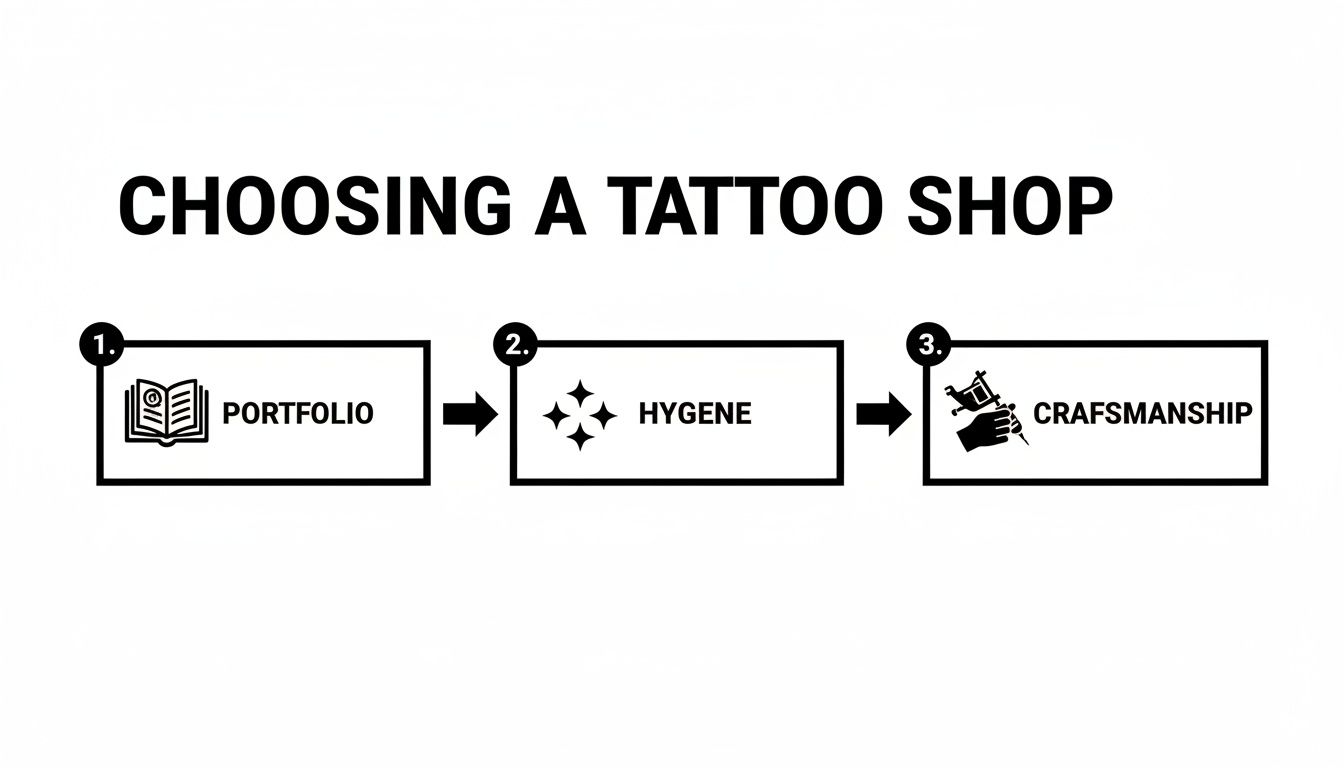
These three things aren't just suggestions; they are the non-negotiable foundation for getting a safe, high-quality tattoo that you won't regret.
Looking Beyond the Pictures
An artist’s skill is paramount, but the shop's professionalism matters just as much. A clean, modern, and easy-to-use website is a great sign. It shows they're organized and invested in the client experience from the very first click.
Online reviews on Google Maps are your window into other people's experiences, but you have to learn how to read them. One grumpy review could just be a bad day. A pattern of complaints about cleanliness, bad communication, or shady deposit practices? That's a dealbreaker.
It also helps to know a little bit about how search engines work when you're looking for "traditional tattoo shops near me." Learning about the main Google Maps ranking factors can give you a better sense of why certain shops pop up first.
Ultimately, you have to trust your gut. The best tattoos come from a place of mutual respect and clear communication between you and the artist. If the vibe feels off during your initial emails or messages, it probably won't get better in person. For a deeper dive into finding that perfect match, check out our complete guide on how to choose a tattoo artist. It'll get you fully prepared for the journey.
Reading a Portfolio Like a Professional
Okay, you’ve done your homework and narrowed your search from "traditional tattoo shops near me" to a handful of promising artists. Now for the most important part: digging into their portfolios. An artist's portfolio is their entire resume, and learning to read it with a critical eye is the single best skill you can develop in your search for the perfect tattoo.
This is where you find the real proof of their skill, consistency, and artistic vision.
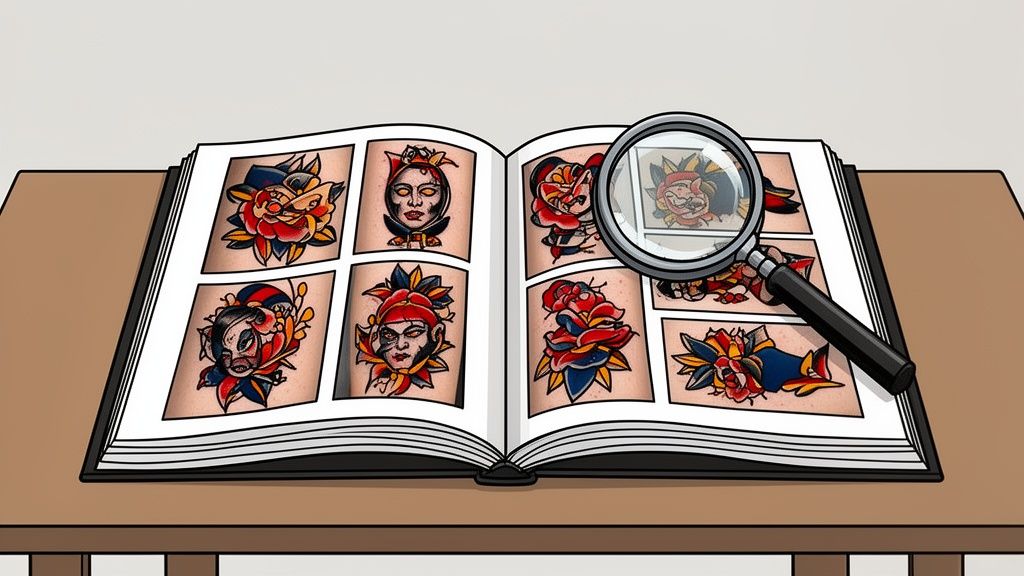
A great portfolio is way more than just a gallery of cool pictures. It's a testament to technical mastery. To get a feel for what top-tier quality looks like, it helps to browse some high-level artist portfolio website examples and see how the pros present their work.
Deconstructing the American Traditional Style
American Traditional tattoos have a distinct and powerful visual language. When you're scrolling through an artist's work, you aren't just looking for designs you like; you're checking for their command of these core elements.
- Bold, Clean Outlines: This is the skeleton of any traditional piece. The lines should be solid, confident, and uniform. Zoom in. Look for any shakiness or "blowouts," where ink has bled under the skin and created a fuzzy halo effect.
- Limited, Saturated Color Palette: Traditional work relies on a classic palette of reds, greens, yellows, and blacks. The color should be packed in solid and even, with no patchy areas or little missed spots (we call them "holidays"). The vibrancy tells you a lot about their technique.
- Iconic and Readable Imagery: Eagles, panthers, skulls, roses—these are the staples. The most important thing is that the designs are instantly readable, even from across the room. A skilled artist knows how to simplify a design to its most powerful form so it holds up for decades.
Distinguishing a Creator from a Tracer
A lot of artists get their start by tattooing "flash"—those pre-drawn designs you see hanging on shop walls. Tattooing classic flash is a rite of passage, but you want an artist who has moved beyond just copying someone else's work.
A truly professional portfolio will show a healthy mix of classic flash alongside the artist's own custom designs. Look for unique compositions or creative takes on traditional subjects. This shows you the artist not only understands the rules of the style but has the vision to create something new and personal for you.
A portfolio that’s filled with nothing but another artist's flash might be a red flag. It could signal a lack of originality or confidence. The best artists respect the history of the craft while bringing their own voice to their work.
The Ultimate Litmus Test: Healed Photos
This is, without a doubt, the most critical part of looking at a portfolio. Fresh tattoos almost always look good. The skin is swollen, which tightens up the lines, and the ink is at its absolute brightest. The real test of a tattoo’s quality is what it looks like after it has fully settled into the skin.
An artist who is confident in their technique will proudly show off photos of their healed work, often months or even years later. When looking at these photos, ask yourself:
- Are the outlines still bold and crisp?
- Has the color stayed vibrant and solid?
- Is the design still clear and easy to read?
If an artist’s portfolio is made up entirely of fresh, glossy photos, it should give you pause. Healed work is the ultimate evidence of craftsmanship. It's your best guarantee that you're investing in a piece of art that is truly built to last a lifetime.
Verifying Shop Safety and Professionalism
A stunning design means nothing if it’s created in an unsafe environment. After you've spent hours scrolling through portfolios and finding an artist you love, your focus has to shift from artistry to hygiene. This is the non-negotiable part of the journey. Cleanliness and professional conduct are everything.
The tattoo industry has grown into a massive, USD 2.43 billion global market as of 2025, and it's not slowing down. You can get a better sense of that explosive growth from the full tattoo market report on fortunebusinessinsights.com. This boom means shops are no longer just back-alley parlors; they're high-end artistic businesses where impeccable standards are the absolute minimum.
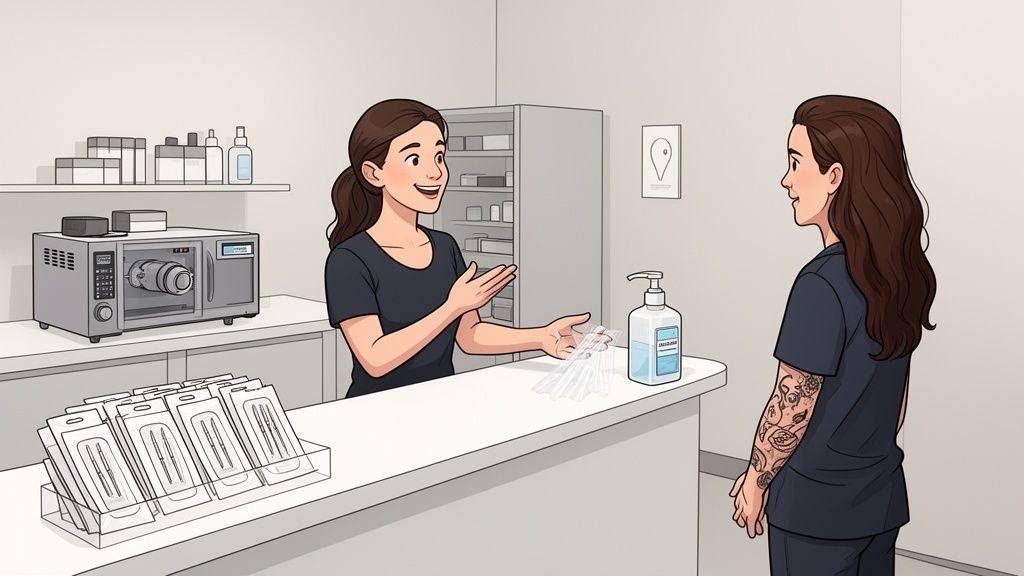
You should feel this professionalism the second you walk through the door. A clean, well-lit waiting area and a friendly, respectful greeting are the first green flags. If the vibe is off or you feel dismissed, that’s a pretty good preview of how you’ll be treated during the actual tattoo process.
Your Essential Hygiene Checklist
When you visit for a consultation, keep your eyes open. A reputable shop is proud of its cleanliness and will have no problem with you looking around. Your health is on the line, so you have every right to be a little picky.
These are the critical safety markers you need to see:
- Single-Use Needles: The artist must open a new, sealed needle package in front of you. There are zero exceptions to this.
- Barrier Protection: Look for clear plastic wrap or disposable covers on everything the artist might touch. That means the tattoo machine, power supply, spray bottle, and even the armrest you're leaning on.
- Sterilization Equipment: Ask them about their autoclave, which is used to sterilize any non-disposable equipment like metal grips. A pro shop will gladly show you their setup.
- Clean Workstations: Each artist’s station should be spotless and organized. You should see sealed ink caps, fresh paper towels, and a proper sharps container for used needles.
Red flags aren't just suggestions—they are warnings. A dirty floor, overflowing trash cans, or an artist who seems annoyed by your questions about safety are all clear signals to walk away immediately.
Asking the Right Questions
Don't be shy. A true professional expects you to ask about their health and safety protocols and will have confident, clear answers ready.
Fire away with questions like:
- "Are all of your artists certified in bloodborne pathogen prevention?"
- "Can you walk me through your sterilization process for any non-disposable tools?"
- "What kind of ink do you use, and is it vegan-friendly?" (if that matters to you)
Their response tells you everything. Confidence and transparency are the hallmarks of a shop that takes your health seriously. Any hesitation or vague answers should make you think twice. Finding a safe, professional shop is every bit as important as finding a talented artist.
Making Your Tattoo Consultation a Success
So, you've spent hours scrolling through portfolios and you've finally found the one. The shop looks clean, the work is solid, and you’re ready to take the next step. The consultation is where the magic really starts.
This meeting isn't just about dropping off a deposit and picking a date. Think of it as a creative strategy session. It’s your chance to connect with the artist, align your vision with their expertise, and make sure you’re both on the same page. Walking in prepared can be the difference between a simple transaction and a true collaboration.
This is your moment to get specific about what you want. Bring all your reference photos, but think of them as inspiration, not a blueprint. A great traditional artist will use your ideas as a launchpad to design something that's uniquely yours—and just as importantly, built to last on skin.
One of the biggest mistakes people make is asking an artist to copy another tattoo. It's a huge faux pas. Instead, talk about what you like in your references. Is it the fierce expression on the eagle? The specific shade of red in the roses? The overall mood? This gives the artist the creative freedom to design something that fits both you and their style perfectly.
Communicating Your Vision Effectively
Clarity is everything. An artist can't read your mind, so the more open and specific you are, the better the final tattoo will be. Your communication here sets the tone for the entire project.
- Explain the "Why": Don't just show them a picture of a panther. Tell them why a panther. Do you want it to look sneaky and predatory or bold and powerful? This context is gold for an artist.
- Be Open to Feedback: A professional artist knows skin. They know what works and what doesn't. If they suggest making a design bigger to hold detail or simplifying a line for longevity, listen up. They want your tattoo to look good for decades, not just the day you get it.
- Discuss Placement and Size: Have a clear idea of where you want the tattoo and how big you're thinking. The artist will then advise on how to best shape the design to flow with the natural curves of your body, which makes a massive difference.
Trust is the foundation of a great tattoo experience. When an artist offers their professional opinion on a design change, they are drawing on years of experience to ensure your tattoo looks incredible not just today, but for decades to come.
Understanding the Business Side
The consultation is also where you’ll sort out the logistics. Getting all this squared away upfront means no surprises later.
You’ll talk price, which is usually handled in one of two ways. Smaller, one-shot designs are typically priced by the piece. Larger, multi-session work like a full sleeve or back piece is almost always priced by the hour.
Any reputable shop will require a non-refundable deposit to lock in your appointment. This isn't just to hold your spot; it covers the artist's drawing time and secures their schedule. Don't worry, this amount comes off the final price of the tattoo. Booking times can vary wildly—from a few weeks to several months out—so be prepared to wait for the right artist. Good work is worth it.
The tattoo industry is booming, and shops are busier than ever. For instance, requests for fine-line tattoos have shot up by over 35% recently. With so much demand, especially from clients traveling internationally, a clear and professional booking process has become absolutely essential. This growth, detailed in reports about the booming tattoo market on businessresearchinsights.com, is exactly why solid booking policies and clear communication are now standard practice at any studio worth its salt.
Taking a Look Inside a Premier Traditional Tattoo Shop
All this theory is great, but seeing it in action really brings it home. When you’re Googling "traditional tattoo shops near me," you aren’t just looking for a pin on a map—you’re searching for a place that lives and breathes the craft.
Let's use a real-world example: Fountainhead New York in Huntington Village. It’s the perfect case study for what a top-tier studio should be.
Founded by the incredibly talented and renowned artists Matt Beckerich and Phil Szlosek, the shop itself is a tribute to the deep history of traditional tattooing. Walk through the door, and you immediately get it. This isn't just a place to get work done; it's an art gallery, a creative space where every detail is intentional. The walls are covered in original paintings and prints, making it clear that the team's dedication to art goes way beyond skin.
Craftsmanship and Artistic Range
The soul of any shop is its artists, period. The crew at Fountainhead—including heavy hitters like Justin Morcillo, Jordan Baxter, and Kyley O'Rourke—shows a massive respect for the foundations of the craft while still pushing it forward.
Their collective portfolios are a masterclass in classic American and Japanese traditional styles. You'll see those powerful, clean lines and solid, punched-in color that define timeless work. It’s this unwavering commitment to the fundamentals that makes them a go-to for anyone wanting an authentic, lasting tattoo.
For a deeper dive into their philosophy, check out their blog post on the enduring legacy of American traditional tattooing at Fountainhead NY.
But they don't stop there. The shop also cranks out stunning modern fine-line and detailed black-and-grey pieces, proving their versatility. This range means they can nail the perfect piece for anyone, whether it's your very first tattoo or another addition to a serious collection.
A top-tier studio operates as a cultural hub, not just a service provider. The best shops are centers for art and community, where the passion for tattooing is evident in every detail, from the art on the walls to the quality of the work.
More Than Just Tattoos
Fountainhead’s commitment to quality extends beyond the tattoo station. The studio also offers professional piercing services and a seriously cool, curated collection of goods from brands that share their same integrity-first mindset. Think small-batch clothing, handmade jewelry, and other unique finds you won’t see everywhere else.
This approach turns the shop from a simple service provider into a true destination. It sets the bar high for what a modern traditional tattoo studio can be: a place that honors its roots while delivering a world-class, professional experience from the first email to the final, healed piece of art.
Ready to see what the best in traditional tattooing looks like? Head over to Fountainhead New York online to check out the artists' portfolios, browse their curated goods, and book a consultation for a piece of art that will genuinely last a lifetime. https://fountainheadny.com


