

Tattoo pricing is never just a simple, one-size-fits-all number. It’s a careful calculation that reflects the artist’s time, their creative vision, and the materials needed to create a permanent piece of art on your skin. Generally, the final cost comes down to two main models: an hourly rate for large, multi-session projects or a flat fee for smaller, single-session pieces.
Let’s break down exactly how we get to those numbers.
Deconstructing the Value of Custom Tattoos
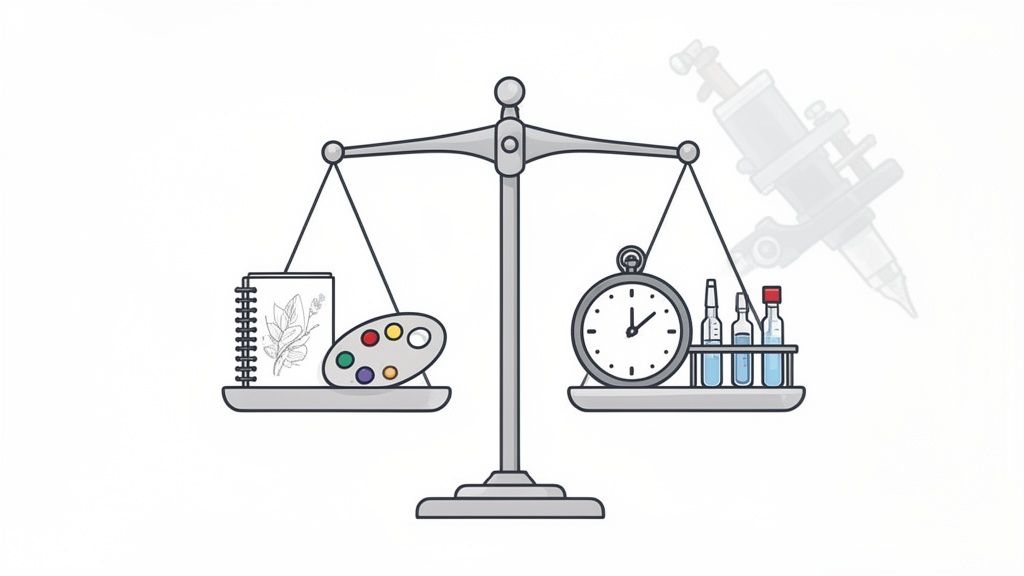
When you ask, "How much does a tattoo cost?" you're really asking about the value of commissioning permanent, wearable art. The price isn't just for the ink and needles; it's an investment in an artist's vision, their expertise, and the thousands of hours they’ve poured into mastering their craft.
The process involves far more than just the time you spend in the chair. A huge portion of the cost covers the unseen labor that makes great tattooing possible:
- Consultation and Design: All the initial conversations, research, and sketching required to bring your unique idea to life.
- Studio Overhead: The costs that ensure a safe, sterile, and professional environment—from rent and insurance to premium, single-use equipment.
- Artist Expertise: Years of dedicated training, daily practice, and developing a unique artistic style that simply can't be replicated.
The Business of Artistry
At its core, tattooing is a business, and artists have to price their work sustainably. Much like artisans in other fields, they need to calculate their costs and set rates that reflect their skill level and cover business expenses. For those curious about the mechanics, guides on how to price for profit in other custom industries offer a great window into this process. This approach ensures fairness for both the artist and the client.
The demand for high-quality, professional work is only growing. The global tattoo market was valued at USD 2.69 billion in 2026 and is projected to reach USD 5.86 billion by 2035, with an incredible 46% of millennials now having tattoos. This isn't just a trend; it's a massive cultural shift toward viewing tattoos as a legitimate form of self-expression and art collection.
At Fountainhead New York, we believe in complete transparency. Our pricing reflects a deep commitment to world-class artistry and uncompromising safety. We want every client to walk away with a timeless piece they will value for a lifetime.
Quick Guide to Tattoo Pricing Models
Before we dive deeper into the specific factors that influence cost, here's a quick look at the two main ways artists structure their pricing.
| Pricing Model | Best For | Typical Price Range (Example) |
|---|---|---|
| Hourly Rate | Large, complex, or multi-session pieces (sleeves, back pieces) | $200 - $400+ per hour |
| Flat Fee | Smaller, single-session tattoos with a clear scope | $150 - $1,000+ per piece |
This table gives you a general idea, but remember that every artist and project is unique. The following sections will explain why these numbers can vary so much.
Hourly Rates vs Flat Fees Explained
 When you get a quote for a custom tattoo, it’s going to land in one of two buckets: an hourly rate or a flat fee. Getting a handle on why artists use each one is a huge part of understanding how tattoo pricing really works. Neither one is better than the other; they’re just different tools for different jobs, designed to keep things fair and transparent for the work at hand.
Here’s an analogy we like to use: you wouldn't pay a contractor a flat fee to build a custom house from the ground up—the project is just too big and unpredictable. On the flip side, you wouldn't pay them by the hour to hang a single picture frame. Tattooing follows that same logic. The payment structure is matched to the project’s scale and timeline.
When Hourly Rates Make Sense
The hourly rate is the industry standard for any large-scale, complex project that’s going to take multiple sessions to finish. Think full sleeves, massive back pieces, intricate realism, or detailed Japanese bodysuits. These aren’t just tattoos; they're journeys that can unfold over several months.
Charging by the hour ensures the artist is fairly paid for every minute of their dedicated time and the skill they bring to the table as the piece evolves. It’s like commissioning a master carpenter to build a custom piece of furniture—you’re investing in the accumulated hours of focused craftsmanship, precision, and artistry. It also allows for creative flexibility, letting a large design breathe and develop organically between sessions without being locked into a rigid, pre-set price.
Key projects that are almost always priced by the hour include:
- Full or Half Sleeves: These require a serious commitment to design and application time, spread across many appointments.
- Large Back or Chest Pieces: The sheer surface area and potential for incredible detail just demand a session-based approach.
- Photorealistic Portraits: Nailing those fine details and subtle shades is an incredibly time-intensive process.
- Complex Cover-Ups: Hiding an old tattoo the right way often requires more time and creative problem-solving than starting on a blank canvas.
The Logic Behind Flat Fees
On the other hand, a flat fee is perfect for smaller, self-contained tattoos that an artist can knock out in a single sitting. If you’re getting a clean piece of fine-line script, a classic American Traditional symbol, or a simple floral design, your artist will almost certainly give you a set price. Why? Because they can accurately estimate the total time and materials needed from start to finish.
This approach gives both you and the artist total clarity. You know the exact cost before the needle ever touches your skin, and the artist knows exactly what they’re earning for a piece that fits neatly into one appointment. This is the go-to pricing model for "flash" designs or any straightforward custom work that doesn't involve a multi-session commitment.
A flat fee simplifies the transaction for smaller tattoos. It covers the artist's design time, setup, execution, and materials in one clear, predictable number, ensuring there are no surprises when it's time to pay.
Ultimately, the choice between hourly and flat-rate pricing isn't random. It’s a deliberate decision rooted in the project's complexity, scale, and timeline. Understanding this helps you walk into the conversation with confidence, knowing exactly why your artist structured their quote the way they did. It's all part of making sure the value of your permanent art is crystal clear from day one.
The Seven Key Factors That Determine Tattoo Cost
Trying to figure out what a tattoo will cost can feel a bit like pricing a custom car. The base model has a starting price, sure, but once you start adding the high-performance engine, the custom paint job, and the premium interior, the final number changes. A tattoo is exactly the same.
While an artist’s hourly or flat rate gives you a baseline, the final quote is a blend of several moving parts. Every single choice, from the size of the piece to the artist’s reputation, plays a role. Let’s break down exactly what you’re investing in when you commission a piece of custom art for your body.
1. Size and Complexity
This one’s the most obvious. A bigger tattoo requires more time, more ink, and more materials, so it naturally costs more. A full sleeve will always be a bigger investment than a small tattoo on your wrist. Simple.
But complexity is the real game-changer. Imagine a four-inch silhouette of a bird—that might take an hour. Now, picture a hyper-realistic, four-inch portrait of that same bird, with every feather and shadow perfectly rendered. That could easily take four hours or more. The level of detail, the precision of the line work, and the depth of the shading all add up, making complexity a huge driver of the final price.
2. Placement on the Body
Where you get your tattoo makes a massive difference. Some parts of the body are just plain harder to work on, demanding a lot more skill, time, and concentration from the artist.
- Tough Spots: Think ribs, stomach, neck, feet, and hands. The skin in these areas can be super sensitive, stretchy, or right on top of bone, making it a serious challenge to pull clean lines and pack in color evenly.
- Prime Real Estate: Forearms, calves, and outer thighs are often considered ideal canvases. The skin is usually tighter and less sensitive, giving the artist a smoother surface to work with.
Because those difficult placements are more demanding, they often come with a higher price tag to compensate the artist for the extra effort and expertise required.
3. Color vs. Black and Grey
Bringing color into the mix adds a whole new layer of work. A color tattoo almost always takes longer than a black and grey piece of the same size. The artist has to expertly blend different pigments, make sure the saturation is just right, and constantly switch between colors, all of which eats up time.
On top of that, high-quality color inks are typically more expensive than black ink and grey wash. That combination of more time and pricier materials means a full-color tattoo will generally cost more than its black and grey equivalent.
The choice between color and black and grey is mostly about style, but it's definitely a budget consideration. A vibrant, multi-hued Japanese piece will naturally use more resources than a subtle black and grey realism portrait.
4. Artist Experience and Reputation
An artist’s skill level is one of the biggest factors in what you’ll pay. It’s like buying a suit—you’ll pay more for one made by a master tailor than one off the rack. You are investing in someone who has poured years, sometimes decades, into perfecting their craft.
- Apprentice: An artist who is still in training will have the lowest rates. They’re building their portfolio and honing their skills under supervision.
- Resident Artist: A fully qualified artist with a strong portfolio and solid experience will charge the studio's standard rates. This is the sweet spot for most clients.
- Renowned Master: An artist with international recognition, a years-long waitlist, and a mastery of their style will command the highest prices. Their rate reflects their incredible skill and the high demand for their work.
Finding the right person for your specific idea is everything. Our guide on how to choose a tattoo artist is a great resource for matching your vision with the right level of expertise.
Understanding how these elements interact can make the pricing process much clearer.
How Different Factors Impact Your Tattoo's Final Price
This table breaks down how specific choices can push your tattoo's cost up or down.
| Cost Factor | Lower Cost Example | Higher Cost Example | Why It Affects Price |
|---|---|---|---|
| Size & Complexity | A simple 2-inch script on the wrist. | A 12-inch photorealistic portrait on the back. | More area and detail require significantly more time, skill, and materials. |
| Placement | Outer forearm or calf. | Rib cage, stomach, or neck. | Difficult areas are harder to tattoo, demanding more precision and time from the artist. |
| Color Palette | Black and grey shading only. | Full-color with complex blending and gradients. | Color work takes longer and high-quality color inks are more expensive. |
| Artist Seniority | An apprentice or junior artist. | A world-renowned artist with a 2-year waitlist. | You're paying for years of honed skill, expertise, and high demand. |
Ultimately, a tattoo quote is a reflection of the time, skill, and resources needed to bring your unique idea to life safely and beautifully.
5. Studio Location and Prestige
The shop itself has its own costs that get factored into pricing. It’s no surprise that a high-end studio in the heart of New York City has higher rent and operating expenses than a small shop in a quiet suburb. That overhead is reflected in the prices.
Studios like ours, known for exceptional quality, uncompromising cleanliness, and a premium client experience, invest a lot in creating that environment. That value is part of what you're paying for.
6. Custom Design Time
Your quote isn't just for the time the needle is actually touching your skin. A huge chunk of the work happens before you even sit in the chair. This includes the consultation, all the research, the initial sketches, and the back-and-forth of refining your custom design until it’s absolutely perfect. That creative labor is a vital part of the service.
7. Materials and Equipment
Finally, the price covers all the premium, single-use, sterile supplies needed to do the job safely. We’re talking about top-of-the-line needles, inks, gloves, protective barriers, and aftercare wraps. A professional studio never cuts corners on safety or quality, and the price reflects the use of the best, industry-approved materials. This commitment is non-negotiable and a huge reason why getting tattooed in a licensed studio is a sound investment in your health.
How to Budget for Your Tattoo from Start to Finish
Thinking about a custom tattoo is the fun part, but figuring out the financial side is just as crucial as nailing the design. Budgeting for your ink isn't just about the final number; it's a process that ensures you can comfortably afford the high-quality art you deserve without any last-minute stress. Think of it less like a purchase and more like an investment in personal art—suddenly, the whole process feels a lot more manageable.
This all begins the moment you're ready to book.
Securing Your Spot with a Deposit
Your first financial step on this journey is paying the deposit. Once you and your artist have hashed out the details in a consultation and you’re both excited about the design, a deposit officially locks in your appointment time.
It's really important to understand that a deposit is not an extra fee. It's a down payment. This amount comes directly off the final cost of your tattoo. Its main purpose is to protect the artist’s time, covering the hours they'll spend drawing and preparing your piece. It’s a sign of commitment that shows both you and the artist are serious about moving forward.
For a full rundown of the booking process, from the first email to getting on the calendar, check out our complete guide on how to book a tattoo appointment.
This chart breaks down the main things that come together to determine the final cost of your tattoo.
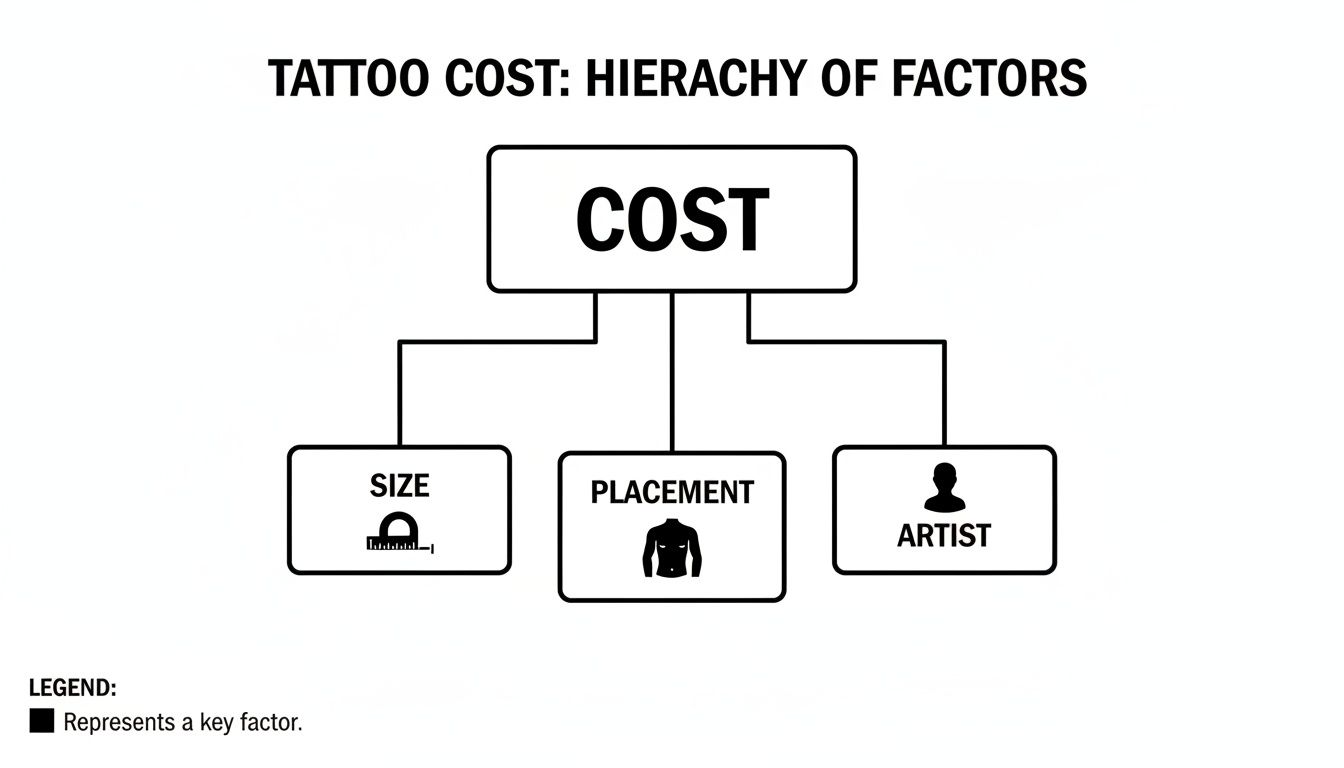
As you can see, it almost always boils down to the tattoo's size, where you're putting it on your body, and the artist's specific skills and experience.
Planning for Multi-Session Pieces
If you’ve got your heart set on a bigger project like a sleeve or a full back piece, your financial planning will look a little different. These tattoos are marathons, not sprints, so you'll need to budget for multiple appointments spread out over several months.
Consistency is key here. It's best to schedule your sessions on a regular basis (say, once a month) to keep the momentum going. Big gaps can throw off the project's flow, and sometimes an artist might need extra time just to blend the new work seamlessly with older, healed sections.
Here’s a simple way to budget for a large-scale tattoo:
- Get the Big Picture: During your consultation, ask the artist for a rough estimate of the total cost or the number of sessions they expect it will take.
- Calculate Per-Session Cost: If your artist charges $300 per hour and you plan on doing four-hour sessions, you’ll need to have $1,200 ready for each appointment.
- Create a Savings Plan: Set aside a specific amount from each paycheck just for your tattoo fund. When you treat it like any other recurring bill, it's way easier to stay on track.
This structured approach breaks a huge financial goal down into manageable chunks, making that dream sleeve a totally achievable reality.
Factoring in the Overlooked Costs
Your budget doesn't stop when the tattoo machine turns off. To protect your investment and keep it looking incredible for years, you need to plan for a few extra—and often forgotten—expenses.
A great tattoo is a two-part process: the artist’s expert application and your diligent aftercare. Skimping on the second part can undermine the quality of the first.
Make sure you include these things in your total budget:
- High-Quality Aftercare: Your artist recommends specific products for a reason. Plan on spending $20-$40 on good ointments, gentle soaps, and moisturizers made for healing tattoos.
- Touch-Up Fees: While many artists offer a free touch-up within the first year, it’s not a universal rule. It’s smart to ask about your artist's policy and have a little cash set aside just in case a touch-up is needed later on.
- Tipping: It isn't mandatory, but tipping your artist 15-25% is the standard way to show you appreciate their skill, service, and artistry. For a multi-session piece, you can tip after each appointment.
By planning for these costs from the very beginning, you set yourself up for a smooth, stress-free experience from the first consultation to your fully healed, beautiful piece of art.
Why a Cheap Tattoo Is Your Most Expensive Mistake
When you start looking into tattoo pricing, it's easy to get sticker shock and immediately start hunting for a deal. But in the world of permanent body art, the lowest price is almost always a massive red flag. A cheap tattoo often becomes the most expensive, painful, and regrettable mistake you'll ever make.
Think of it this way: a high-quality tattoo from an expert artist is like a bespoke suit. It’s crafted with premium materials, tailored perfectly to your body, and designed to last a lifetime. A cheap tattoo is the fast-fashion equivalent—it might look okay from a distance at first, but it quickly falls apart, fades, and reveals its poor construction, leaving you with something you want to hide.
The Hidden Costs of Poor Quality
The money you think you're saving on a low-priced tattoo gets completely wiped out by the staggering future costs required to fix it. This isn't just about looks; it involves your health, your time, and a financial commitment that dwarfs what you originally tried to avoid.
These "hidden" expenses usually fall into a few painful categories:
- Laser Removal: This is the most common path for a tattoo gone wrong. Laser removal is a long, painful, and incredibly expensive process, often costing ten times the price of the original tattoo. You'll need multiple sessions, and there's no guarantee it will ever be completely gone.
- Complex Cover-Ups: If you can't go the laser route, a cover-up is your next best bet. But a skilled artist now has a much harder job. They have to design something larger, darker, and more intricate to effectively hide the old piece, making it significantly more expensive than tattooing on clean skin.
- Health Risks: Unlicensed artists or "scratchers" often cut costs by compromising on hygiene. This is where things get dangerous. You're at risk for serious skin infections or bloodborne pathogens, which can lead to hefty medical bills and potential long-term health problems.
Looking for a reputable shop is the first and most important step to avoid all this. To learn what sets a professional studio apart from the rest, check out our guide on how to find the best tattoo shop on Long Island.
The Value of Premium Materials and Expertise
When you invest in a reputable artist at a studio like Fountainhead New York, you're paying for more than just ink and needles. You're buying peace of mind, guaranteed safety, and artistry that lasts forever. The quality of the materials alone plays a huge role in both the price and the final result.
The global market for high-quality tattoo ink is growing fast, projected to hit $180 million by 2032, because artists and clients are demanding better, safer products. Premium inks, which might add 10-20% to a project's cost, deliver superior vibrancy and fade resistance. This is non-negotiable for styles like Japanese irezumi or American Traditional, where the integrity of the color is what makes the tattoo hold up for decades.
This commitment to quality is part of why high-end studios thrive in a global tattoo market that's expected to reach $5.86 billion by 2035.
A tattoo is one of the few things you will buy that truly lasts forever. Investing in quality from the start ensures it’s a piece of art you’ll cherish for life, not a mistake you'll pay to correct for years.
Ultimately, a quality tattoo is the most cost-effective decision you can make. It’s a one-time investment for a lifetime of value—free from the hidden costs, pain, and regret that almost always come with a bargain.
Got More Questions About Tattoo Pricing? Let's Clear Them Up
Even after breaking down the basics, the financial side of getting a tattoo can feel a little murky. We get it. To make sure you walk into your consultation feeling confident and ready to focus on the art, we’ve tackled the most common questions we hear from clients right here.
Think of this as the final piece of the puzzle. Once you've got these details sorted, you can put your energy where it belongs: collaborating with your artist to create something incredible.
Do I Tip My Tattoo Artist? How Much?
Tipping is absolutely a standard practice in the tattoo world, and it’s one of the best ways to show your artist you appreciate their skill, time, and the creative energy they poured into your piece. While it's never demanded, it's always deeply appreciated—just like in any other service industry where you're receiving a personalized, expert service.
The industry standard for a tip is 15-25% of the tattoo's total cost. If you're working on a big, multi-session piece, you can either tip after each session or give a larger tip once the entire project is finished. It’s a direct and meaningful way to acknowledge all the hard work that happens both before and during your appointment.
Are Cover-Up Tattoos More Expensive?
Yes, almost without exception. A cover-up isn't just a new tattoo; it's a strategic mission requiring a ton more creativity, planning, and technical finesse than working on clean skin. You’re not starting with a blank canvas—you’re solving a complex visual puzzle.
The new design usually has to be bigger and often darker than the old one to effectively hide it, which means more time, more ink, and more materials. Your artist has to cleverly incorporate the old lines and colors, making the new piece look like it was always meant to be there, not like a patch-up job. That specialized skill is rightfully reflected in the final price.
A cover-up isn't just about adding new ink. It’s about making old ink disappear. The extra brainpower and technical skill needed to pull that off well is why it’s a premium service.
This is exactly why it pays to find an artist with a strong portfolio of cover-up work. It’s a completely different ballgame.
What’s Actually Included in the Price I’m Quoted?
When your artist gives you a price, they're bundling the entire professional service into one number. That quote covers everything needed to get the job done right. This typically includes:
- Custom Design Time: All the hours your artist spends researching, sketching, and perfecting your design long before you ever sit in the chair.
- The Tattoo Session(s): The artist's focused time, expertise, and labor during the tattoo application itself.
- Sterile, Professional-Grade Materials: Every single-use, high-quality supply for a safe procedure—needles, inks, gloves, machine barriers, you name it.
In short, the price covers the artist's talent, the studio’s clean and professional environment, and the peace of mind that comes with a safe, hygienic procedure. Things like aftercare products and your tip are separate, so be sure to factor those into your total budget.
Can I Haggle or Negotiate the Price of My Tattoo?
In a reputable, professional studio, the answer is no. Artists at established shops don't negotiate their hourly rates or flat-fee prices. That number is carefully calculated to reflect their skill level, years of experience, the demand for their work, and the costs of running a safe, clean, and professional studio. Trying to haggle is often seen as a sign of disrespect for their craft and career.
But that doesn't mean you're stuck if the price is out of reach. A much better approach is to be upfront about your budget during the consultation. A good artist is usually happy to work with you. They might suggest simplifying the design, reducing the size, or choosing a different placement to help meet your budget without ever sacrificing the quality or integrity of the final tattoo. It becomes a collaboration, which always leads to the best results.
At Fountainhead New York, our whole team is committed to transparent pricing and world-class artistry. If you have any other questions or you're ready to get the ball rolling on your next piece, we're here for it. Book your consultation today and let’s create something timeless together.


9q47nf