

Getting a tattoo is a serious commitment, and for a lot of people, the pain is a major hurdle. For anyone looking for a more comfortable experience, the best tool in your arsenal is a solid numbing cream. Typically, you're looking for water-based formulas with 5% lidocaine, which is the strongest you can get over the counter. These products can seriously dull the pain for a few hours, making those long sessions or sensitive spots much more manageable.
Your Guide to a More Comfortable Tattoo Experience
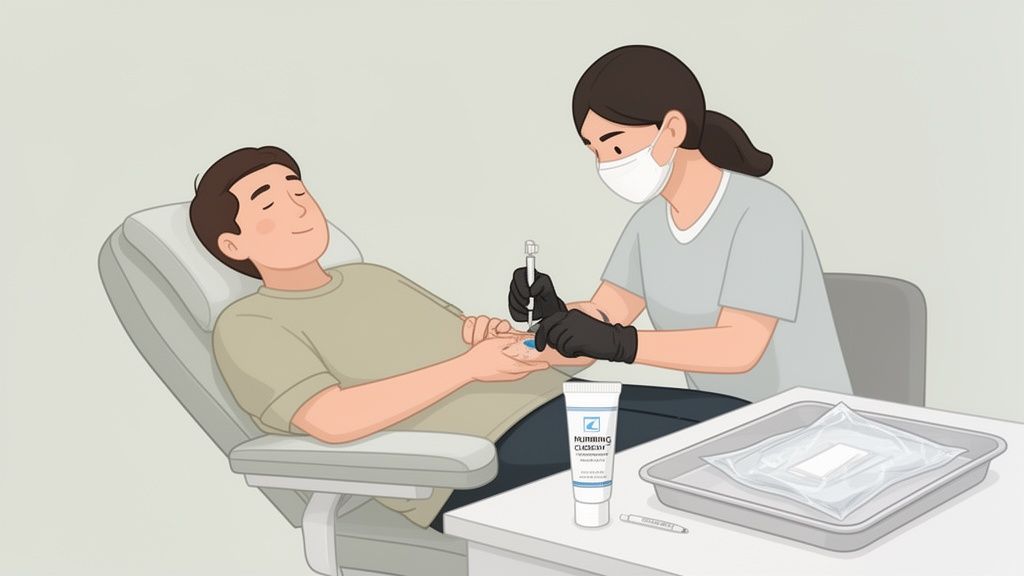
While some people see the discomfort as just part of the deal, modern topical anesthetics can completely change the game. It can shift the experience from a painful ordeal to something you can actually sit through calmly. This is especially true for big, detailed pieces or tattoos on notoriously brutal spots like the ribs, feet, or down the spine.
This guide is here to cut through the noise and give you clear, practical advice. We’ll get into the science of how these creams actually work, what to look for in a quality product, and how to use them safely so you don't mess up the final look of your tattoo.
Why Numbing Creams Are More Popular Than Ever
The demand for a less painful tattoo process is impossible to ignore. The global market for tattoo numbing creams was valued at a massive $678.40 million in 2021 and is on track to hit nearly $2 billion by 2031. That explosive growth is a direct reflection of how popular tattoos have become, especially with younger people who care about the art and the experience of getting it. You can explore more about these market trends and see the full analysis.
At the end of the day, the goal is to make your tattoo session as smooth as possible. When you understand the tools available, you can have a real conversation with your artist and make the right call for your own comfort. A good numbing cream can help you:
- Endure longer sessions: You can sit for hours without needing constant breaks, which lets your artist stay in their creative flow.
- Tackle sensitive spots: It makes getting work done on high-pain areas like the sternum or inner bicep feel totally achievable.
- Reduce anxiety: It can take the edge off those pre-appointment jitters, especially if you're a first-timer worried about the needle.
Think of a quality numbing cream not as a way to cheat the tattoo experience, but as a tool to enhance it. It allows you to focus on the excitement of getting new art, rather than just gritting your teeth through the pain.
By the time you finish this guide, you’ll have the confidence to pick the best numbing cream for your next tattoo, know how to apply it the right way, and work with your artist to get a great result.
How Numbing Creams Block Tattoo Pain Signals
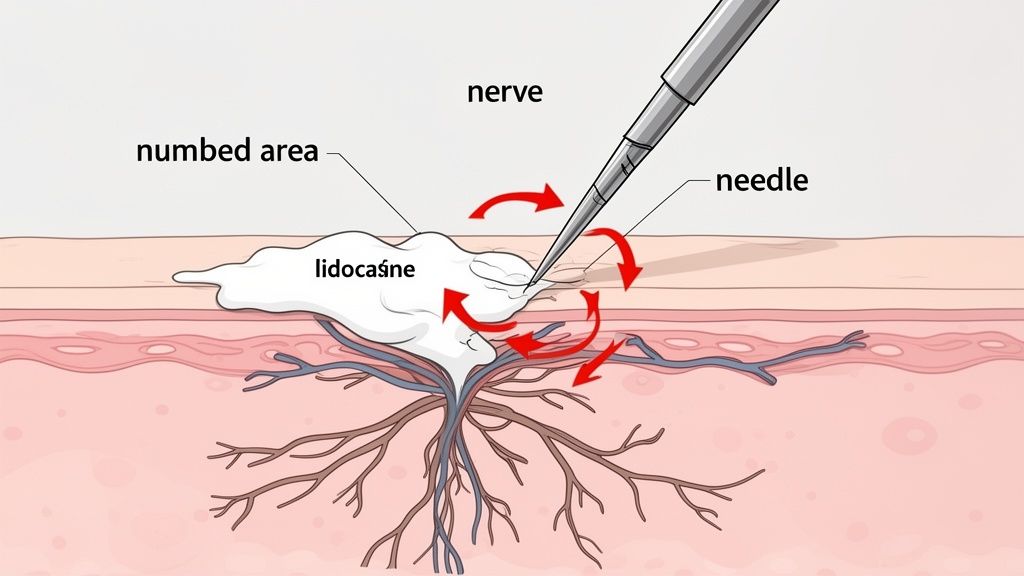
Ever wondered how a simple cream can quiet the intense sting of a tattoo needle? The science is actually pretty clever.
Think of your nervous system as a massive switchboard. When a tattoo needle enters your skin, the local nerve endings flip a switch, sending an urgent electrical message straight to your brain that screams, "Hey, something's happening here!" Your brain instantly interprets that signal as pain.
Numbing creams work by simply getting to the switchboard first and cutting the power to that specific area. They're topical anesthetics, meaning they create a temporary, localized block that stops the nerves from sending out pain signals in the first place. No signal, no pain message.
The Key Players: Lidocaine, Benzocaine, and Tetracaine
Most high-quality tattoo numbing creams don’t rely on a single ingredient. Instead, they use a strategic blend of nerve-blocking agents, with each one playing a slightly different part.
-
Lidocaine: This is the industry heavyweight and the most common active ingredient you'll find. In over-the-counter products, it's typically present in concentrations up to 5%. It works by blocking the sodium channels in your nerve cells—essentially the pathways that electrical pain signals need to travel. For a deeper dive, you can learn more about how lidocaine works for pain relief.
-
Benzocaine and Tetracaine: These are often used as supporting characters alongside lidocaine. They function in a similar way but have different speeds and durations. Combining them creates a more robust effect, ensuring the numbness kicks in quickly and sticks around for your whole session.
Think of it like a security system. A pain signal is an intruder trying to get through a door. Lidocaine’s job is to jam the lock on that door so the intruder can't even get started. The signal is stopped dead in its tracks before it can ever make the journey to your brain.
By combining these agents, formulators create a far more effective and longer-lasting product. It’s a tactical approach: one ingredient provides a fast initial numbing, while another ensures that feeling of comfort is sustained for hours.
This multi-pronged strategy is why it’s so crucial to read the label when choosing a cream. A product with a well-balanced formula will give you a much more reliable numbing experience than one that just uses a single, weaker ingredient.
The Secret Ingredient: Understanding Vasoconstrictors
Beyond the main numbing agents, the best creams have another trick up their sleeve: an ingredient called a vasoconstrictor, like epinephrine. It might sound technical, but its role is simple and incredibly effective for tattooing.
A vasoconstrictor temporarily narrows the blood vessels in the area where you apply the cream. This simple action delivers a few key benefits that make a huge difference for both you and your tattoo artist.
Benefits of Vasoconstrictors
- Longer-Lasting Numbness: By reducing blood flow, vasoconstrictors slow down how quickly your body absorbs the numbing agents. This keeps the lidocaine and other anesthetics concentrated right where you need them for a longer period.
- Less Bleeding and Swelling: A tighter network of blood vessels means less bleeding and inflammation while you're getting tattooed. For your artist, this creates a much clearer canvas to work on, which can lead to sharper lines and better detail.
- Better Ink Saturation: With less bleeding trying to push the ink out of your skin, the pigment goes in and stays in more effectively. This can directly contribute to a brighter, more solid, and more vibrant healed tattoo.
When you understand how all these components work together, you can look at a product label and know exactly what you're getting. It allows you to pick a cream that’s truly formulated for a better, more comfortable tattoo experience.
Choosing the Right Numbing Cream for Your Session
Not all numbing creams are created equal. Picking the right one is your first real step toward a more comfortable tattoo experience, and making a smart choice means looking past the flashy marketing to understand what really makes a product effective and safe.
Your checklist should start with the active ingredients. The most trusted and effective agent you'll find in over-the-counter creams is lidocaine. For tattoo purposes, a concentration of 5% lidocaine is the gold standard—it’s the maximum strength legally allowed without a prescription and hits that sweet spot of potent numbing power and safety.
Going with a lower percentage might not give you the relief needed for a long sit, while hunting down illegally high concentrations online is just plain dangerous. Stick to reputable brands that are transparent about what's in their formula.
Comparing Cream Formulations
Once you’ve locked in the right active ingredient, the next thing to consider is the formulation. Numbing products come in a few different forms, each with its own pros and cons depending on your skin and the tattoo you're planning.
- Creams: This is the most common and often preferred option. A good cream is easy to spread, gives you excellent coverage, and its thicker consistency helps it stay put under the plastic wrap, ensuring it absorbs deeply where you need it most.
- Gels: Gels tend to absorb a bit faster than creams and can feel less greasy on the skin. They’re a solid alternative, especially if you have oily skin, but you’ll want to be sure you apply a thick enough layer since they can sometimes dry out more quickly.
- Sprays: Think of numbing sprays more as a "top-up" tool. They’re best used for reapplication on broken skin during a really long session, and only if your artist gives you the green light. They just don't penetrate deeply enough on their own to be effective for the initial numbing.
To get a better handle on the best option for your specific tattoo session, it helps to compare the most common types side-by-side.
Comparing Top Numbing Cream Types
Use this table to compare common types of numbing creams based on key features, helping you select the best option for your tattoo session.
| Cream Type and Active Ingredients | Effective Numbing Duration | Required Application Time | Ideal for Which Tattoos | Key Considerations |
|---|---|---|---|---|
| Lidocaine-Based Creams (5%) | 3-5 hours | 60-90 minutes under wrap | Long sessions, color packing, line work on sensitive areas | The industry standard; occlusive wrapping is critical for full effect. |
| Gels (Lidocaine/Prilocaine) | 2-4 hours | 45-60 minutes under wrap | Medium sessions, shading, smaller pieces | Absorbs faster but may require a thicker application to prevent drying. |
| Botanical/Herbal Creams | 1-2 hours | 60 minutes | Small tattoos, fine-line work on less sensitive spots | Less potent; good for those with sensitivities to chemical anesthetics. |
| Sprays (Broken Skin Use) | 30-60 minutes (reapplication) | A few minutes during the session | Touch-ups during multi-hour sessions | For in-session use only, not for initial numbing. Artist approval is a must. |
Ultimately, a 5% lidocaine cream remains the most reliable choice for most tattoo scenarios due to its proven effectiveness and duration.
For additional context on how these creams work for different procedures, you can explore guides on the top numbing creams for various aesthetic procedures, like laser hair removal.
Identifying Reputable Brands and Avoiding Fakes
The boom in tattoo popularity has flooded the market with numbing products, and unfortunately, that includes a lot of low-quality knockoffs. Using a sketchy cream isn't just a waste of money—it can be genuinely harmful, leading to skin irritation or, even worse, messing with how your tattoo heals.
The key is to choose brands that are trusted within the tattoo community. A reputable company will have clear ingredient lists, positive reviews from actual users, and often be recommended by professional artists themselves.
Look for signs of a trustworthy brand: professional packaging, clear application instructions, and a history of solid feedback. Be wary of products with vague ingredients, rock-bottom prices, or wild claims of a "100% painless" experience.
The demand for quality products is huge, and women are a major driving force. In 2021, women accounted for $348.2 million in market spending, which makes sense when you see that 2024 stats show 38% of US women have tattoos. Brands that actually deliver on their promises are seeing incredible growth; some top companies are on track to sell over a million tubes globally. These premium creams, typically using that 5% lidocaine base, can numb skin in as little as 30 minutes, last for 3-5 hours, and have been shown to knock down perceived pain by a staggering 70-90%.
By focusing on these key factors—ingredient concentration, formulation, and brand reputation—you can confidently pick a cream that will make your tattoo experience safer and a whole lot more pleasant.
A Step-by-Step Guide to Safe Application
Getting the most out of a tattoo numbing cream isn't just about slathering it on and hoping for the best. There's a right way to do it—a method that ensures you get maximum numbness safely, without creating any issues for your artist. Think of it less like applying lotion and more like prepping a canvas for a masterpiece.
This guide will walk you through the exact process, from the non-negotiable patch test to showing up at the studio perfectly prepped and ready to go.
This visual guide breaks down the simple yet critical process for safe and effective numbing.
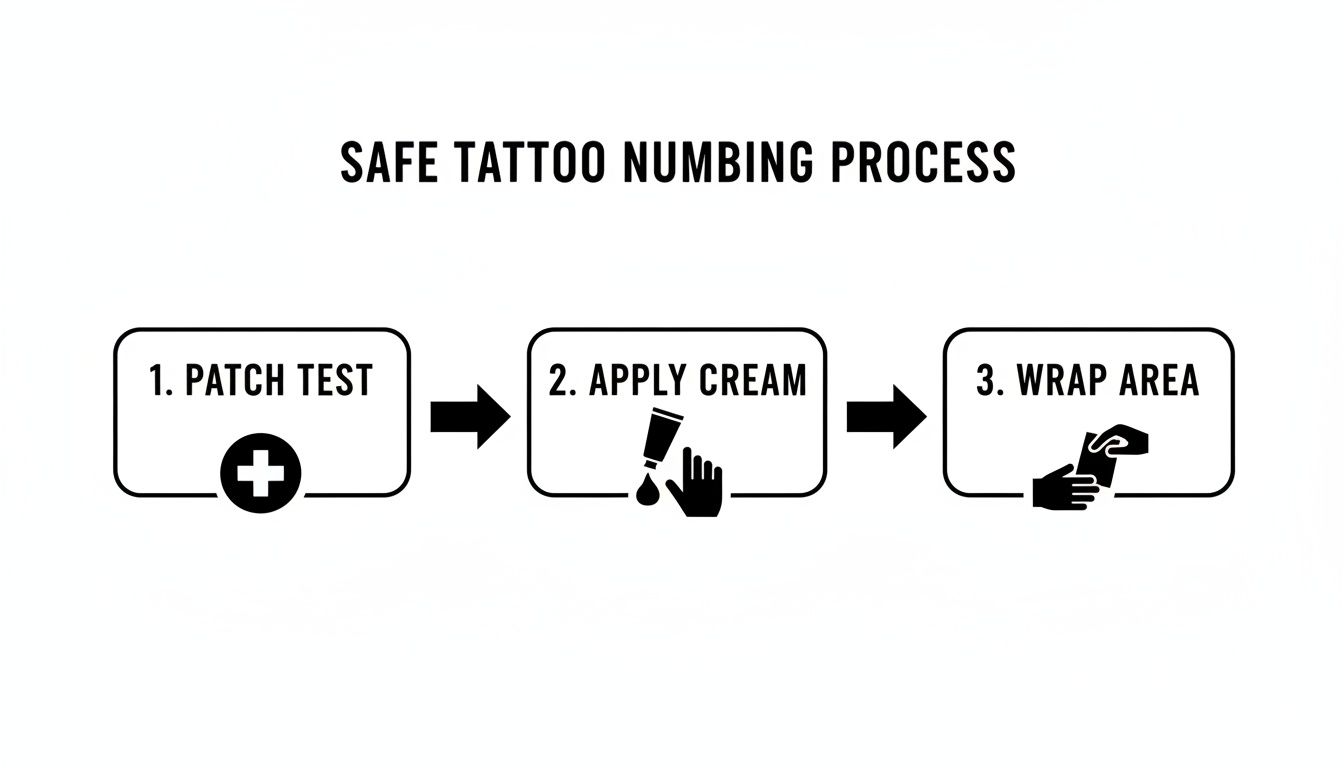
Nailing these three core steps—testing, applying, and wrapping—is the most reliable way to make sure your skin is numb and ready for your session.
Step 1: Perform a Patch Test First
Before you even think about covering a large patch of skin, you must do a patch test. This is easily the most important safety step, and you need to do it 24 to 48 hours before your appointment. The last thing you want is to discover you’re having an allergic reaction on the day of your tattoo.
Just apply a small, dime-sized amount of the cream to a discreet spot, like your inner wrist or behind your ear. Pop a small bandage over it and let it sit for the recommended time, usually 60-90 minutes. After you wipe it clean, keep an eye on that spot for the next 24 hours. If you notice any redness, itching, swelling, or a rash, don't use the product.
Step 2: Prepare and Apply the Cream Correctly
Once your patch test comes back clear, it’s time for the real deal. Timing is crucial here. You'll want to start this process about 60 to 90 minutes before your tattoo appointment is scheduled to begin.
First, wash the entire area you're getting tattooed with a mild, antibacterial soap and warm water. Pat it completely dry with a clean towel. Clean, healthy skin will absorb the cream much more effectively.
Now, apply a thick, generous layer of the numbing cream. This is not a time to be stingy. You're aiming for a "frosting a cake" kind of thickness, not rubbing it in like a moisturizer. The layer should be so thick that it's opaque—you shouldn't be able to see your skin through it. This ensures there's enough active ingredient to penetrate deep into the skin where the nerves are.
Step 3: Wrap the Area for Maximum Absorption
As soon as the cream is on, wrap the area with plastic film (regular kitchen plastic wrap works perfectly). This step is absolutely critical, as it creates an occlusive barrier.
This barrier does two key things: it traps your body heat, which helps open your pores for better absorption, and it stops the cream from drying out or rubbing off on your clothes. The cream has to stay moist to stay active.
Wrap it snugly, but not so tight that you're cutting off circulation. Make sure the plastic wrap covers all the cream and is sealed around the edges. Leave it on for the full recommended time, typically 60-90 minutes, and head to your appointment. Your artist will handle removing the wrap and cleaning your skin as part of their normal prep.
Common Application Mistakes to Avoid
Even with a great product, a few simple mistakes can kill its effectiveness or cause problems for your artist. Make sure you steer clear of these common blunders:
- Not Applying a Thick Enough Layer: A thin, see-through layer won't have enough juice to properly numb the area. Be generous.
- Applying to Broken Skin: Never put numbing cream on cuts, scrapes, or tattoos that aren't fully healed. It can lead to some nasty irritation and mess with the healing process.
- Leaving It On for Too Short a Time: Patience really is a virtue here. Taking the wrap off after just 30 minutes won't give the active ingredients enough time to work their magic.
- Forgetting to Tell Your Artist: This one is huge. Always, always let your artist know you've used a numbing cream. A pro needs to know exactly what's on your skin before they start tattooing.
Here is the rewritten section, crafted to sound like an experienced human expert, following all provided instructions and examples.
Will Numbing Cream Affect My Tattoo's Quality?
This is the big question, the one we hear all the time: will using a numbing cream mess up my finished tattoo? It’s a completely fair question. You’re putting your trust, your money, and a piece of your skin into permanent art. The last thing you want is for a shortcut to comfort to ruin the final product.
The short answer is no, a high-quality numbing cream, when used the right way, won’t hurt your tattoo. A properly formulated product is designed to work on the nerves deep in your skin, not to interfere with the ink or the artist's process. Once the cream is cleaned off, your artist has a perfect canvas to work on that just happens to be desensitized.
But—and this is a big but—that answer depends entirely on two things: using a "high-quality" product and "using it the right way."
The Risks of Bad Products and Improper Use
The myth that numbing creams ruin tattoos didn't just appear out of thin air. It comes from genuine horror stories involving cheap, sketchy products or people who just ignored the instructions. A low-quality cream can leave behind a greasy film, make the skin puffy, or give it a weird, rubbery texture that's a nightmare for an artist to tattoo.
Think of it like priming a wall before you paint. A good primer creates a smooth, perfect surface for the paint to stick to. A cheap, oily one will make the paint slide around, streak, and look awful. It's the same idea here. The cream is a prep tool, and the quality of that tool is everything.
When you choose a reputable numbing cream and apply it as directed, you're preparing your skin for the best possible outcome. When you use a sketchy product, you're introducing an unpredictable variable that can complicate the entire process for your artist.
The whole point is to numb the area without changing the canvas. Following the directions—a thick layer, properly wrapped for the specified time—lets the active ingredients get absorbed without leaving a problematic surface for your artist to deal with.
How Quality Creams Can Actually Lead to a Better Tattoo
On the flip side, using a good numbing cream can actually help you get a better tattoo. When you’re not wincing, twitching, or needing a break every ten minutes, your artist can lock in, maintain a steady hand, and keep a consistent rhythm. This is especially critical for tattoos with intricate linework or smooth color packing that demand absolute precision.
This is exactly why the demand for effective numbing creams has skyrocketed. For people booking sessions with top-tier artists, these creams can knock the pain down by up to 80%, according to user trials. That allows them to sit for bigger, more ambitious pieces. With over 21,000 tattoo parlors in the US alone, North America's tattoo infrastructure provides a massive market for these products. You can learn more about the global trends in the tattoo numbing cream market to see just how much comfort is shaping the industry.
Of course, aftercare is just as important. Once the numbing effect wears off, the real healing begins, and that process is just as critical as the tattoo session itself. Make sure you check out our complete guide on tattoo aftercare instructions to keep your new art looking perfect.
Ultimately, how a numbing cream impacts your tattoo is up to you. Pick a trusted brand, follow the instructions to the letter, and talk to your artist. Do that, and you’ll set yourself up for a comfortable session and a beautiful piece of art.
How to Talk to Your Artist About Using Numbing Cream
Bringing up numbing cream with your tattoo artist can feel a little awkward, but it's a conversation you absolutely need to have. Great tattoos are built on collaboration, and open communication is the foundation. This isn't about asking for permission—it's about making a plan together.
The single most important rule? Tell your artist beforehand. The ideal time is during your initial consultation, well before your appointment. Just showing up with a pre-numbed arm without giving them a heads-up is a major professional faux pas. Artists need to know exactly what’s going on with your skin to prep it correctly and manage their schedule for the day.
Why Your Artist Needs to Know
Every artist has their own workflow and comfort level. Some are completely on board with clients using quality numbing creams because they know a comfortable client is a still client, especially during long sessions. Others are more cautious, maybe from a bad experience with a cheap cream that made the skin feel rubbery and difficult to tattoo.
Giving them advance notice turns it into a productive conversation. It shows you respect their expertise and gives them a chance to recommend a brand they trust or adjust their process. It also lets you gauge their perspective early on. Our guide on how to choose a tattoo artist can help you find a professional whose approach aligns with your needs.
By framing the conversation as a team effort, you're not just a client—you're a partner in creating the best possible piece of art. This approach ensures you are both on the same page, working together toward a common goal.
Simple Ways to Start the Conversation
You don't need a formal script. Just be direct, respectful, and collaborative. A few simple questions during your consultation are all it takes to get the ball rolling.
Here are a few easy ways to bring it up:
- "I'm considering using a numbing cream for this session, especially for the more sensitive spots. Do you have any experience with that or a brand you prefer?"
- "Since this is going to be a long sit, I was looking into some of the best numbing creams for tattoos to help me stay still. What are your thoughts on clients using them?"
- "I have a pretty low pain tolerance and want to make sure I'm the best canvas possible for you. I was planning on using a numbing cream—is that something you're comfortable with?"
These questions open the door for a professional dialogue. Your artist can share their knowledge, potentially saving you from a bad product and ensuring the entire process is smooth for everyone involved. It’s a simple step that transforms an awkward request into a smart, proactive part of your tattoo planning.
Got Questions? We've Got Answers.
Even after you've done your homework, a few questions always pop up. It’s totally normal. This last section is all about giving you quick, straightforward answers to the most common things people ask about numbing cream, so you can walk into your appointment feeling relaxed and ready.
How Long Does The Numbing Effect Actually Last?
This is the big one, especially if you're settling in for a multi-hour session. A good quality cream with 5% lidocaine will generally keep the area numb for three to five hours once it's set in properly. But remember, this is an estimate—your own body, skin, and the specific cream you use will all play a part.
A few things can change the duration:
- The Application: This is non-negotiable. A thick layer, sealed up tight under plastic wrap for a good 60-90 minutes, is what gets you the best and longest-lasting result.
- Body Part: Skin isn't the same everywhere. Thicker, tougher skin (like on your back) might not stay numb as long as thinner skin (like your inner bicep).
- Your Metabolism: Simply put, your body's personal processing speed affects how quickly it breaks down the numbing agents.
If your session is scheduled to go longer than four hours, make sure you and your artist have a game plan before the needle starts.
Can I Reapply Numbing Cream During A Long Tattoo Session?
This is a hard no. Slathering more cream on a tattoo that's already in progress is a bad idea. These creams are designed to work on unbroken skin only. Applying them to what is essentially an open wound can cause a world of hurt—think intense burning and major skin irritation—and it can seriously mess with how your tattoo heals.
Now, some artists do have special numbing sprays or gels made specifically for use on broken skin. These can offer a quick top-up of relief mid-session, but they should only be applied by your artist, and only if they approve it. Never, ever bring your own stuff to reapply without talking to them first.
Think of it like this: your first application is prepping the canvas before the art begins. Once the tattooing starts, that canvas becomes a sensitive, open wound. Only the professional should decide what’s safe to put on it.
What Does It Feel Like When The Numbness Wears Off?
Don't worry, you won't get hit by a sudden wall of pain. The feeling comes back gradually. It usually starts with that familiar, dull "pins and needles" tingle, a lot like when your arm falls asleep.
Over the next 30 to 60 minutes, you'll slowly start to feel the needle's sharpness more clearly. Some people say the pain feels more intense once the numbness is totally gone, but that’s mostly because of the sharp contrast. Knowing this is coming helps you mentally prepare for the home stretch of your session. The soreness you feel right after is completely normal, and understanding how long tattoos take to heal will get you set up for a smooth recovery.
Is It Safe To Use Numbing Cream?
Yes, absolutely—as long as you use it correctly. Stick with reputable brands that are transparent about their ingredients, use the FDA-approved maximum of 5% lidocaine for over-the-counter products, and always do a patch test 24-48 hours beforehand. That last step is crucial for catching any potential allergic reactions.
The problems start when people buy sketchy, unregulated creams online with dangerously high concentrations or ignore the application instructions. With tattoos becoming more mainstream than ever—North America holds 35.6% of the global market and 32% of US adults have at least one—the demand for safe, effective pain relief is huge. You can learn more about the growth of the tattoo numbing cream market and why using trusted products is so important.
At Fountainhead New York, your comfort and the quality of your tattoo are our top priorities, from the first line to the final wipe down. Whether you're planning a tiny first piece or a full back mural, we're here to guide you. Check out our work and book your consultation at https://fountainheadny.com.


Great, well‑researched guide! 👏 I appreciate how you break down not only which numbing creams work best but why ingredients like lidocaine and vasoconstrictors matter in practice — that science‑based explanation makes it easier for people to choose wisely.
One addition that might help newer readers: it’s super important to patch test any cream 24–48 hours before use, especially if you have sensitive skin, to avoid irritation on tattoo day or healing complications. And talking to your tattoo artist beforehand about any product you plan to use can make a big difference — many artists have preferences about which formulas they’re comfortable working with.
Overall, this is a practical resource for anyone nervous about pain or unsure how to prep for a session — thanks for the detailed breakdown!
Regards
Alex
https://besttattoonumbingcream.com